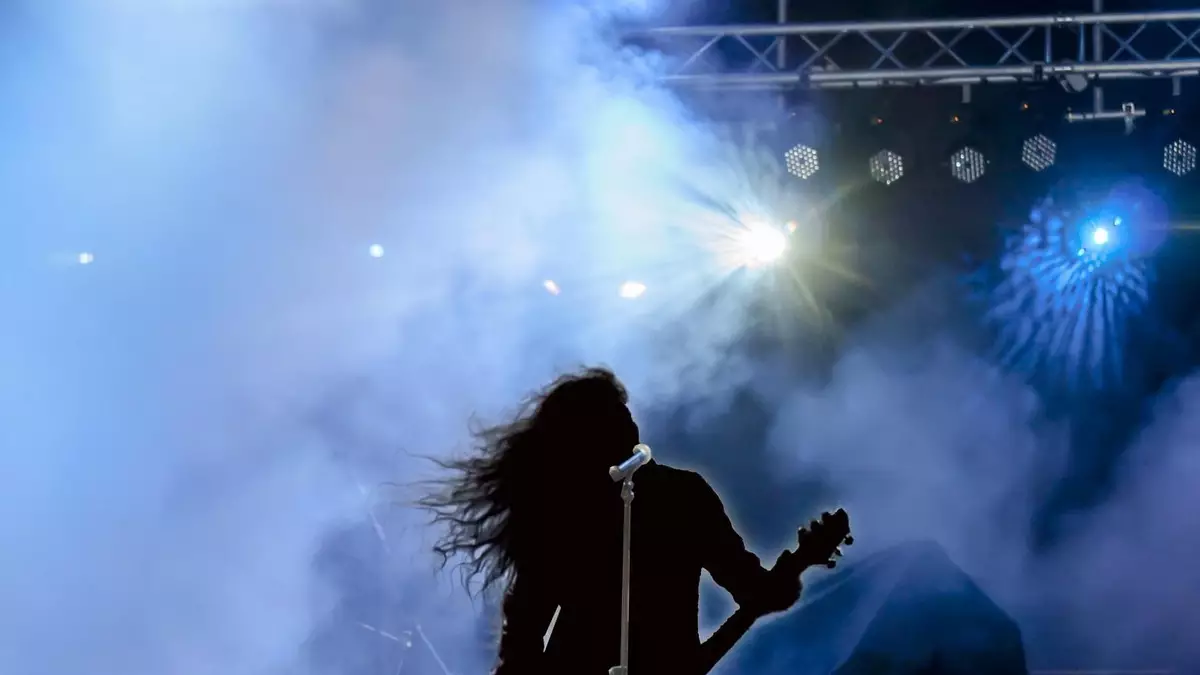
Björk’s ambitious ‘Cornucopia’ and orchestral shows keep her art-pop legacy alive
Veröffentlicht: 16.06.2026 um 16:03 Uhr, Redaktion AD HOC NEWS, Redaktionelle Verantwortung: Rafael Müller (Chefredaktion)
Björk remains one of pop’s most fearless shape-shifters, and her current focus on the immersive Cornucopia production and orchestral concert formats underlines how restlessly she keeps reinventing live music and her own catalog for a new generation of listeners.
Across three decades, the Icelandic artist has turned experimental pop into a global reference point, pairing daring electronic productions with striking visuals, fashion and stage design that push well beyond standard rock or pop concert formats.
More background on Björk’s projects
Discover further reports, interviews and analyses on Björk’s albums, collaborations and live concepts in the AD HOC NEWS archive.
More news on Björk at AD HOC NEWS ->Tuesday focus: how Björk made theatrical pop a laboratory for sound and image
When fans talk about ambitious live pop, Björk’s name appears quickly. From early tours behind Debut and Post to the multi-layered stage worlds of Vespertine, Biophilia and Cornucopia, she consistently treats each album cycle as a chance to redesign how songs occupy physical space and interact with technology, light and video.
The Cornucopia shows, first developed around the album Utopia, blend musicians, choir, custom instruments and large-scale projections into an almost theater-like experience built around themes of ecology, community and listening. Rather than playing a conventional greatest-hits set, Björk curates deep cuts and newer pieces, inviting audiences to hear familiar sounds inside a completely reimagined frame.
This ethos continues her long-running interest in staging. Earlier projects like the Vespertine tour with chamber ensembles, or the educational, app-driven Biophilia series, already positioned her concerts as laboratories where technology, design and performance could cross traditional genre lines.
For many fans, this approach turns each new cycle into an event: even absent a brand-new studio album, Björk manages to generate anticipation through fresh arrangements, updated visuals and subtle shifts in narrative focus that together make each touring concept feel like a distinct era in her creative timeline.
From The Sugarcubes to solo pioneer: the evolution of Björk’s sound
Long before she embraced large-scale multimedia productions, Björk experimented with rock energy and pop hooks as the singer for The Sugarcubes, helping introduce Icelandic alternative music to international audiences at the end of the 1980s. Their surreal, jagged guitar sound provided a springboard for her solo work.
Her solo breakthrough Debut in 1993 drew on house, jazz and electronic club culture, while Post intensified the contrasts between explosive beats and delicate ballads. A track like Army of Me put industrial flavors next to string-laden songs, making it clear that Björk saw no barriers between underground electronics and chart-ready pop songwriting.
Across Homogenic, Vespertine, Medúlla, Volta, Biophilia, Vulnicura, Utopia and Fossora, she pushed this logic further, treating each album as a world with its own sonic palette. Strings and distorted beats dominate one record, whisper-quiet microbeats and choirs define another, while bass clarinets or trombones have taken center stage in more recent work.
This mixture of risk-taking and melodic instinct helped establish her as a reference not only for art-pop but also for electronic producers, indie acts and experimental composers who see her discography as evidence that adventurous sound design and emotional directness can coexist in mainstream-facing music.
At the same time, her collaborations across genres have constantly refreshed her language, whether working with trip-hop and IDM pioneers in the 1990s, linking with experimental vocalists and classical musicians, or inviting younger producers into the studio for detailed sound-sculpting sessions.
Cornucopia on stage: how Björk turns climate themes into immersive performance
The Cornucopia production stands out even within Björk’s career as a particularly dense live concept. Built around the material from Utopia and later expanded to incorporate songs from Fossora, it presents a kind of sci-fi forest on stage, populated by flutes, percussion, electronics and a vocal ensemble.
Visually, the shows use towering screens, intricate projections and sculptural stage pieces to evoke ecosystems and microscopic structures, while sound designers craft a 360-degree impression that surrounds the audience. The result feels less like a standard concert and more like stepping into a living installation with a strong ecological subtext.
In interviews around the launch of Cornucopia, Björk emphasized how central climate concerns and the relationship between humans and their environment have become in her songwriting. She frequently links personal stories to broader planetary questions, allowing songs to operate simultaneously as intimate confessions and as reflections on collective responsibility.
This makes the staging choices especially pointed. A single vocal line might be set against images of landscapes or microorganisms, underlining the idea that individual feelings and global systems are intertwined. Fans often describe leaving these concerts with the sense of having witnessed a kind of ritual as much as a show.
While many major touring productions now rely on LED walls and visual effects, Björk’s use of technology tends to foreground organic forms, natural cycles and the physicality of live musicians. The digital elements underscore, rather than replace, human presence.
Orchestral shows and reimagined catalog: Björk as her own curator
Parallel to the high-tech Cornucopia concept, Björk has devoted extensive energy to orchestral and acoustic-centered concerts. These performances strip back electronics in favor of strings, woodwinds, choirs and, at times, only voice, highlighting how strongly many of her songs function as compositions beyond their studio arrangements.
By inviting orchestras and ensembles to reinterpret material from across the catalog, Björk acts as a curator of her own work. She reorders songs, places early tracks alongside recent ones and explores how different arrangements can reveal fresh emotional colors within pieces that fans thought they knew inside out.
This process of revisiting older songs through new instrumentation offers another answer to the question of how long-running pop and rock acts can age gracefully. Rather than simply performing hits as they appeared on record, she treats them as living entities that can be regenerated decades after their first release.
It also gives orchestras and classical musicians an opportunity to engage deeply with pop repertoire that demands virtuosic playing and nuanced dynamics. For audiences, these evenings serve as an alternative entry point into Björk’s universe, emphasizing melody, harmony and vocal phrasing over pure sound design.
Such concerts demonstrate how her writing has always contained a strong structural backbone. Even tracks famous for their innovative production often rest on solid harmonic movement and clear thematic development, which can be transposed into entirely different sonic contexts without losing their identity.
Visual identity, fashion and the art of collaboration
Björk’s impact would look very different without her longstanding collaboration with visual artists, designers and directors. From iconic music videos to adventurous album covers, she has treated each release as part of a broader visual conversation that mirrors the music’s aesthetic.
Costume designers and fashion houses have helped her create stage outfits and red-carpet looks that range from sculptural masks and headpieces to textured gowns and futuristic silhouettes. These choices often resonate with the themes of the corresponding era, whether evoking digital organisms, volcanic landscapes or botanical imagery.
In the video sphere, she has repeatedly worked with innovators in animation, CGI and experimental filmmaking, resulting in a videography that many critics rank among the most influential in pop history. Clips blur the line between performance documentation and standalone short films, expanding the narrative possibilities of a three- or four-minute track.
This integrated approach makes her a key reference point for younger artists who aspire to coherent audiovisual worlds rather than isolated singles. Björk shows how aligning sound, image and stagecraft can amplify the emotional and conceptual impact of songs far beyond radio play.
The collaborative nature of these projects also reflects her broader philosophy: although she is instantly recognizable as an individual artist, much of her work emerges from carefully chosen partnerships where each contributor brings a distinct voice to the final result.
Icelandic roots, global influence
Raised in Reykjavík, Björk has carried elements of Iceland’s landscape and cultural atmosphere into her music from the beginning. Listeners often associate her work with geological imagery, weather patterns and an underlying tension between fragility and force that echoes volcanic terrain and shifting light.
At the same time, her records absorb influences from cities like London and New York, where club culture, sound system traditions and experimental scenes offered tools to expand her sonic vocabulary. The friction between remote-island introspection and global metropolitan energy has become a hallmark of her style.
This duality helps explain why Björk resonates with both avant-garde circles and mainstream pop audiences. She embodies a localized sensibility while speaking a musical language that feels borderless, connecting with listeners who may never have visited Iceland but recognize the emotional landscapes she sketches.
Her success also opened doors for other Icelandic acts by demonstrating that artists from a relatively small market can have a strong international presence without diluting their unique perspectives. Festivals, labels and creative communities in Reykjavík today still bear traces of the path she helped carve.
In interviews, she has repeatedly underlined the importance of community and artistic ecosystems, pointing to the interconnectedness of musicians, visual artists, designers and programmers who contribute to a vibrant cultural environment around her projects.
Albums as ecosystems: how Björk structures her discography
One way to understand Björk’s career is to see each album as a self-contained ecosystem. Rather than a linear sequence of releases, her discography functions as a set of interlinked worlds, each with its own rules, textures and emotional weather.
Debut frames the move from band frontwoman to solo explorer, emphasizing personal independence and the discovery of new sonic tools. Post takes that freedom and pushes it outward, testing how far contrasts can stretch without snapping the coherence of an album.
Homogenic distills this into a sharp focus on strings and beats, presenting an almost geographic sense of space in its production. Vespertine then turns inward, favoring microbeats and intimate textures that suggest whispered conversations and winter nights.
Medúlla makes the human voice the central instrument, layering choirs, beatboxing and vocal experiments into a highly physical, bodily sound world. Volta swings back toward rhythmic extroversion, infusing brass and percussion with political urgency.
Biophilia connects songs to scientific themes and educational tools, while Vulnicura presents a raw, string-heavy chronicle of heartbreak. Utopia introduces flutes, birdsong-like textures and a search for communal healing, later matched by Fossora, whose earthy low-end and clarinets explore grief, grounding and transformation.
Taken together, these albums show an artist consistently willing to uproot herself aesthetically, trusting that audiences will follow even when the path leads from club beats to choral experiments or from digital interfaces to acoustic ensembles.
Technology, apps and new formats: Björk beyond the traditional album
Björk has often been early to experiment with emerging formats. The Biophilia project, for example, unfolded not only as an album but also as a suite of interactive smartphone and tablet apps that allowed users to explore songs through games, scores and visualizations.
This strategy treated digital devices as instruments of learning and play rather than merely as distribution channels. Schools incorporated Biophilia-related activities into classroom work, showing how pop music could intersect with science education and creative coding.
In other projects, she has tested virtual reality and immersive video, inviting fans to experience songs in 360-degree environments or through installations that require physical movement. These explorations blur the boundaries between recorded music, gaming, performance art and museum display.
For the broader music industry, Björk’s experiments act as prototypes, illustrating possible futures in which albums are not just collections of tracks, but platforms linking sound to interactive experiences, visual art and live performance.
Even when specific technologies evolve or fall out of fashion, the underlying principle remains clear: she treats new tools as chances to ask what else a song can be or do when it leaves the confines of stereo playback.
Influence on younger artists and scenes
Because of her longevity and restlessness, Björk’s influence extends across multiple generations. Electronic producers cite her as proof that complex rhythms and unconventional sound sources can reach large audiences. Indie and alternative acts look to her for examples of integrating vulnerability with bold experimentation.
Pop stars influenced by her often mention the permission she provides to take risks with visuals, stagecraft and concept albums, even within commercially oriented careers. Her willingness to embrace awkwardness, intensity and non-traditional song structures has broadened perceptions of what mainstream pop can accommodate.
In academic and conservatory contexts, her work appears in curricula examining the intersection of popular music, composition and media art. Scholars analyze her recordings and videos to discuss gender, technology, ecology and globalization in contemporary culture.
At the same time, grassroots scenes around the world adopt elements of her approach without necessarily copying her sound directly. DIY artists who design their own costumes, self-direct videos or build multimedia live shows often point to Björk as an inspirational figure who paved the way for hybrid roles.
This diffuse influence underlines how deeply she has permeated conversations about art-pop and experimental music, rendering genre boundaries increasingly porous.
How Björk balances experimentation and accessibility
One of the recurring questions around Björk’s career concerns how she maintains a recognizable identity while constantly reshaping her sound. Part of the answer lies in her voice: its distinctive timbre and expressive range knit together diverse productions into a coherent whole.
Another factor is her sense of melody. Even in complex arrangements, she often centers songs on strong, singable motifs or phrases that listeners can carry with them after first contact. These melodic anchors provide stability amid shifting textures and rhythms.
Lyrically, she often alternates between abstract, poetic language and very direct statements of emotion. This interplay allows different listeners to engage at different levels, whether they respond more to mood, imagery or explicit narrative content.
The result is a catalog where tracks can function as accessible entry points for casual listeners or as deep wells for repeated, analytical listening. This dual appeal has helped her maintain a broad, international fan base even as she steps further away from conventional radio formats.
In interviews, she has suggested that she does not see experimentation and accessibility as opposites but as forces that can reinforce each other when handled carefully, with attention to pacing, dynamics and contrast across an album or live set.
Why Björk’s live shows still matter so much
In an era when streaming platforms dominate listening habits and many artists rely heavily on backing tracks, Björk’s live shows stand out as events designed to be experienced in person. The precise sound design, the tactile presence of unusual instruments and the interplay between visuals and acoustics reward close attention.
Fans frequently describe these concerts as transformative encounters, citing how specific arrangements or visual motifs changed their understanding of songs they had known for years. This effect emerges from the care with which Björk and her collaborators design each aspect of the performance.
By continuing to invest in ambitious live concepts like Cornucopia and orchestral programs, she underlines her belief that concerts can still serve as spaces of shared discovery rather than mere repetitions of recorded versions. That attitude resonates strongly with audiences seeking depth in an attention-fragmented culture.
Even when she revisits existing material, the sense of risk and novelty remains present. New arrangements, new stage designs and new thematic emphases keep the shows aligned with her current interests rather than freezing them as museum pieces of past success.
In this way, Björk’s live work functions as an ongoing commentary on her discography and on broader questions about how pop and rock performance can evolve without losing emotional immediacy.
Key facts about Björk at a glance
- Act: Björk
- Genre: Art-pop, electronic, alternative
- Origin: Reykjavík, Iceland
- Active since: late 1970s (child recordings), internationally since late 1980s
- Key works: Debut, Post, Homogenic, Vespertine, Medúlla, Biophilia, Vulnicura, Utopia, Fossora
- Label: various over career, including One Little Independent Records
- Charts / certifications: multiple gold and platinum awards in the UK and other territories, frequent top-10 album placements in Europe
FAQ: Björk, Cornucopia and her ongoing influence
How would you describe Björk’s main musical style?
Björk’s core style is often labeled art-pop or experimental pop, combining electronic production, acoustic instruments and distinctive vocals. She moves freely between dance, ambient, classical and avant-garde influences, treating genre boundaries as tools rather than limits.
What makes the Cornucopia shows stand out in Björk’s career?
The Cornucopia shows are among her most elaborate stagings, blending immersive visuals, surround-style sound design, choirs and custom instruments. They foreground ecological themes and treat the concert as a multi-sensory installation rather than a simple run-through of hits.
How has Björk influenced younger pop and rock artists?
Björk’s example encourages younger artists to experiment with format, fashion, video and live production while staying emotionally honest. Her career shows that it is possible to maintain artistic integrity, explore new technologies and still connect with broad, international audiences.
This article was created with a.i. assistance and reviewed by editors. All information without guarantee.
Disclaimer zu unseren Artikeln: Keine Anlageberatung, keine Kauf oder Verkaufsempfehlung. Angaben zu Kursen, Unternehmen und Märkten ohne Gewähr; Änderungen jederzeit möglich. Börsengeschäfte können zu hohen Verlusten führen. Unsere Beiträge werden ganz oder teilweise automatisiert mit Unterstützung von AI erstellt und geprüft.