
Santana extend 2026 North American tour after Las Vegas run
Published on 06/17/2026 at 01:11 | Editorial responsibility: Rafael Müller, Editor-in-Chief AD HOC NEWS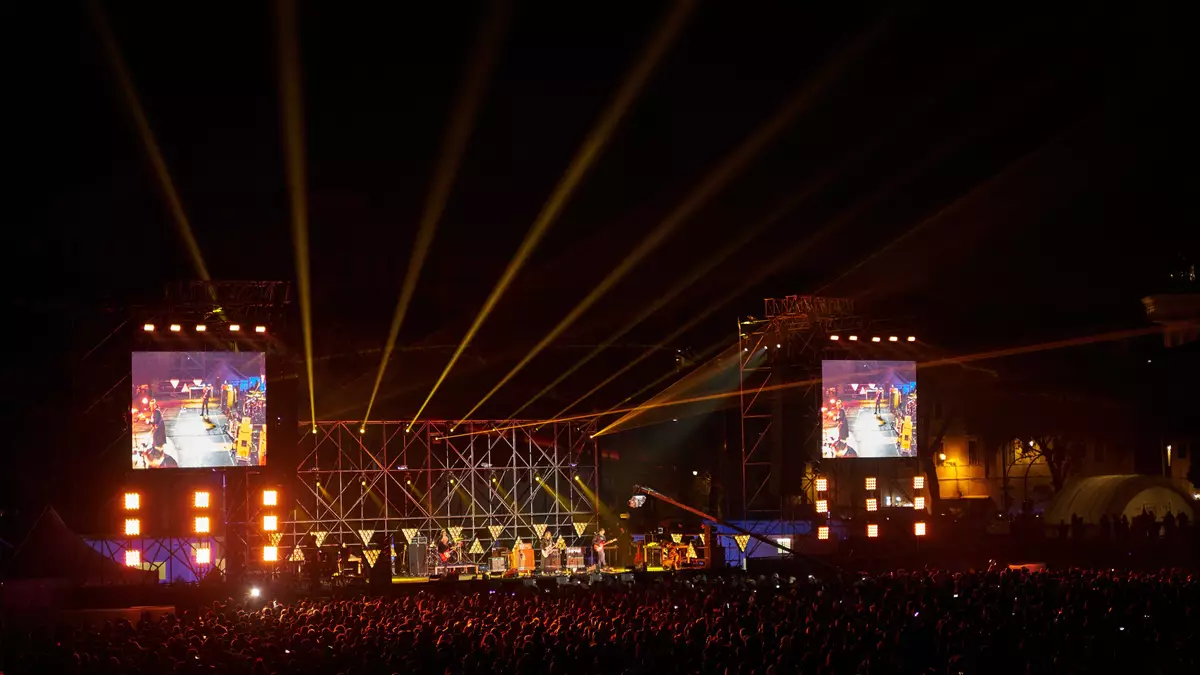
Santana are keeping their live flame burning in 2026: after another residency-style run at the House of Blues in Las Vegas this spring, Carlos Santana and his band have extended their North American tour with further dates in June, giving fans more chances to experience the Rock and Roll Hall of Fame guitarist's blend of rock, blues and Latin grooves on stage.
The current tour keeps Santana on the road in the United States with a mix of standalone arena shows and festival-style appearances, following their ongoing relationship with the House of Blues at Mandalay Bay in Las Vegas, where the band have staged the long-running An Intimate Evening with Santana: Greatest Hits Live show in multi-week blocks.
How Santana became a live institution across decades
Background, milestones and chart moments from Carlos Santana's band, from the Woodstock breakthrough to Grammy-winning comeback albums.
More news on Santana at AD HOC NEWS ->Wednesday focus: Santana's live fire still drives the band
More than five decades after their breakthrough at Woodstock, Santana still center their story on the stage. The band turned their House of Blues residency in Las Vegas into a fixture of the Strip, with the show celebrating its tenth year in 2024 and continuing with additional runs through 2025 and 2026. These performances mix early classics with later hits in a compact, high-energy format.
The current 2026 routing builds on that residency momentum. After finishing a sequence of spring dates in Las Vegas, Santana scheduled further U.S. stops in June, including headline shows and appearances at summer concert events within the month-long window around mid-June. Local promoters continue to position Santana as a main-stage draw for audiences that span classic rock fans and younger listeners discovering the band through streaming.
From Woodstock to multi-platinum albums: Santana's long arc
The Santana story began in San Francisco in the late 1960s, where Carlos Santana formed the band that would soon blend rock, blues, jazz and Latin influences into a distinctive sound. Their early breakthrough came with a high-profile performance at the Woodstock festival in August 1969, where a then-unknown Santana stunned the crowd with an extended version of Soul Sacrifice. That appearance, captured in the Woodstock film, quickly raised their profile worldwide.
Shortly after Woodstock, Santana released their self-titled debut album Santana in 1969, reaching the U.S. Top 10 and introducing songs like Evil Ways. The follow-up Abraxas in 1970 pushed the band even higher, topping the Billboard 200 albums chart and yielding signature tracks such as Black Magic Woman and Oye Como Va, which showcased their fusion of rock guitar, Afro-Latin rhythms and organ-driven grooves.
As the early 1970s progressed, Santana experimented with jazz fusion and spiritual themes, releasing albums like Caravanserai and Welcome that moved away from radio-format singles toward longer, improvisational pieces. While these records cemented Carlos Santana's reputation among musicians and critics, they temporarily shifted the band away from mainstream chart dominance. Nonetheless, the group maintained a strong touring presence and continued to evolve lineup and sound.
By the late 1970s and 1980s, Santana navigated changing rock landscapes with albums that combined rock, pop and Latin elements to varying commercial results. Singles such as Hold On and Winning kept the band on radio playlists. At the same time, Carlos Santana deepened his reputation as a guest guitarist, contributing to other artists' recordings and broadening his stylistic reach.
Supernatural and the resurgence of Santana on the charts
One of the most dramatic comebacks in rock history arrived with Santana's 1999 album Supernatural. Built around collaborations with younger artists and contemporary producers, the record featured the global hit single Smooth, sung by Rob Thomas of Matchbox Twenty, which spent 12 weeks at number one on the Billboard Hot 100 in 1999 and 2000. Another major single, Maria Maria featuring The Product G&B, also topped the chart.
Supernatural went on to sell more than 30 million copies worldwide and earned nine Grammy Awards at the 2000 ceremony, including Album of the Year and Record of the Year for Smooth, tying Michael Jackson's record for most Grammys in a single night. The project revived Santana's mainstream profile and introduced his guitar tone to a generation that had not experienced the early 1970s albums on release.
The follow-up albums Shaman (2002) and All That I Am (2005) continued the collaborative approach, bringing in vocalists from pop, rock and R&B to front Santana compositions. These releases produced charting singles like The Game of Love with Michelle Branch and Why Don't You & I featuring Chad Kroeger and Alex Band, extending the Supernatural-era crossover success.
Even as the chart peaks softened in later years, Santana used that period to strengthen touring demand. The combination of classic 1970s material and late-1990s hits allowed the band to construct setlists that resonated with multigenerational audiences, from fans who grew up with Abraxas on vinyl to listeners who discovered the band through MTV and radio rotation of Smooth.
Recent albums and studio work around the 2026 tour
In the 2010s and 2020s, Santana continued releasing new music while sharpening their live identity. The 2014 album Corazón focused on Latin collaborations, featuring guest appearances from vocalists across Spanish-language pop and rock, and achieved strong sales particularly in Latin America and among Latin music audiences worldwide. The project underscored Carlos Santana's long-standing commitment to Latin musical traditions.
In 2016, Santana reunited most of the classic early-1970s lineup for the album Santana IV, which intentionally picked up stylistically where the 1971 album Santana III had left off. This reunion brought back guitarist Neal Schon and other original members, resulting in a record that blended jam-based rock, Latin grooves and extended solos, appealing strongly to fans of the band's formative era.
More recently, Santana released Afrika Speaks in 2019, a project inspired by African rhythms and voices, produced by Rick Rubin and featuring Spanish vocalist Buika. The album was recorded largely live in the studio and captured a raw, energetic sound that critics praised for its focus and intensity. It reached the Top 5 of the Billboard Top Latin Albums chart and reasserted Santana's appetite for stylistic exploration.
In 2021, the album Blessings and Miracles arrived with another roster of collaborators, including artists like Steve Winwood and Chris Stapleton. While not matching the commercial impact of Supernatural, it extended Santana's collaborative template into new directions, connecting his guitar voice with contemporary rock, country and pop influences. These records form the studio backdrop for the 2026 touring cycle, giving the band a deep catalog from which to pull live.
Inside Santana's 2026 live setup and House of Blues legacy
Santana's long-running Las Vegas residency at the House of Blues in Mandalay Bay has become one of the key pillars of the band's modern profile. Launched in 2012, it has periodically been renewed and extended, with branded runs under titles such as An Intimate Evening with Santana: Greatest Hits Live. The format typically sees the band playing several nights a week in a theater-scale environment, allowing for more detailed sound and lighting production than a typical arena.
The 2026 shows in Las Vegas follow that model, presenting a career-spanning set that moves from early instrumentals to pop-era hits within an approximately two-hour performance window. For fans, the venue offers a chance to experience Santana's nuanced guitar tone and percussion-heavy arrangements in a relatively intimate setting compared with open-air festivals. For the band, the residency structure reduces travel strain while maintaining a high volume of performances.
A typical 2026 setlist, based on recent performances, blends opener instrumentals with crowd favorites like Black Magic Woman/Gypsy Queen, Oye Como Va, Maria Maria and Smooth alongside deeper cuts and newer material. Extended percussion features, keyboard solos and guitar improvisations remain central to the experience, reflecting Carlos Santana's roots in jam-based rock and Latin jazz. The dynamic between composed hooks and open-ended sections keeps the concerts fresh even for repeat visitors.
Beyond Las Vegas, the June 2026 tour dates include selected cities across North America within the 30-day window around mid-June, based on current promotional announcements. These shows transport the residency's production ethos to arenas and amphitheaters, where the band balances sound clarity with the scale needed for larger crowds. Local press in various cities consistently underline the high energy of the performances and the cross-generational makeup of the audience.
Band lineup, interplay and the role of percussion
Although the Santana name emphasizes Carlos Santana himself, the band has long revolved around a collective of musicians, particularly percussionists and vocalists who bring Latin and Afro-Caribbean rhythms to the fore. The classic early-1970s lineup featured players like Michael Shrieve, José "Chepito" Areas and Mike Carabello, whose congas, timbales and drums created a dense rhythmic bed under the guitar. That emphasis on percussion remains a defining feature of the group.
Over the years, the modern Santana touring band has included a mix of long-serving members and newer additions on instruments such as keyboards, bass, rhythm guitar, trumpet and trombone. Multiple percussionists often share the stage simultaneously, layering traditional Latin patterns over rock backbeats. This multi-layered percussion approach helps distinguish Santana's live sound from that of a conventional rock band built solely on drum kit and bass.
Carlos Santana's guitar style works in dialogue with this rhythmic foundation. His phrases frequently slide across bar lines, leaning into sustained notes, bends and melodic motifs that draw on blues, rock and Latin phrasing. In concert, he often extends solos over vamps that give percussion space to build, creating crescendos that rely as much on groove and dynamics as on harmonic complexity.
The vocal role in Santana has historically shifted among lead singers, from Gregg Rolie in the early years to guest vocalists in the Supernatural era and beyond. In the 2026 lineup, the band continues to rely on strong lead and backing vocal interplay to deliver both English- and Spanish-language material, ensuring that songs like Oye Como Va and Corazón Espinado connect directly with diverse audiences.
Influence on rock, Latin music and guitar culture
Santana's impact extends across multiple musical spheres. In rock, their early-1970s albums played a major role in bringing Latin rhythms and instrumentation into mainstream guitar music, influencing bands that would later integrate congas and timbales into rock arrangements. The success of Abraxas and the visibility of Woodstock proved that a fusion of Afro-Latin grooves and blues-based guitar could succeed commercially.
In Latin music, Santana helped pave pathways between Spanish-language repertoire and English-language rock, decades before the streaming era's global playlists. Their recording of Oye Como Va, written by Tito Puente, introduced many rock listeners to a classic Latin song and demonstrated the commercial viability of bilingual and cross-cultural material. That dynamic foreshadowed later waves of Latin pop and reggaeton crossing into mainstream charts.
Within guitar culture, Carlos Santana is recognized for a highly identifiable tone and phrasing approach. His sustain-rich sound, created through a combination of humbucking pickups, overdriven amplifiers and careful use of effects, has become a reference point in discussions of rock guitar tone. Signature models from PRS Guitars and other partnerships have further cemented his status among guitarists worldwide, with many players citing his melodic sensibility and vibrato as key inspirations.
The multi-genre influence of Santana also appears in jazz and jam-band scenes. Musicians in fusion and improvisational rock acts frequently acknowledge the band's role in normalizing long-form improvisations in rock contexts, particularly through early tracks like Soul Sacrifice and later live renditions of Incident at Neshabur and Samba Pa Ti. That legacy is visible at festivals where jam bands and Latin jazz ensembles coexist on the same bill.
Streaming, discovery and how younger fans find Santana
In the streaming era, Santana's catalog has found new life on platforms where playlists mix classic rock staples with contemporary releases. Tracks such as Smooth, Maria Maria, Black Magic Woman and Oye Como Va rank among the band's most streamed songs globally on services like Spotify and Apple Music. Editorial and algorithmic playlists focused on classic rock, guitar heroes and Latin fusion regularly feature the band.
The cross-generational appeal is particularly visible when comparing streams of early 1970s tracks and late 1990s hits. While Smooth and Maria Maria benefit from late-1990s pop nostalgia and ongoing radio rotation, deep cuts from Abraxas and Santana III attract listeners curious about the roots of Latin rock. This balance helps sustain catalog consumption even when the band is not actively promoting a new studio album.
Video platforms, especially YouTube, further support discovery. Clips from Woodstock, classic TV appearances and modern Las Vegas shows sit alongside official music videos and lyric videos, offering multiple entry points for new fans. Guitar-focused channels frequently analyze Carlos Santana's solos, tone and phrasing, while live-concert uploads showcase the interaction between band and audience.
Social media also plays a role: official and fan-run accounts share archival photos, tour news and short performance clips, giving followers regular updates on Santana's activities. During the 2026 tour run, fans use platforms like Instagram and TikTok to post short videos from shows, often highlighting crowd reactions when the band launches into familiar riffs from hits such as Smooth or Black Magic Woman.
Legacy, honors and the continuing story of Santana
Santana's long career has been recognized with multiple honors. Carlos Santana and the band were inducted into the Rock and Roll Hall of Fame in 1998, with the Hall citing their role in merging rock with Latin and African rhythms and their influence on subsequent generations of musicians. The Grammy haul for Supernatural in 2000 further underscored their impact across genres and eras.
Beyond awards, the band's legacy appears in the number of artists who cite Santana as an influence. Latin rock and pop acts, guitar virtuosos, jam bands and even hip-hop producers point to the rhythmic and melodic ideas pioneered on Santana records as foundational to their own work. Collaborations on albums like Supernatural, Corazón and Blessings and Miracles document those connections directly.
The ongoing 2026 tour and Las Vegas residency demonstrate that Santana's story remains active rather than purely retrospective. Night after night, the band translate decades of studio work into living performances, with improvisation ensuring that no two shows are identical. For many fans, seeing Santana live provides a direct link between historic recordings and the present moment, illustrating how rock, Latin and blues continue to intersect on stage.
As long as Carlos Santana and his band continue to tour and record, the Santana catalog will keep expanding and recontextualizing itself for new audiences. The 2026 performances show a group still engaged with both tradition and exploration, balancing the expectations of listeners who come for familiar hits with the creative impulses that have driven the band since their San Francisco beginnings.
Santana at a glance
- Act: Santana
- Genre: Rock, Latin rock, blues rock
- Origin: San Francisco, California, USA
- Active since: Late 1960s
- Key works: Abraxas, Supernatural, Santana III, Afrika Speaks
- Label: Various over time including Columbia, Arista and Concord
- Charts / certifications: Multi-platinum albums and singles, including the Grammy-laden Supernatural with more than 30 million copies sold worldwide
FAQ: Santana in 2026
How active is Santana on tour in 2026?
Santana remain a highly active live act in 2026, combining a recurring residency at the House of Blues in Las Vegas with additional North American tour dates, including shows in June within the current 30-day window.
Which Santana songs are most popular with streaming listeners?
On major streaming services, tracks like Smooth, Maria Maria, Black Magic Woman and Oye Como Va rank among Santana's most played songs, reflecting both the Supernatural-era crossover hits and classic early-1970s material.
What makes the Santana live show distinctive?
Santana's concerts stand out for their fusion of rock guitar and dense Latin-influenced percussion, extended improvisations and setlists that bridge early fusion-era tracks with pop-radio hits. The Las Vegas residency format further highlights this mix in a focused theater setting.
This article was created with a.i. assistance and reviewed by editors. All information without guarantee.


