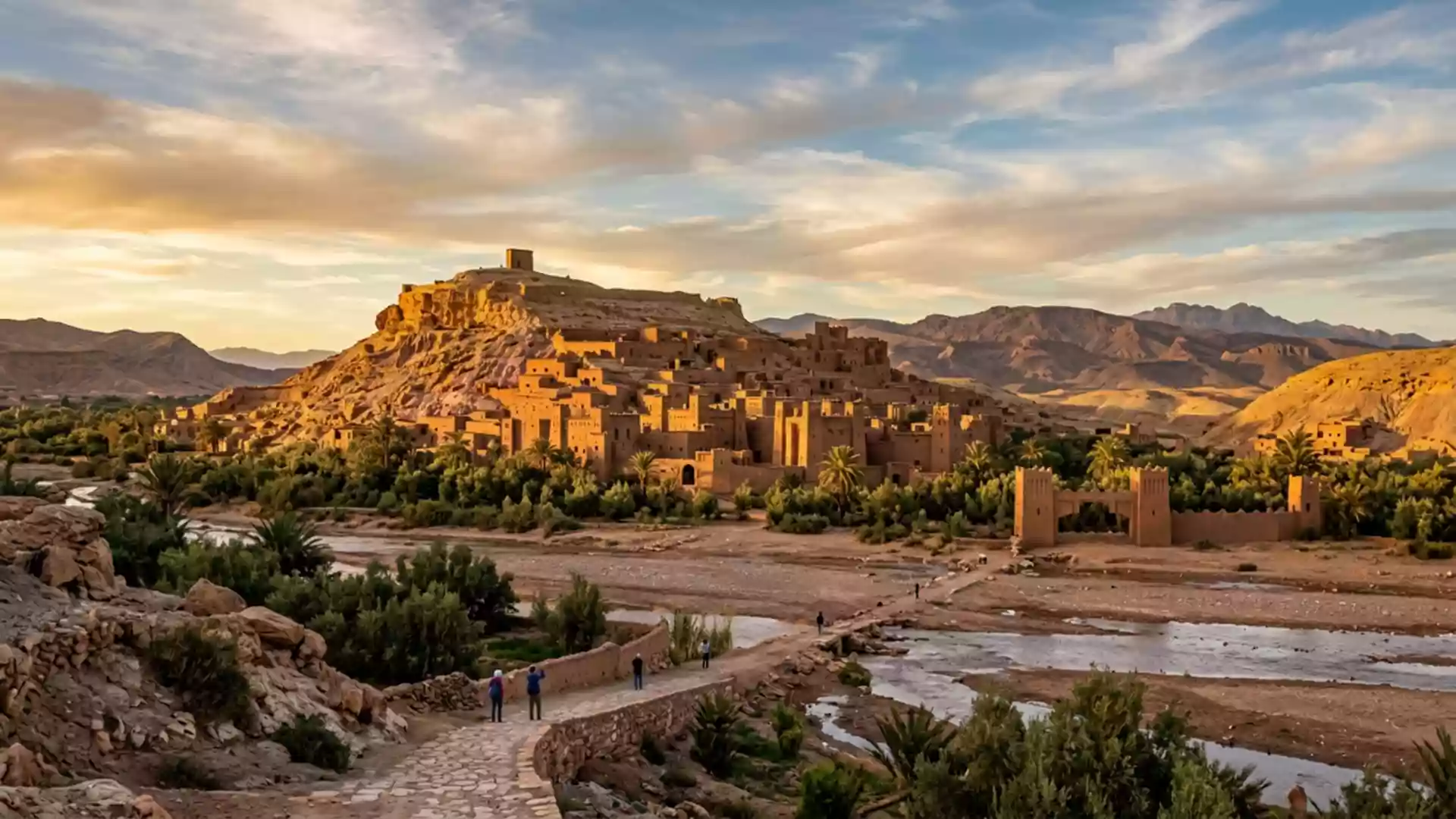
Ait Ben Haddou and the earthen skyline of southern Morocco
Published on 09/02/2026 at 12:45 | Editorial responsibility: Rafael Müller, Editor-in-Chief AD HOC NEWS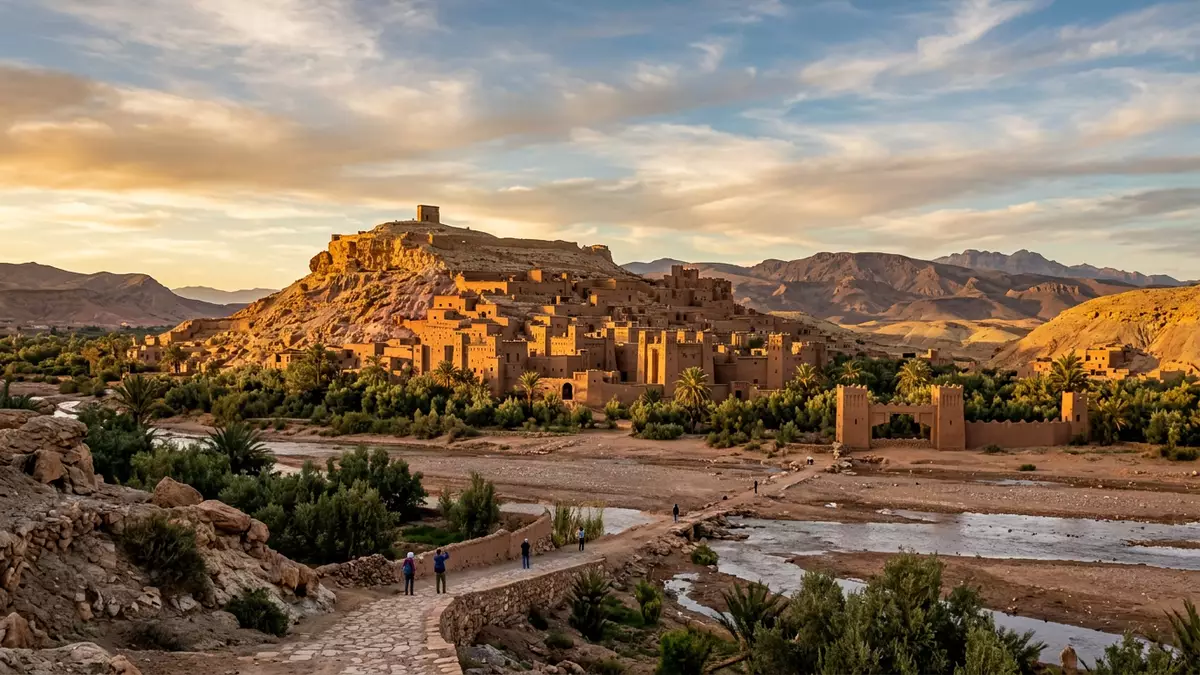
Ait Ben Haddou, near Ouarzazate in southern Morocco, is a fortified earthen village that climbs a hillside above the Ounila Valley in the foothills of the High Atlas. Recognised as the Ksar of Ait-Ben-Haddou on the UNESCO World Heritage List since 1987, it preserves a layered ensemble of dwellings, towers and walls built in packed earth and clay. The settlement stands along a former caravan route linking the Sahara with Marrakesh, and the architecture reflects centuries of traffic across this corridor.
An earthen ksar on a High Atlas slope
Ait Ben Haddou stands on the southern slopes of the High Atlas, in Morocco’s Ouarzazate Province, where the Ounila Valley cuts through a dry, rocky landscape.Located in the foothills, the ksar rises above the valley floor on a hillside that gives it clear views over the surrounding terrain. The old village concentrates on this slope, while a more recent settlement spreads on the opposite bank of the seasonal river below.
The core of Ait Ben Haddou is a ksar, a group of earthen buildings enclosed by defensive walls reinforced with towers.The ensemble is described as a traditional pre-Saharan habitat, where houses cluster tightly together within a single perimeter. Thick walls built in pisé and adobe, with timber elements supporting upper levels, create a continuous mass of reddish-brown facades that follow the contours of the hill.
From caravan route to World Heritage site
Ait Ben Haddou lies on a historic route that linked the Sahara to Marrakesh, part of a network that channelled trans-Saharan trade across the High Atlas.The settlement grew beside this caravan corridor, which passed through the Ounila Valley and the Tizi-n'Telouet area on its way north. The ksar’s location beside a watercourse and at the base of a hill gave it a blend of defensive and logistical advantages for merchants moving between desert and city.
The Ksar of Ait-Ben-Haddou was inscribed on the UNESCO World Heritage List in 1987 as a cultural property, under criteria that highlight both its architecture and its testimony to traditional life in southern Morocco.The listing records Ait Ben Haddou as a significant example of Moroccan earthen clay architecture. The surviving structures reflect building techniques and patterns that had developed across the southern valleys of Morocco over many generations, even where individual houses belong to later phases.
Inside the walls of the ksar
Within the walls of Ait Ben Haddou, houses stack along stepped alleys and terraces that climb towards a small fortified structure at the top of the hill.The layout includes a mosque, a public square, a caravanserai and open threshing areas, reflecting the mixture of domestic, religious and economic activities that shaped daily life. The defensive walls frame this dense interior, punctuated by projecting towers that mark corners and prominent points on the perimeter.
The materials and details of the ksar reward close attention. Walls follow the reddish tones of local earth, while wooden beams and doors introduce darker accents against the clay surfaces.The buildings are described as almost entirely pisé, adobe and wood, giving the whole settlement a visual unity when seen from across the valley. Decorative elements, including geometric reliefs on tower faces and entrance frames, sit within this overall simplicity rather than overshadowing it.
Visiting Ait Ben Haddou: what travellers from Western Europe should know
- Ait Ben Haddou lies in Ouarzazate Province in southern Morocco, in the Ounila Valley on the southern slopes of the High Atlas. The ksar stands near a more recent village on the opposite bank of the valley.
- Access to the historic ksar involves crossing the valley floor and ascending paths and stepped alleys on the hillside, with uneven earthen surfaces and changes in level inside the walls.
- The surrounding region is arid, with the settlement rising above a seasonal riverbed, so exposed paths and open terraces form part of any exploration of the site.
- The official language is Arabic and the currency is the Moroccan dirham.
- Entry requirements depend on your nationality; UK travellers can check the FCDO travel advice at gov.uk/foreign-travel-advice, Irish travellers the Department of Foreign Affairs at ireland.ie.
Searching for Ait Ben Haddou on social platforms
These links open searches for Ait Ben Haddou on each platform.
Frequently asked questions about Ait Ben Haddou
Where is Ait Ben Haddou located?
Ait Ben Haddou is in Ouarzazate Province in southern Morocco, on the southern slopes of the High Atlas above the Ounila Valley.
What should visitors expect inside the ksar?
Visitors encounter earthen houses, defensive walls, towers and stepped alleys that climb the hillside, with a mosque, public spaces and former storage or caravan areas inside the enclosure.
What makes Ait Ben Haddou distinctive?
Ait Ben Haddou combines a hillside setting, cohesive earthen construction and a documented role on a former caravan route, recognised through its inscription as a UNESCO World Heritage Site.