
Ajanta Caves and the painted Buddhist cliff
Published on 09/23/2026 at 19:38 | Editorial responsibility: Rafael Müller, Editor-in-Chief AD HOC NEWS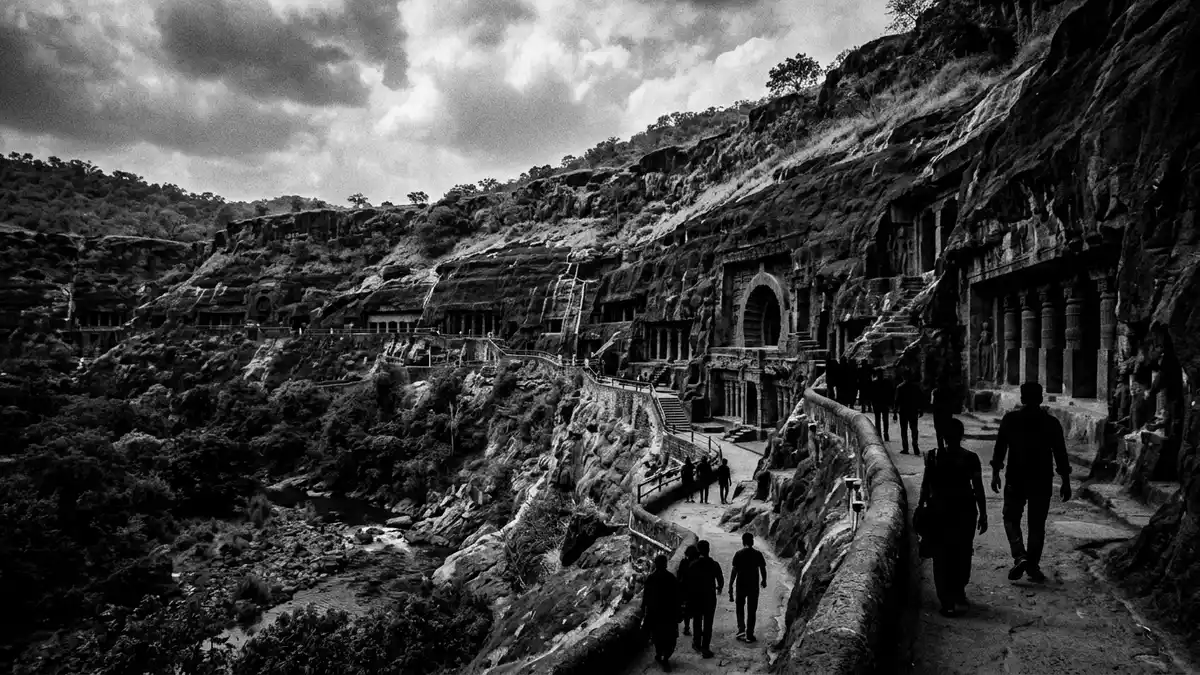
Ajanta Caves are Buddhist sanctuaries and monasteries carved into a cliff above the Waghora River in Maharashtra, India. Their galleries combine excavated stone architecture with paintings, sculpture and a long visual record of Buddhist stories.
Ajanta Caves in the Waghora valley
The caves occupy the inner side of a curved ravine in the Ajanta hills, north-east of Aurangabad. The rock face rises above the river, with the cave entrances arranged along the cliff rather than across a level plain.
The site contains about 30 rock-cut monuments. Their spaces include chaitya halls, used for Buddhist worship, and vihara monasteries with chambers arranged around interior halls. the cliff above the Waghora remains central to the character of the site.
Two Buddhist building phases in stone
Ajanta’s earliest excavations belong to the second and first centuries BC. A second phase developed between the fourth and sixth centuries AD, producing the larger group of decorated halls and monasteries associated with the surviving paintings and sculpture.
The interiors show how a Buddhist complex could be cut directly from living rock. Pillars divide halls, cells open from monastic spaces, and carved Buddhas occupy important architectural positions. The sequence of forms records changing Buddhist practice across many centuries.
The caves received UNESCO World Heritage status in 1983. the two excavation phases distinguish the early monuments from the later flowering of the complex.
Paintings, sculpture and Buddhist stories
Ajanta is particularly associated with wall paintings created on prepared plaster over the rock. Their colours include reds, ochres, greens, black and pale mineral tones, while decorated ceilings contain patterns, foliage, animals and other natural forms.
Many scenes relate to the Jataka stories, which recount earlier lives of the Buddha. Other images show the Buddha, Bodhisattvas, attendants, courtly figures and scenes of movement through richly detailed interiors. The paintings are not separate from the architecture: they occupy halls, passages and chambers within the excavated monuments.
The sculptures include seated and standing Buddhas, guardians and architectural carvings. Together, the paintings and reliefs create a Buddhist visual environment extending across the curved cliff. Ajanta’s painted interiors form the site’s most recognisable artistic feature.
Visiting Ajanta Caves: what travellers from Western Europe should know
- Ajanta Caves lie in Maharashtra, north-east of Aurangabad, beside the Waghora River. The approach is made through the Ajanta valley and continues towards the cliff complex.
- The caves are cut into a steep ravine, and visiting involves uneven ground, steps and movement between separate cave entrances along the rock face.
- The interiors contain painted surfaces and carved stone details. Low light and narrow chambers make the architecture and decoration closely connected.
- The official language is Marathi and the currency is the Indian rupee.
- Entry requirements depend on your nationality; UK travellers can check the FCDO travel advice at gov.uk/foreign-travel-advice, Irish travellers the Department of Foreign Affairs at ireland.ie.
Searching for Ajanta Caves on social platforms
These links open searches for Ajanta Caves on each platform.Frequently asked questions about Ajanta Caves
Where are Ajanta Caves?
Ajanta Caves are in Maharashtra, India, in a ravine above the Waghora River and north-east of Aurangabad.
What can visitors see inside?
The complex contains rock-cut Buddhist monasteries, prayer halls, sculpture and painted interiors showing Buddhist narratives and decorative patterns.
What makes Ajanta Caves distinctive?
The site brings architecture, painting and sculpture together inside a curved cliff, with monuments dating from the second century BC through the fifth and sixth centuries AD.


