
Al-Masjid al-Haram in Mekka and the vast mosque around the Kaaba
Published on 09/10/2026 at 07:15 | Editorial responsibility: Rafael Müller, Editor-in-Chief AD HOC NEWS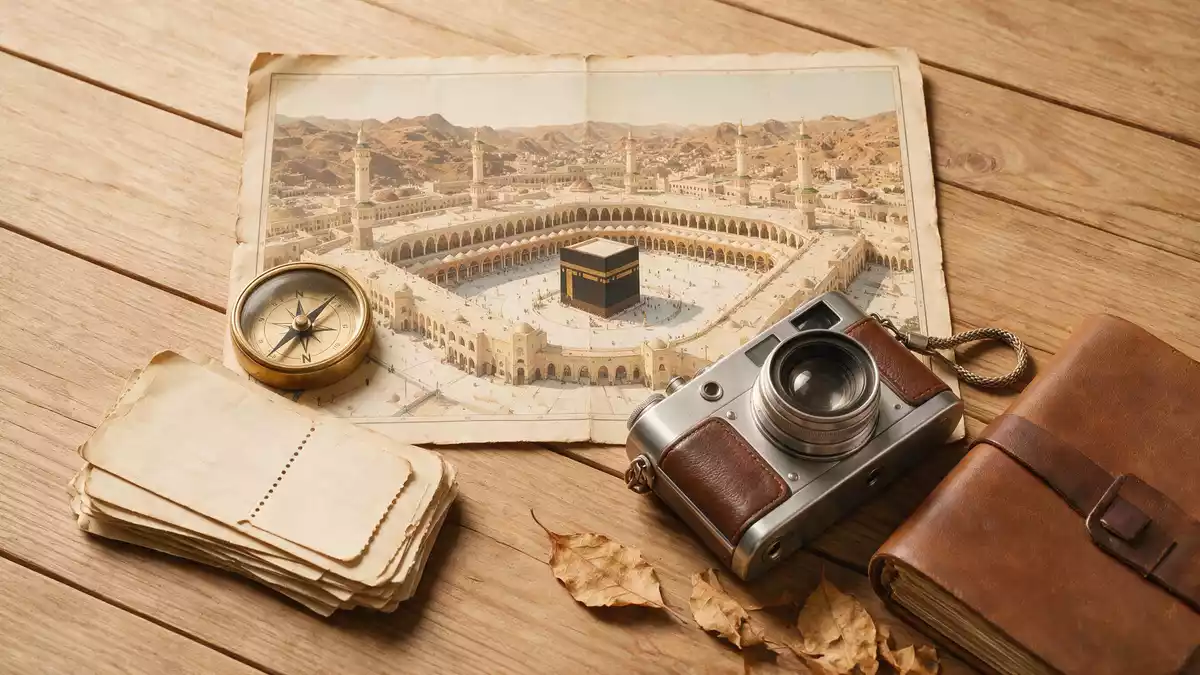
Al-Masjid al-Haram in Mekka is the great mosque that enfolds the Kaaba, turning a single cubic sanctuary into the centre of an immense architectural and ritual complex shaped over many centuries. The site links the early seventh-century formation of the Muslim community with successive layers of building from the Umayyad, Abbasid, Mamluk, Ottoman and Saudi periods.
The Kaaba at the heart of Al-Masjid al-Haram
At the core of Al-Masjid al-Haram stands the Kaaba, a stone cube that serves as the qibla, the direction towards which Muslims across the world orient their prayers.the Kaaba as the focal point Islamic tradition links the foundations of this structure to Ibrahim (Abraham) and his son Ismail, and early sources describe it as a pre-Islamic pilgrimage centre for the tribes of Arabia.pre-Islamic role of the Kaaba
In 630 CE, the Prophet Muhammad entered Mekka and removed the idols that had gathered inside and around the Kaaba, dedicating it exclusively to monotheistic worship.Muhammad’s cleansing of the Kaaba in 630 CE At that time the sanctuary itself stood in an open space, without the surrounding colonnades and halls that define the mosque today; the architectural history of Al-Masjid al-Haram begins when the early caliphs enclosed and articulated the space around the cube.
From courtyard to vast mosque complex
The first enclosure wall around the Kaaba was ordered by the second caliph Umar ibn al-Khattab in 638 CE, creating a defined prayer area around the sanctuary.Umar’s 638 enclosure wall Umar and his successor Uthman ibn Affan added lighting and covered prayer spaces supported by wooden columns, turning a simple courtyard into a recognisable mosque arrangement.early caliphal enlargements
Major rebuilding followed under the Umayyad and Abbasid dynasties. Abd al-Malik ibn Marwan, ruling in the late seventh century, is recorded as having rebuilt the mosque after conflict damage, adding marble columns and mosaics, and his successor al-Walid I replaced wooden supports with marble and introduced an early minaret.Umayyad rebuilding under Abd al-Malik and al-Walid Around the late eighth century, Abbasid caliph al-Mahdi carried out a large expansion that relocated the outer walls so that the Kaaba sat more centrally within the growing mosque precinct.Abbasid expansion by al-Mahdi
Domes, galleries and the modern Saudi expansions
Fire and flood damage struck parts of Al-Masjid al-Haram in the fourteenth century, prompting rebuilding that continued into the Mamluk period under sultans such as Nasir Faraj bin Barquq, who restored damaged columns and ceilings.Mamluk rebuilding after fourteenth-century damage In the sixteenth century the Ottoman sultan Selim II commissioned architect Mimar Sinan to renovate the mosque, replacing earlier flat roofing with domes and refining the structural supports that still form part of the present-day complex.Ottoman renovation under Selim II and Sinan
During the twentieth century the Saudi monarchy oversaw successive enlargements that transformed Al-Masjid al-Haram into a vast multi-level complex.twentieth-century Saudi enlargements Work sponsored by King Abdulaziz and his successors extended prayer halls, added galleries and introduced extensive modern infrastructure, with later projects in the early twenty-first century further amplifying the scale and adding new wings and external plazas.twenty-first-century expansion campaigns
Spaces of ritual: from Tawaf to Zamzam
Within the mosque complex, the open paved courtyard around the Kaaba forms the space for tawaf, the ritual of walking in circuits around the sanctuary; this area is encircled by arcades that frame the view of the cube from multiple levels.courtyard and arcades around the Kaaba To one side, the Mas'a galleries accommodate the sa‘i between the hillocks of Safa and Marwa, which were incorporated into the mosque’s interior during Abbasid reconfiguration and later rebuilt as elongated corridors.
East of the Kaaba lies the Zamzam Well, enclosed within the floor level of the mosque and recorded in modern measurements as reaching about 30 m (98 ft) in depth.depth of the Zamzam Well Its position near the Kaaba and the association with the story of Ismail’s thirst give this subterranean water source a special prominence among the elements of Al-Masjid al-Haram, tying geology, narrative and architecture together in one tightly organised sacred precinct.location of Zamzam east of the Kaaba
Visiting Al-Masjid al-Haram: what travellers from Western Europe should know
- Al-Masjid al-Haram stands in the centre of Mekka in western Saudi Arabia, with the mosque complex forming the core of the city’s sacred quarter.
- The inner precinct consists of vast paved courtyards and multi-level galleries, with long interior corridors and stairways that require extended walking on hard surfaces.
- The surrounding city rises among hills, and approaches to the mosque area involve urban streets and structured entrances designed around controlled access points.
- The official language is Arabic and the currency is the Saudi riyal.
- Entry requirements depend on your nationality; UK travellers can check the FCDO travel advice at gov.uk/foreign-travel-advice, Irish travellers the Department of Foreign Affairs at ireland.ie.
Searching for Al-Masjid al-Haram on social platforms
These links open searches for Al-Masjid al-Haram on each platform.
Frequently asked questions about Al-Masjid al-Haram
Where is Al-Masjid al-Haram located?
Al-Masjid al-Haram is located in Mekka in western Saudi Arabia, with the mosque encircling the Kaaba at the centre of the city’s sacred district.
What should a visitor expect inside Al-Masjid al-Haram?
The interior comprises large open courtyards around the Kaaba, surrounding colonnades, multi-level prayer halls and long corridors that accommodate the main pilgrimage rituals.
What makes Al-Masjid al-Haram distinctive among mosques?
Al-Masjid al-Haram is distinguished by enclosing the Kaaba itself, by the presence of the Zamzam Well and by its layered architecture shaped by many Islamic dynasties and modern Saudi expansions.


