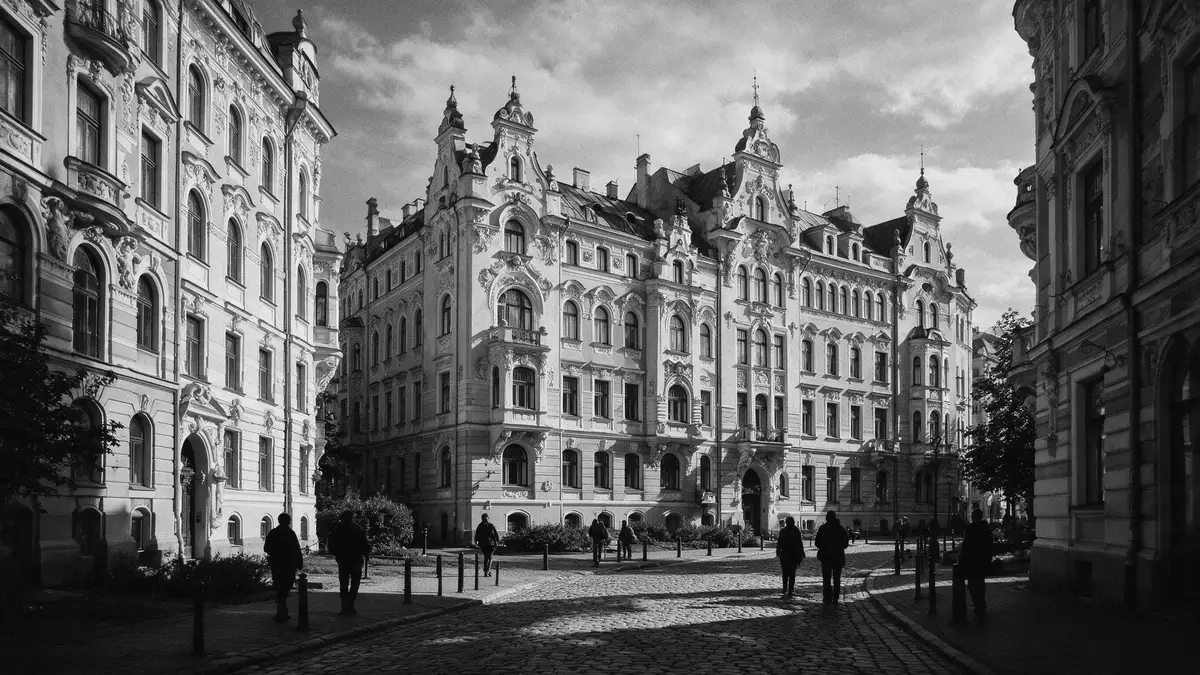
Art Nouveau district Riga’s ornate streets and facades
Published on 08/07/2026 at 15:09 | Editorial responsibility: Rafael Müller, Editor-in-Chief AD HOC NEWS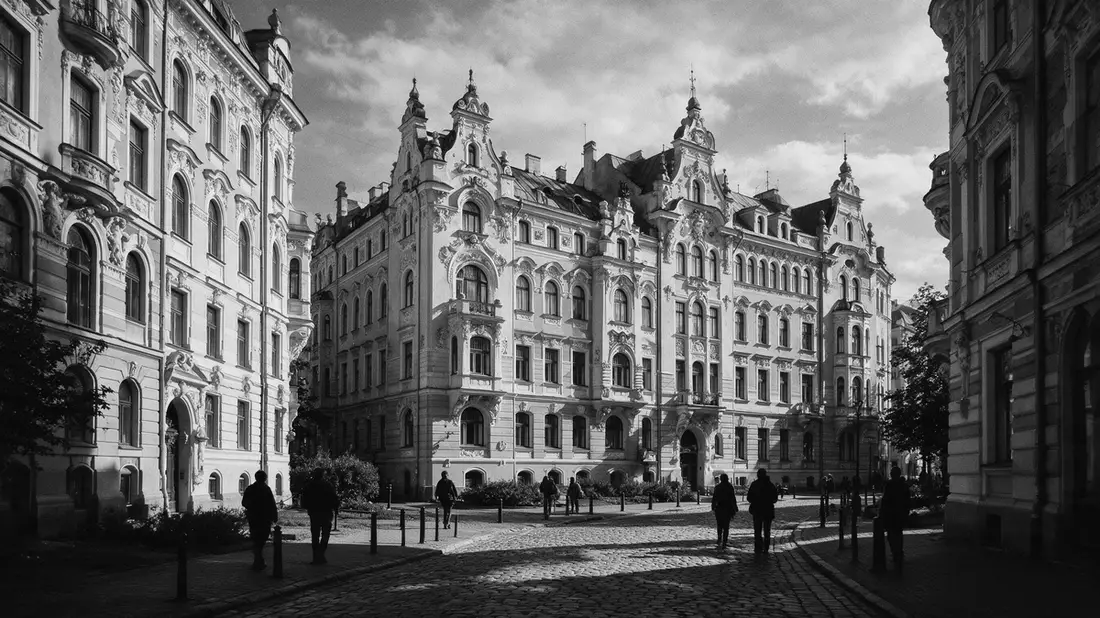
Art Nouveau district Riga is the part of the city where late nineteenth- and early twentieth-century apartment streets carry façades in stone, stucco and metal. The best-known streets are close to the centre, and the district is linked above all with the work of Mikhail Eisenstein and the broader Art Nouveau movement.
Stone façades and sculpted surfaces
The district is a street-level lesson in ornament. Bay windows, masks, reliefs, vegetal lines and vertical bands break up the façades, while many buildings keep the scale of ordinary city housing.
That mix matters. Riga’s Art Nouveau quarter is not one monument but a concentration of apartment houses, each with its own frontage, colour and decoration. The result is a district that reads best on foot, one façade after another.
Mikhail Eisenstein and Riga’s Art Nouveau streets
Mikhail Eisenstein left some of the most recognisable buildings in the district, including façades on Alberta iela and nearby streets. His work belongs to the early twentieth century and shows the period’s taste for dense surface detail and strong contrasts in ornament.
The wider Riga setting also matters. The city expanded quickly around 1900, and the district preserves the street culture of that moment: apartment houses, elegant entrances, courtyards and upper floors packed into compact urban blocks.
Between apartment life and architectural display
Many of the buildings were ordinary homes for city residents, but their street fronts carry a high level of finish. That tension between daily housing and architectural display gives the district its character.
Visitors meet it in the façades first, then in stair halls, doorway surrounds and ironwork where access is possible. The district is therefore both a neighbourhood and an open-air gallery of Riga’s Art Nouveau period.
Visiting Art Nouveau district Riga: what travellers from Western Europe should know
- The district lies in central Riga and is reached on foot, by tram or by taxi from the old town and the railway area.
- Admission arrangements and opening hours are set by the site's operator and change with the season; the official website is the only binding source.
- Late spring and early autumn suit street walking, when daylight is generous and exterior detail is easier to study.
- The district is level, but it rewards unhurried walking and attention to pavements, gateways and street crossings.
- Cafés, shops and ticket machines may work with card payment, though cash remains useful in the city.
- Entry requirements depend on your nationality. UK travellers should check the FCDO travel advice at gov.uk/foreign-travel-advice; Irish travellers the Department of Foreign Affairs at ireland.ie; EU and EEA citizens their own national foreign ministry.
Searching for Art Nouveau district Riga on social platforms
These links open searches for Art Nouveau district Riga on each platform.
Frequently asked questions about Art Nouveau district Riga
Where is Art Nouveau district Riga?
It is in central Riga, especially around Alberta iela and nearby streets in the city’s historic core. The district is part of an urban neighbourhood, not a single enclosed site.
What should I expect on a visit?
Expect a walking district of apartment façades, entrances and decorated upper storeys. It works best at street level, where the ornament can be read house by house.
What makes it distinctive?
The district brings together a dense group of Art Nouveau buildings from the early twentieth century, with Mikhail Eisenstein among the key names. Its streets show how decorative architecture shaped everyday housing in Riga.