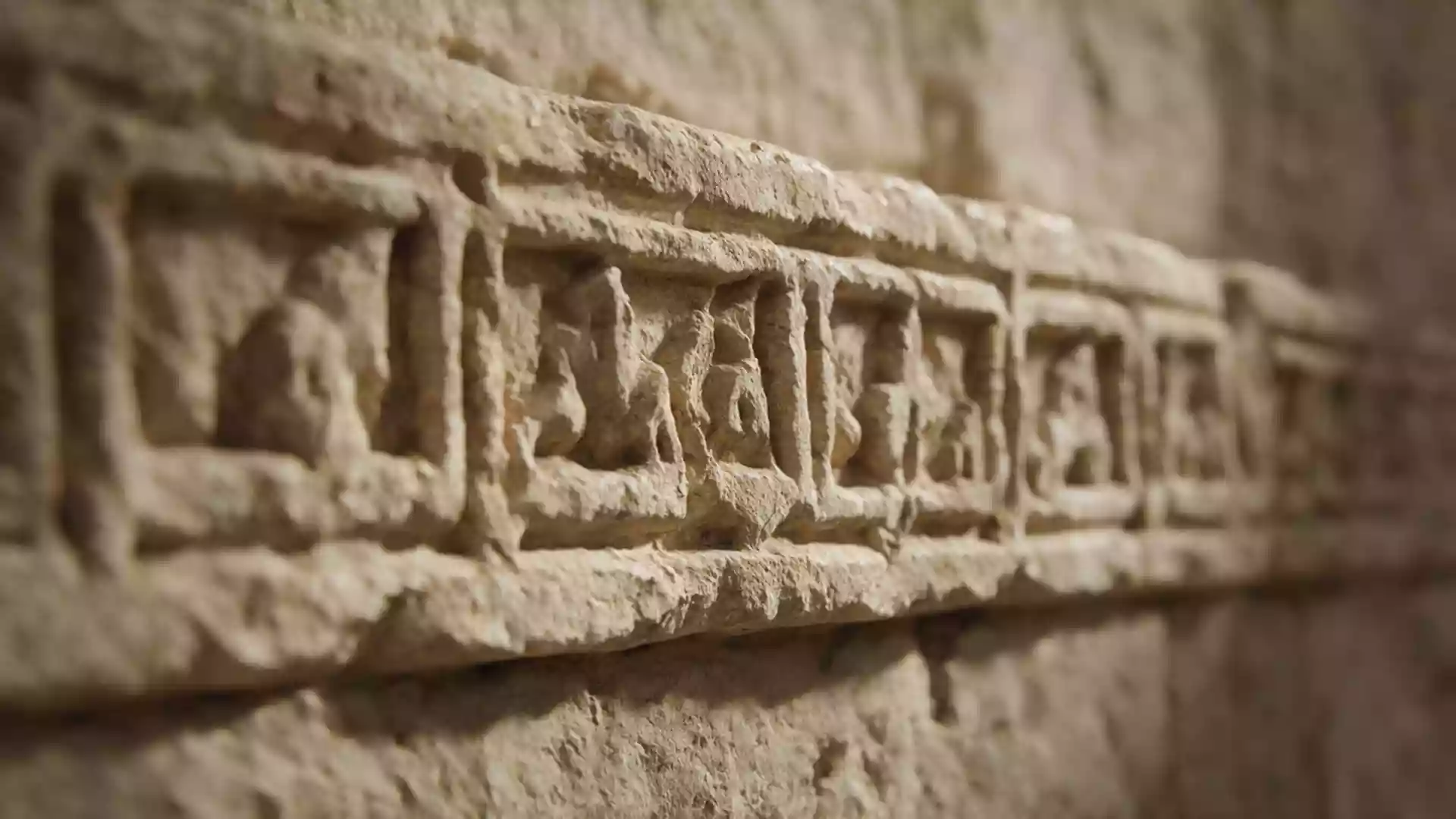
At-Turaif, the mudbrick citadel above Wadi Hanifah
Published on 09/02/2026 at 21:23 | Editorial responsibility: Rafael Müller, Editor-in-Chief AD HOC NEWS
At-Turaif in Diriyah is a historic mudbrick citadel rising above the Wadi Hanifah valley on the north-western edge of Riyadh, recognised as a UNESCO World Heritage Site and closely linked with the emergence of the First Saudi State in the Arabian Peninsula.UNESCO World Heritage Site
Mudbrick walls and Najdi urban fabric
At-Turaif is built largely from earthen mudbrick, forming thick walls that define palaces, houses and defensive structures along the edge of the oasis.traditional Najdi mudbrick The buildings are arranged as inward-facing compounds around courtyards, creating a compact urban quarter that steps down towards the greenery of Wadi Hanifah.
The district is widely described as an example of Najdi architecture from the centre of the Arabian Peninsula, with adobe construction used even in major palatial complexes such as Salwa Palace.crafted from mudbrick in the traditional Najdi style From the higher terraces the view takes in the oasis below, while within the lanes the mass of earth walls and closely spaced structures gives a sense of a fortified town pressed between desert and cultivated land.fortified urban ensemble
From fifteenth-century settlement to First Saudi State
At-Turaif traces its origins to a settlement founded in the fifteenth century in the heart of the Najd region of the Arabian Peninsula.founded in the 15th century Over the eighteenth and early nineteenth centuries it developed into the first capital of the Saudi Dynasty, serving as a political and religious centre linked with the First Saudi State between 1727 and 1818.first capital of the Saudi Dynasty
Salwa Palace, a large palatial complex within At-Turaif, is associated with the Al Saud ruling family and forms one of the core ensembles of the site.Salwa Palace, the original home of the Al Saud ruling dynasty Other named structures include Saad bin Saud Palace, Imam Mohammad bin Saud Mosque and residential quarters that together illustrate the organisation of power, worship and domestic life in an earthen capital of the Saudi kingdom.historic palaces and mosque
A living museum above the Diriyah oasis
At-Turaif has been the focus of conservation and interpretation work intended to present the earthen city as a living museum, with archaeological ruins, restored facades and walkways set among the mudbrick fabric.Atturaif Living Museum Across the district visitors encounter layers of construction, from massive palace walls to more modest compounds, all shaped from local earth and organised into a network of alleys and courtyards.
The site stands above the Wadi Hanifah flood plain and the Diriyah oasis, so movement through At-Turaif often alternates between views over palm groves and enclosed passages between mudbrick elevations.overlooks Wadi Hanifah and the Diriyah oasis Interpretive installations and galleries have been integrated into parts of the historic urban fabric, distinguishing new structures from conserved remains while keeping the overall impression of an earthen capital shaped along the edge of an oasis.
Visiting At-Turaif: what travellers from Western Europe should know
- At-Turaif lies in Diriyah, north-west of Riyadh in Saudi Arabia, above the Wadi Hanifah valley; it is typically reached from Riyadh by road along routes signposted to Diriyah.
- Within the historic district, movement involves walking on uneven earthen surfaces and stone paths, with stairways linking different levels between the citadel and the oasis edge.
- The surrounding landscape includes the cultivated Diriyah oasis and the course of Wadi Hanifah, so parts of the approach pass close to palm groves and other planted areas.
- The official language is Arabic and the currency is the Saudi riyal.
- Entry requirements depend on your nationality; UK travellers can check the FCDO travel advice at gov.uk/foreign-travel-advice, Irish travellers the Department of Foreign Affairs at ireland.ie.
Searching for At-Turaif on social platforms
These links open searches for At-Turaif on each platform.
Frequently asked questions about At-Turaif
Where is At-Turaif and what kind of place is it?
At-Turaif is a historic earthen district in Diriyah, north-west of Riyadh in Saudi Arabia, forming a mudbrick citadel above the Wadi Hanifah valley.
What can visitors expect when walking through At-Turaif?
Visitors move through lanes, courtyards and palace complexes built of mudbrick, encountering restored and conserved structures that show the scale and organisation of an earthen capital at the edge of an oasis.
What makes At-Turaif distinctive among historical sites?
Its role as the first capital of the Saudi Dynasty, its fifteenth-century origins and its Najdi mudbrick architecture overlooking Wadi Hanifah combine to give At-Turaif a distinctive character within Arabian heritage.