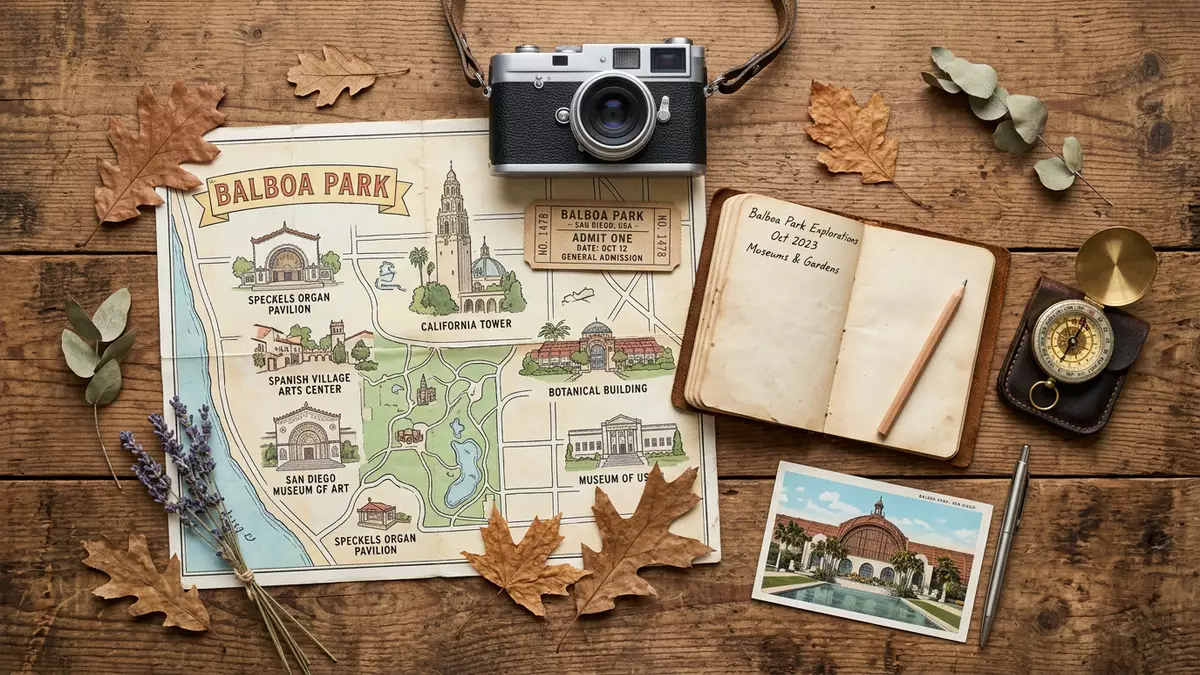
Balboa Park’s Spanish Revival heart of San Diego
Published on 08/12/2026 at 14:25 | Editorial responsibility: Rafael Müller, Editor-in-Chief AD HOC NEWS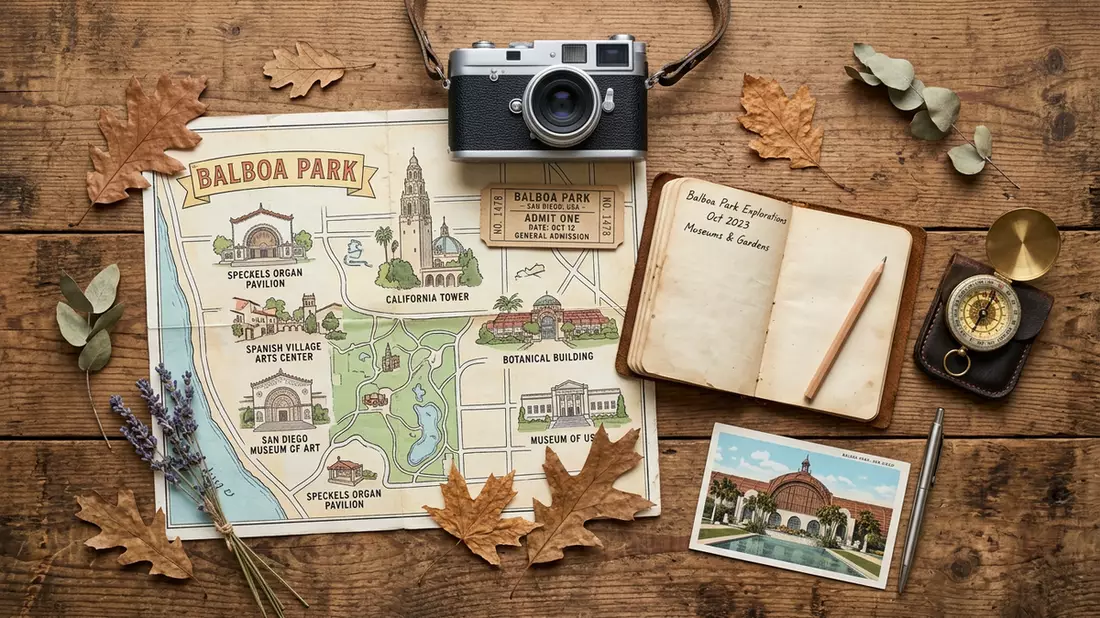
Balboa Park in San Diego is a historic urban park where Spanish Colonial Revival architecture lines garden avenues and cultural institutions sit among canyons and lawns. Its present form grew out of a nineteenth-century city park reserve and the grand expositions of the early twentieth century, giving the landscape a layered character that is rare in a municipal green space.
From City Park to cultural landmark
The land that became Balboa Park was reserved for public use in the nineteenth century, when San Diego’s civic leaders set aside a broad mesa above the developing town for a city park.City Park was the early name for this expanse of scrub and arroyos, which lay inland from San Diego Bay. In 1910 the park was renamed to honour Vasco Núñez de Balboa, the Spanish explorer associated with the first recorded European sighting of the Pacific Ocean from the American mainland.The naming came ahead of a planned exposition celebrating the opening of the Panama Canal.
The Panama–California Exposition opened in Balboa Park in 1915 and ran into 1917, turning the once-simple reserve into an elaborate fairground of permanent and temporary structures.The exposition marked the canal’s completion and promoted San Diego as a Pacific port. Architect Bertram Goodhue, working with Carleton Winslow, laid out an axial plan across the central mesa, lining a main east–west boulevard with ornate pavilions in the then-novel Spanish Colonial Revival style.Their scheme established the park’s architectural character, which later expositions and restorations retained and elaborated.
Spanish Colonial Revival along El Prado
The heart of Balboa Park’s built landscape runs along El Prado, the principal promenade that crosses the central mesa from west to east.The El Prado Complex is recognised as a historic district, with a concentration of exhibition halls, arcades and towers set among courtyards. Many of these structures date from the 1915 exposition and were later refurbished for the California Pacific International Exposition in 1935–1936, when architect Richard Requa added new buildings and garden courts that extended Goodhue’s vision.That later fair introduced the Palisades area, with architecture referencing Pueblo and pre-Columbian forms alongside more streamlined modern facades.
Along and near El Prado, former exposition pavilions now house museums devoted to art, natural history, photography, science and regional heritage.Institutions include the San Diego Museum of Art, the Museum of Us and several others, all arranged within stucco facades enlivened by sculptural ornament and tower silhouettes. The ensemble received national recognition in 1977 when Balboa Park and its exposition-era buildings were designated a National Historic Landmark and listed as a National Historic Landmark District, underlining its role as a cultural landscape rather than a simple city park.The designation reflects the importance of both the architecture and the planning.
Gardens, canyons and the zoo
Beyond the plasterwork facades, Balboa Park unfolds as a series of gardens and natural pockets cut by canyons. The park’s horticultural displays range from formal European-inspired layouts such as Alcazar Garden to themed plant collections including a cactus garden, a rose garden and the Japanese Friendship Garden, each occupying its own terrace or slope.Named gardens are spread across the mesa and its edges, linked by paths, bridges and stairways that negotiate the undulating topography.
One of the park’s signature structures is the Botanical Building, a large lath house originally constructed for the 1915 exposition and aligned with a reflective lily pond.The building uses narrow wooden slats to filter light for thousands of plants, and stands beside lawns that frame views back towards El Prado. On another part of the mesa, Balboa Park contains the San Diego Zoo, which occupies a large tract at the park’s northern edge and has become one of its best-known tenants.The zoo dates from the early twentieth century, adding an animal collection to a landscape already rich in gardens and exhibition halls.
Visiting Balboa Park: what travellers from Western Europe should know
- Balboa Park occupies a broad mesa immediately north-east of downtown San Diego, with main entrances from Park Boulevard and Sixth Avenue and signposted access by car, bus and tram.
- The central areas around El Prado are largely level promenades, but many routes drop into or climb out of canyons, using stairways, ramps and footbridges that can feel long on foot.
- The San Diego Zoo and several gardens are set on slopes, where paths can be steep in places and some viewpoints involve walking on exposed, uneven ground.
- The official language is English and the currency is the United States dollar.
- Entry requirements depend on your nationality; UK travellers can check the FCDO travel advice at gov.uk/foreign-travel-advice, Irish travellers the Department of Foreign Affairs at ireland.ie.
Searching for Balboa Park on social platforms
These links open searches for Balboa Park on each platform.
Frequently asked questions about Balboa Park
Where is Balboa Park in relation to central San Diego?
Balboa Park lies immediately inland from San Diego Bay, on a mesa bordering downtown to the north and east, reached by city streets and public transport.
What should visitors expect during a day in Balboa Park?
Visitors encounter historic exhibition buildings adapted as museums, extensive formal and thematic gardens, the San Diego Zoo and open lawns and canyons for quieter walks.
What makes Balboa Park distinctive among urban parks?
Balboa Park combines Spanish Colonial Revival architecture from early twentieth-century expositions, a concentration of cultural institutions and a varied topography of mesas and canyons within one city park.