
Banaue Rice Terraces and the living Ifugao landscape
Published on 09/24/2026 at 10:39 | Editorial responsibility: Rafael Müller, Editor-in-Chief AD HOC NEWS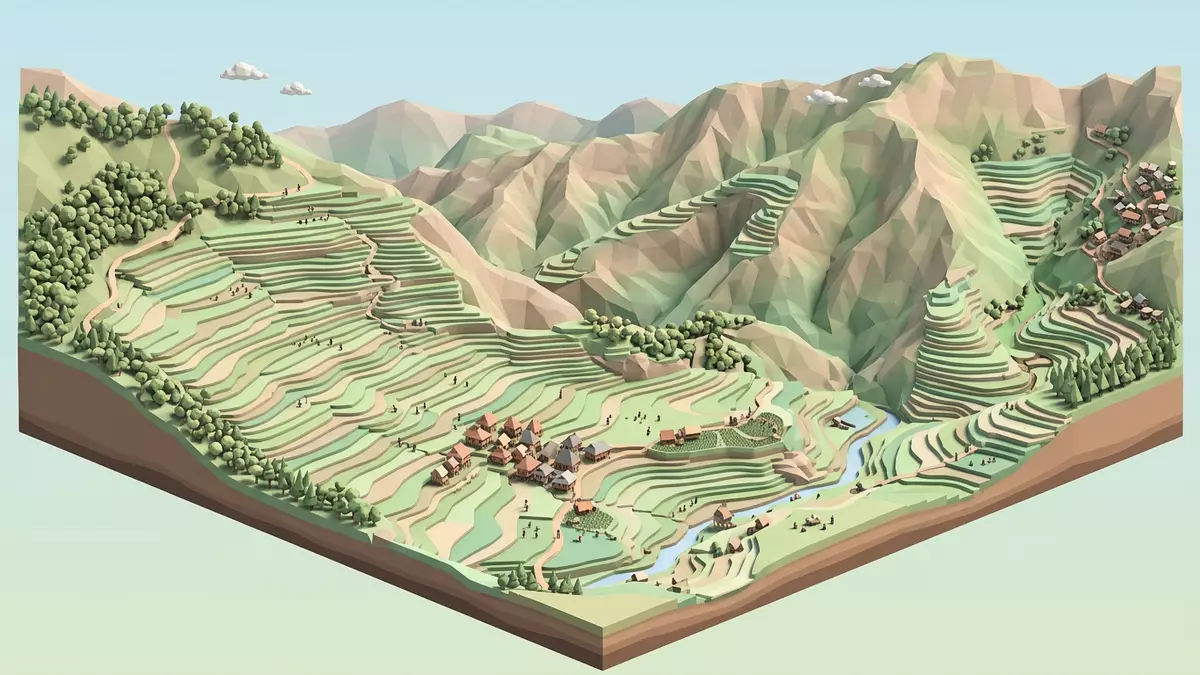
Banaue Rice Terraces spread across the mountain landscape of Banaue in Ifugao Province, northern Luzon. Stone-and-mud retaining walls divide steep slopes into fields where rice cultivation remains part of Ifugao cultural life.
Banaue Rice Terraces: fields shaped into mountain slopes
The terraces are not a single wall or viewpoint, but a broad landscape of stepped paddies, irrigation channels, villages and forested ridges. Their surfaces follow the contours of the mountains, creating horizontal bands across slopes that would otherwise appear as uninterrupted hillsides.
Water moves through channels between the fields, while the retaining walls hold the wet soil of each terrace. The construction combines earth, stone and careful maintenance. Houses and granaries form part of the wider cultural landscape, alongside the cultivated plots.
The Ifugao people and a landscape measured in generations
The terraces were created by the Ifugao people, an Indigenous community of the Philippine Cordilleras. The agricultural landscape is traditionally dated to roughly two millennia ago, although exact dating differs between terrace areas and studies.
Rice cultivation is connected with Ifugao houses, granaries, rituals and knowledge of mountain water. Work on the fields follows agricultural cycles, while the condition of walls and channels depends on skills passed between generations. The terraces therefore represent both an agricultural system and a cultural landscape.
The wider Ifugao terrace system covers parts of northern Luzon. In Banaue, the Bangaan and Batad clusters belong to the UNESCO-listed Rice Terraces of the Philippine Cordilleras, inscribed in 1995.
Batad, Bangaan and the wider Cordillera setting
Batad is associated with terraces arranged around a mountain basin, with a village located within the cultivated landscape. Bangaan forms another terrace cluster in Banaue and includes a traditional Ifugao village setting.
The UNESCO property includes five terrace clusters across the Philippine Cordilleras: Batad, Bangaan, Hungduan, Mayoyao Central and Nagacadan. The designation concerns the wider cultural landscape, while Banaue remains the principal town associated with the terraces.
The terraces are protected in the Philippines as part of the Ifugao Rice Terraces, which carry National Cultural Treasure status. The Ifugao Rice Terraces record places the site in Banaue, Ifugao, within the Cordillera Administrative Region.
Visiting Banaue Rice Terraces: what travellers from Western Europe should know
- Banaue lies in Ifugao Province on northern Luzon. Road travel from Manila reaches the mountain town through the Cordillera interior.
- Viewing points around Banaue show broad terrace landscapes, while Batad involves a mountain approach and walking between village paths and cultivated slopes.
- The terrain includes steep hillsides, uneven paths, stone retaining walls and agricultural fields. Footwear suited to rough ground is relevant for routes beyond town.
- The official language is Filipino and the currency is the Philippine peso.
- Entry requirements depend on your nationality; UK travellers can check the FCDO travel advice at gov.uk/foreign-travel-advice, Irish travellers the Department of Foreign Affairs at ireland.ie.
Searching for Banaue Rice Terraces on social platforms
These links open searches for Banaue Rice Terraces on each platform.Frequently asked questions about Banaue Rice Terraces
Where are Banaue Rice Terraces?
Banaue Rice Terraces are in Banaue, Ifugao Province, on the island of Luzon in the Philippines. The landscape lies within the mountain region of the Philippine Cordilleras.
What can visitors expect to see?
Visitors encounter stepped rice fields, retaining walls, irrigation channels, villages and mountain paths. Batad and Bangaan provide named terrace clusters associated with Banaue.
What makes the terraces distinctive?
The terraces combine agricultural engineering with Ifugao cultural traditions. Their fields, water systems, homes and rituals form a living cultural landscape associated with a history reaching back roughly two millennia.


