Banff National Park’s lakes, peaks and icefields
Published on 08/08/2026 at 15:08 | Editorial responsibility: Rafael Müller, Editor-in-Chief AD HOC NEWS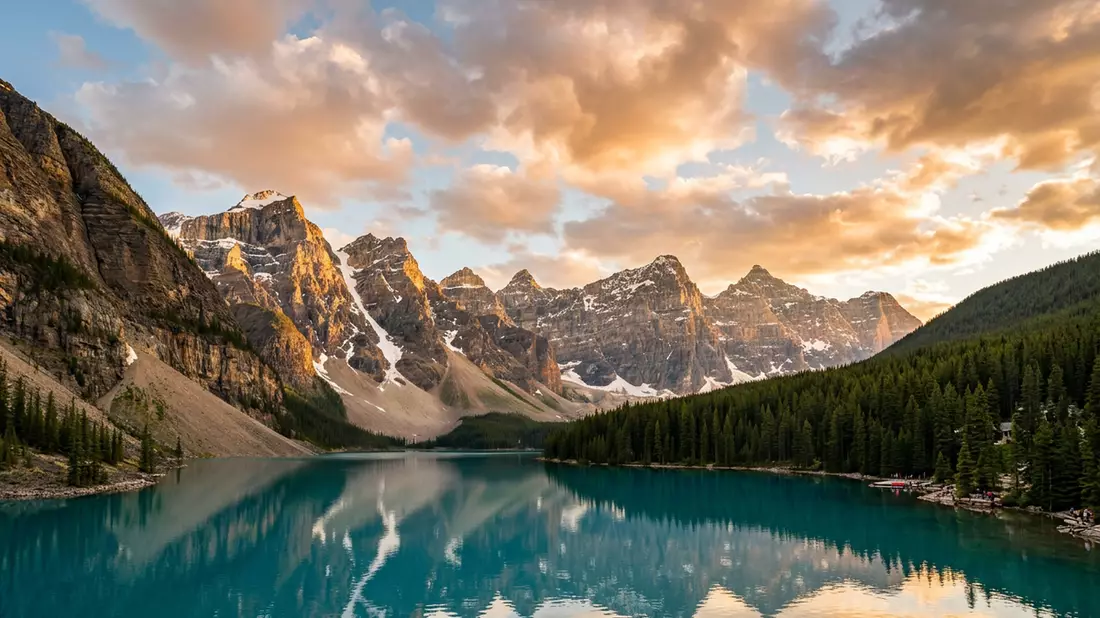
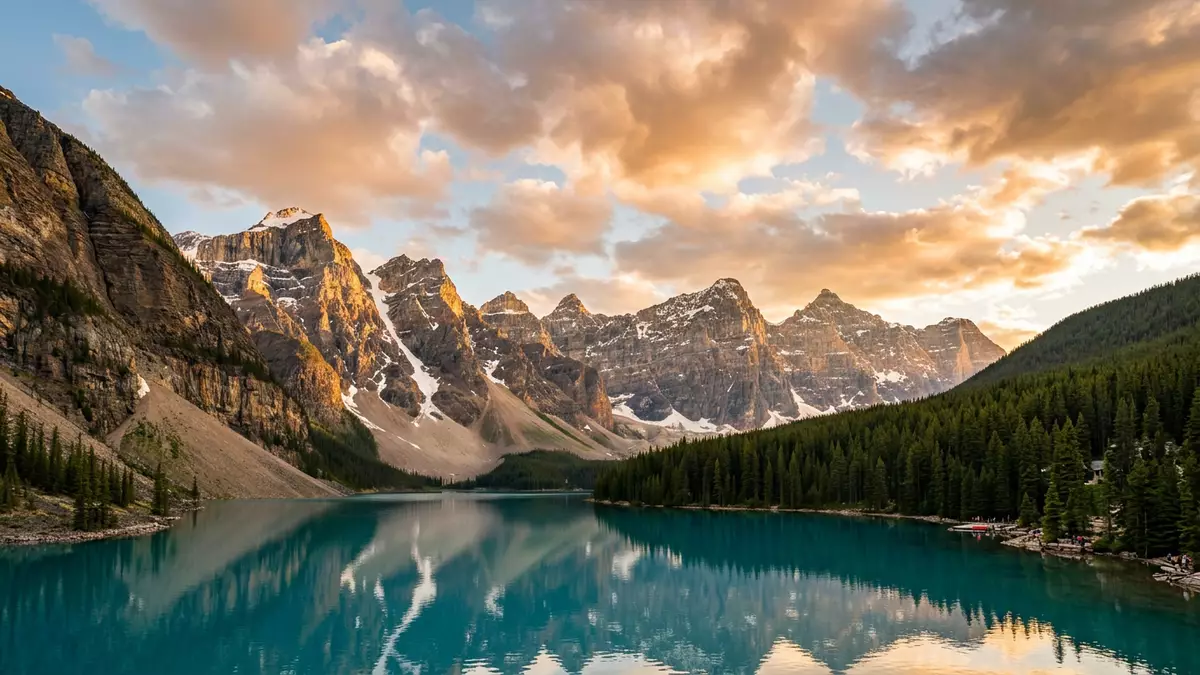
Banff National Park in Alberta, Canada, centres on the mountain town of Banff and the Canadian Rockies around it. Established in 1885, it is Canada’s oldest national park and part of the Canadian Rocky Mountain Parks UNESCO World Heritage Site. Its identity rests on a striking mix of glacier-fed lakes, limestone peaks, forests and long mountain valleys.
Glacier water and limestone ridges
The park’s landscape is shaped by the Rocky Mountains and the ice that carved them. Lake Louise and Moraine Lake are the best-known water scenes, but many smaller lakes and rivers share the same clear, mineral colour. Above them rise ridges, cirques and broad slopes of limestone and shale.
The park also contains the Columbia Icefield and large areas of alpine and subalpine terrain. In summer, snow may linger on the higher ground while lower valleys carry dense forest and wet meadows. The contrast between open water, rock and ice gives the park much of its visual character.
Banff townsite and the mountain setting
The town of Banff sits inside the park and gives it a human centre, with the Bow River, mountain backdrops and nearby trails all close together. Banff Avenue, the hot springs area and the surrounding hotels create a compact base for exploring the park. The setting makes the town feel inseparable from the national park itself.
Elsewhere, roads lead to viewpoints, trailheads and lakes rather than to urban districts. The park works as a linked chain of places: a townsite, a lakeshore, a pass, an icefield and long stretches of protected mountain land. That variety is part of its appeal for walkers, drivers and skiers.
History, protection and mountain travel
Banff began as a protected area after hot springs were discovered in the 1880s, and the park expanded from that origin into a major conservation landscape. Its history includes the arrival of rail travel, the development of mountain tourism and long-running protection of wildlife and scenery. The park is closely associated with the early national park system in Canada.
Today, Banff National Park remains a place where geology and access meet. Roads, trails, ski areas and lakeside paths open different parts of the landscape, but the mountains remain the dominant feature. For many visitors, the park’s most lasting impression is the scale of the terrain around the town of Banff.
Visiting Banff National Park: what travellers from Western Europe should know
- The park is reached from Calgary by road, and Banff is the main town inside it.
- Admission and opening hours are set by the site's operator and change with the season; the official website is the only binding source.
- Late spring, summer and early autumn bring the fullest access to lakes, passes and hiking routes.
- Higher areas involve altitude, uneven ground and long walks, and some trails cross exposed mountain terrain.
- English is used widely, and card payment is accepted in many places, though cash can still be useful.
- Entry requirements depend on your nationality. UK travellers should check the FCDO travel advice at gov.uk/foreign-travel-advice; Irish travellers the Department of Foreign Affairs at ireland.ie; EU and EEA citizens their own national foreign ministry.
Searching for Banff National Park on social platforms
These links open searches for Banff National Park on each platform.
Frequently asked questions about Banff National Park
Where is Banff National Park?
It is in Alberta, in western Canada, around the town of Banff and the surrounding Rocky Mountains. Calgary is the main gateway city for road access.
What should visitors expect?
Expect mountain scenery, lakes, forests and a strong contrast between compact town facilities and large protected terrain. Travel in the park often means road journeys, trail walks and elevation gain.
What makes it distinctive?
Its combination of Canada’s oldest national park status, the town of Banff, glacier-fed water and major Rocky Mountain landscapes gives it a clear identity. The park is both a conservation area and a major mountain destination.