
Basilica de Nuestra Senora del Pilar and its many domes
Published on 09/23/2026 at 19:49 | Editorial responsibility: Rafael Müller, Editor-in-Chief AD HOC NEWS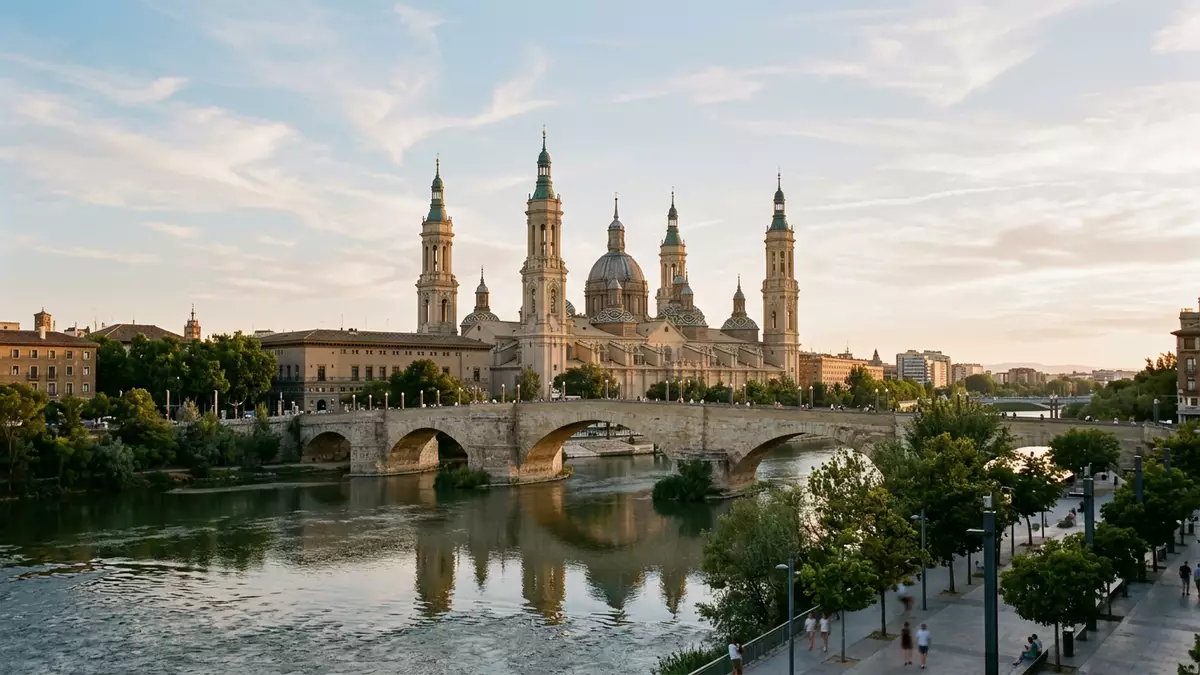
Basilica de Nuestra Senora del Pilar rises beside the Ebro in Zaragoza as a long Baroque church crowned by domes and towers. Its interior brings together a Marian chapel, an alabaster altarpiece, historic choir stalls and frescoes by Francisco de Goya.
Domes, towers and a Baroque silhouette
The basilica occupies Plaza del Pilar beside the river. Its brick and stone exterior presents a broad horizontal form, with domes and towers defining the skyline. The building belongs to a long architectural sequence spanning the seventeenth to the twentieth century.
Construction of the present temple began in 1681. Felipe Sánchez initiated the project, while Francisco de Herrera the Younger revised its design. The Baroque basilica took its mature form through the work of Ventura Rodríguez, who redesigned the interior and the Holy Chapel.
The central dome and the first tower were completed in 1872. Further towers were added in 1907 and 1961, giving the building the group of vertical landmarks visible from Zaragoza’s riverfront and surrounding streets.
A sanctuary layered with earlier Zaragoza
The present basilica replaced earlier churches associated with the site. A Romanesque building followed the Christian conquest of Zaragoza, and a Gothic-Mudejar church was completed in 1515. A fire in 1434 damaged the Romanesque church; a stone tympanum from that period remains incorporated into the southern wall.
The Gothic-Mudejar church contained the alabaster altarpiece that remains a central work inside the basilica. Damián Forment carved it between 1509 and 1518 from alabaster from the Gelsa quarries. The alabaster altarpiece presents scenes connected with the life of Christ and the Virgin.
The tradition of the Pilar centres on a marble column associated with an apparition of the Virgin Mary to the apostle James. The column remains within the Santa Capilla, the small Baroque chapel at the centre of the basilica’s devotional life.
The Santa Capilla, Goya and the interior collection
Ventura Rodríguez completed the Santa Capilla between 1750 and 1765. Jaspers, marbles and bronzes surround the image of the Virgin, which stands in a silver-clad setting against green marble. The chapel’s dome carries paintings connected with the same Marian story.
The main interior has three naves of equal height, with pilasters, niches, garlands, palms and angels across the walls. The choir stalls depict episodes from the lives of Christ and the Virgin, while a Mannerist grille separates the choir from the central nave.
Francisco de Goya painted Regina Martyrum for the basilica. Another work by Goya appears in the Coreto, the gallery associated with the choir. These paintings place an eighteenth-century artistic voice inside a church whose fabric combines Baroque planning with older surviving elements.
The basilica also preserves a large collection of mantles for the Virgin. The oldest named mantle dates from 1762 and was made by Capuchin nuns in Zaragoza. The collection adds textile history to the building’s architecture, sculpture and painting.
Visiting Basilica de Nuestra Senora del Pilar: what travellers from Western Europe should know
- The basilica stands at Plaza del Pilar beside the Ebro in Zaragoza. City buses and Zaragoza’s public transport network serve the central area.
- The interior contains steps, chapels, choir barriers and closely arranged artworks. The Santa Capilla occupies the central devotional space beneath its painted dome.
- The official language is Spanish and the currency is the euro.
Searching for Basilica de Nuestra Senora del Pilar on social platforms
These links open searches for Basilica de Nuestra Senora del Pilar on each platform.Frequently asked questions about Basilica de Nuestra Senora del Pilar
Where is Basilica de Nuestra Senora del Pilar?
It stands at Plaza del Pilar in Zaragoza, beside the Ebro. The square forms part of the city’s central historic area.
What can visitors expect inside?
The interior contains the Santa Capilla, the alabaster main altarpiece, historic choir stalls and paintings by Francisco de Goya.
What makes the basilica distinctive?
Its broad Baroque form combines multiple domes and towers with a chapel surrounding the Marian column. Earlier Romanesque and Gothic-Mudejar elements remain connected with the present building.


