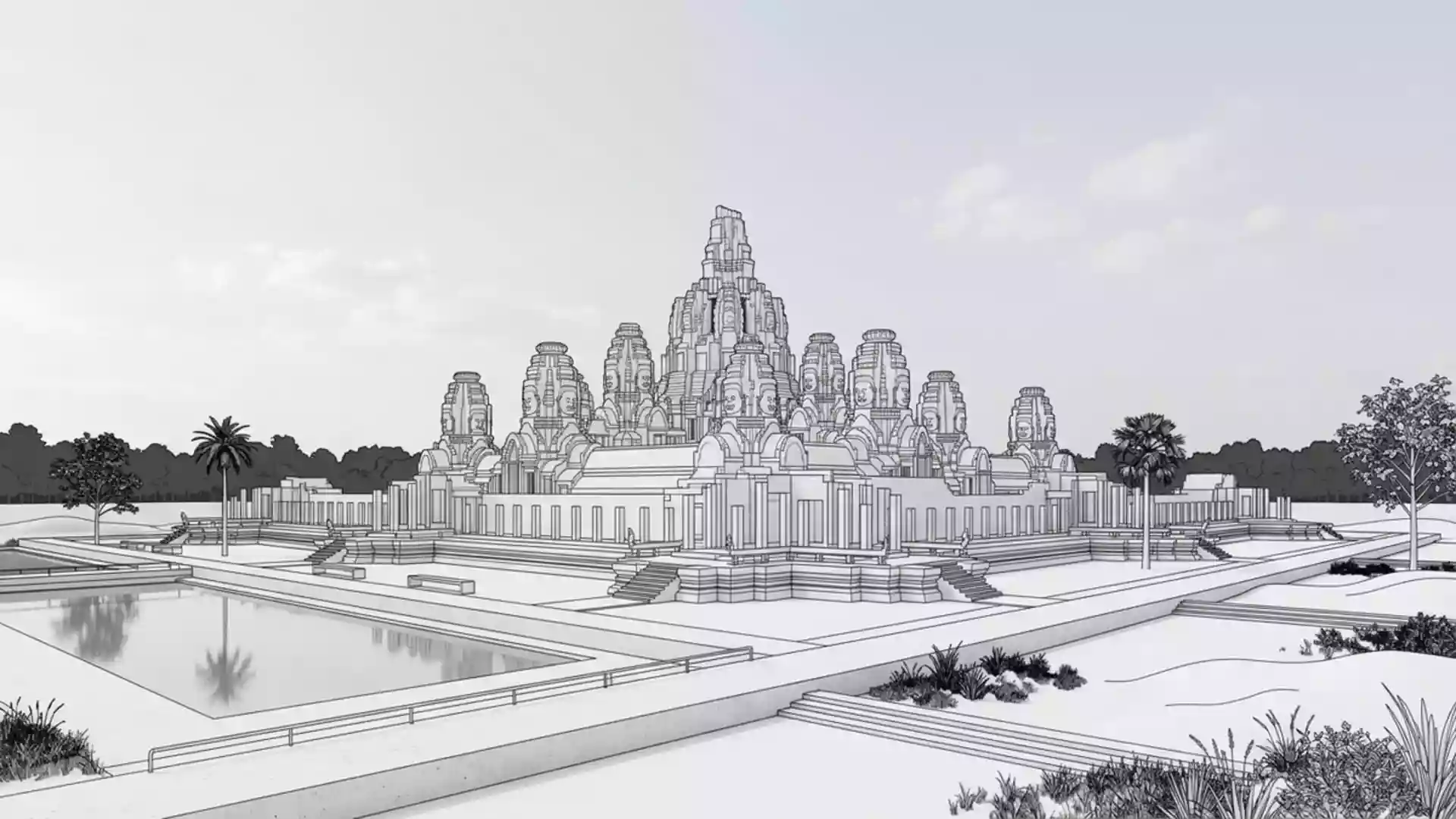
Bayon and its stone faces at the heart of Angkor Thom
Published on 09/14/2026 at 17:37 | Editorial responsibility: Rafael Müller, Editor-in-Chief AD HOC NEWS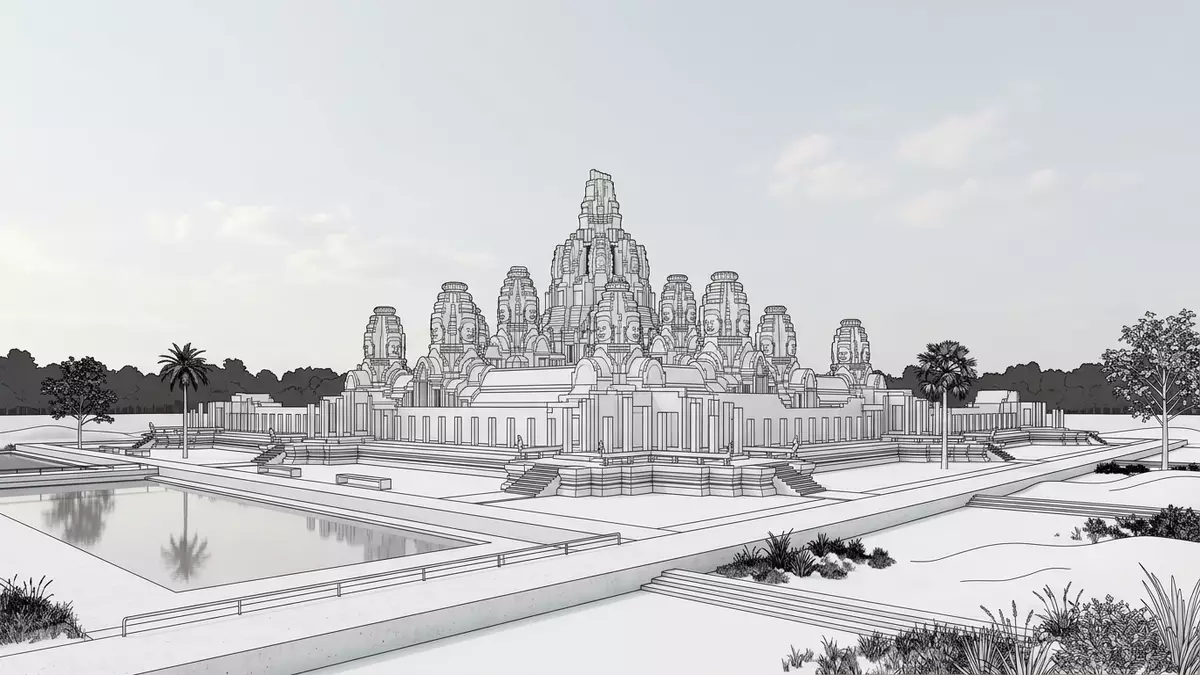
In the forested interior of Angkor Thom near Siem Reap, Bayon concentrates stone, space and symbolism into a compact temple crowned with serene human faces on its towers. Built in the late twelfth to early thirteenth century under King Jayavarman VII as a Buddhist state temple of the Khmer Empire, it anchors the royal city both geographically and spiritually and rewards a visit that looks closely at its carvings and layered terraces.
Bayon at the centre of Angkor Thom
Bayon stands at the exact centre of Angkor Thom, the walled royal city north of Angkor Wat in Cambodia’s Angkor Archaeological Park. The temple forms the focal point of the “Small Circuit” of Angkor-era sites and is enclosed by the avenues and gateways of Angkor Thom, rather than by its own separate moat and walls.centre of Angkor Thom The city’s north–south and east–west axes intersect at Bayon, so approaching from any gate of Angkor Thom eventually brings travellers to its outer galleries.
The temple’s historical role is equally central. Bayon was the state temple of King Jayavarman VII and served as the key Buddhist sanctuary of his late Angkor capital.state temple of Jayavarman VII Constructed in the late twelfth century and completed into the early thirteenth century, it reflects the moment when Theravada and Mahayana Buddhist iconography became dominant in Khmer royal architecture.late twelfth to early thirteenth century Its position inside Angkor Thom means that a visit to Bayon inevitably passes under monumental stone gateways and along causeways lined with figures from Khmer mythology.
Towers of faces and layered terraces
Bayon is best known for its towers bearing enormous human faces, carved directly into the stone so that sculpture and structure are one. Roughly several dozen towers rise above the upper terraces, and many carry four faces aligned with the cardinal directions, creating a dense cluster of gazes that seem to look out across the temple and city.towers with giant faces These faces have broad cheeks, a wide nose and a faint smile often referred to as the “Bayon smile”, topped by tiered crowns associated with Buddhist imagery.Bayon smile on crowned faces
The temple itself is a multi-level sandstone pyramid with surrounding galleries. Lower levels carry long bas-relief panels, while upper terraces lift visitors into the realm of the face towers and subsidiary shrines. The pyramid form alludes to Mount Meru from Hindu and Buddhist cosmology, with Bayon’s stacked platforms rising toward a central sanctuary.mountain temple representing Mount Meru Moving from the outer galleries through inner corridors and stairways, the temple’s spaces narrow and rise until travellers stand on the upper terrace surrounded by towers and stone faces at close range.
Carved stories in stone
Below the famous faces, Bayon’s outer and inner galleries carry extensive bas-reliefs that record episodes from both royal campaigns and everyday Khmer life. Panels show battles, processions and maritime scenes, alongside markets, games and domestic activities, giving a detailed view of the late Angkor period carved into stone walls.bas-reliefs of mythological and daily scenes These carvings run in long horizontal bands, so following a single gallery can become a continuous narrative walk around the temple.
The religious imagery at Bayon reflects its Buddhist identity under Jayavarman VII. The temple was dedicated to Buddha and incorporates figures associated with the bodhisattva Avalokiteshvara, known in Khmer sources as Lokeshvara, whose compassionate presence was closely linked with the king.Buddhist state temple The combination of colossal faces, smaller standing Buddha images and narrative reliefs means that visitors encounter both monumental iconography and finely worked detail in a single compact monument.
Visiting Bayon: what travellers from Western Europe should know
- Bayon stands in the dead centre of Angkor Thom within the Angkor Archaeological Park near Siem Reap; it is reached along the park’s roads and causeways that connect Angkor Wat with the walled city gates.
- The temple interior is built on several levels linked by stone stairways and corridors; visiting involves walking through uneven galleries and climbing flights of steps to reach the upper terrace and tower faces.
- The site lies in Cambodia, where the official language is Khmer and the currency is the Cambodian riel.
- Entry requirements depend on your nationality; UK travellers can check the FCDO travel advice at gov.uk/foreign-travel-advice, Irish travellers the Department of Foreign Affairs at ireland.ie.
Searching for Bayon on social platforms
These links open searches for Bayon on each platform.Frequently asked questions about Bayon
Where is Bayon and what is its setting?
Bayon stands in Cambodia inside the Angkor Archaeological Park, at the centre of Angkor Thom near Siem Reap, surrounded by the avenues and gates of the walled city.
What can travellers expect when visiting Bayon?
Travellers encounter layered stone galleries, extensive bas-reliefs and upper terraces filled with towers whose large carved faces look out toward the four cardinal directions.
What makes Bayon distinctive among Angkor temples?
The combination of its central position in Angkor Thom, its role as Jayavarman VII’s Buddhist state temple and its concentration of colossal tower faces gives Bayon a character that differs from the larger but less densely carved Angkor Wat.