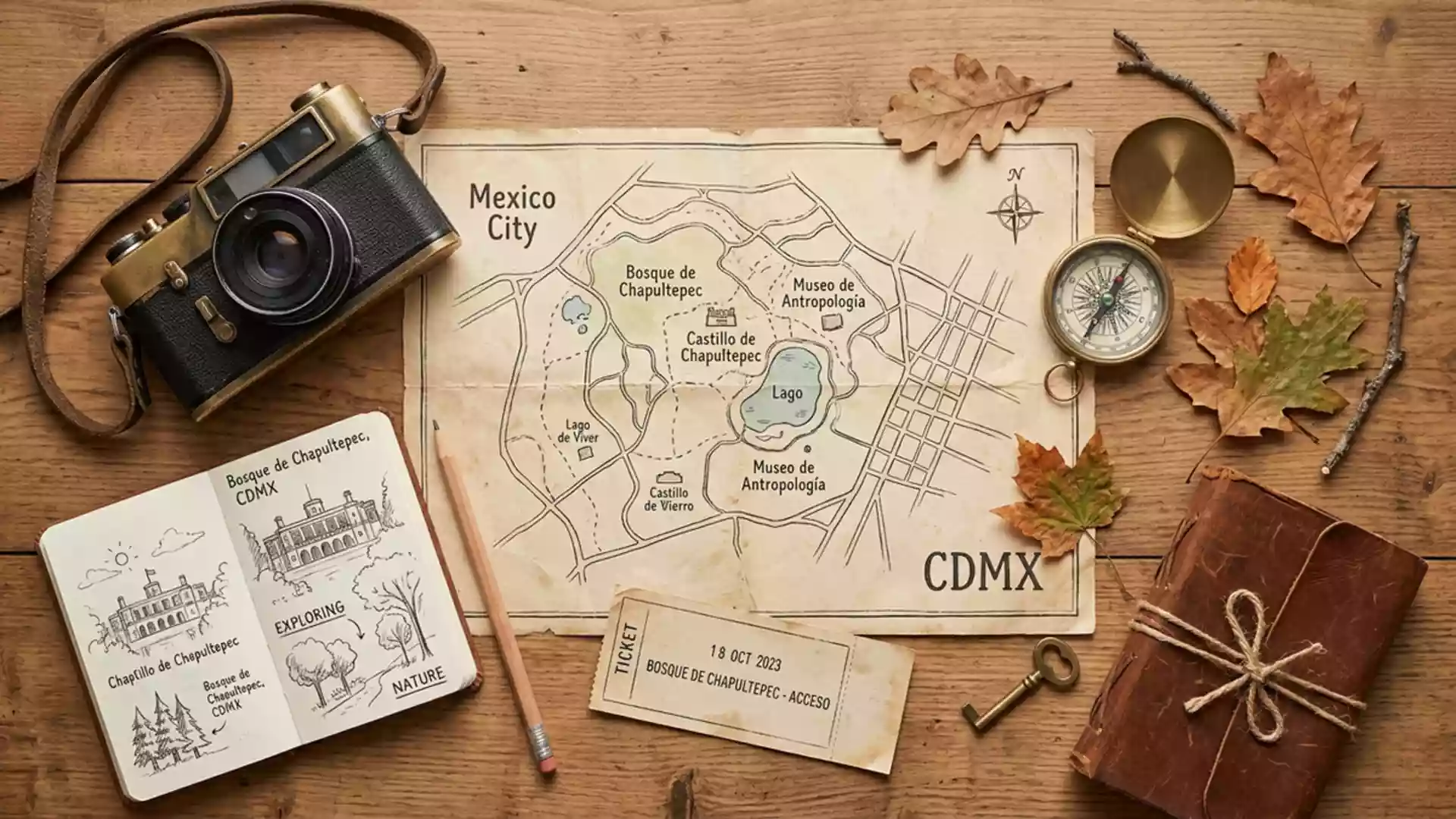
Bosque de Chapultepec, a green and historic landscape in Mexiko-Stadt
Published on 09/01/2026 at 19:36 | Editorial responsibility: Rafael Müller, Editor-in-Chief AD HOC NEWS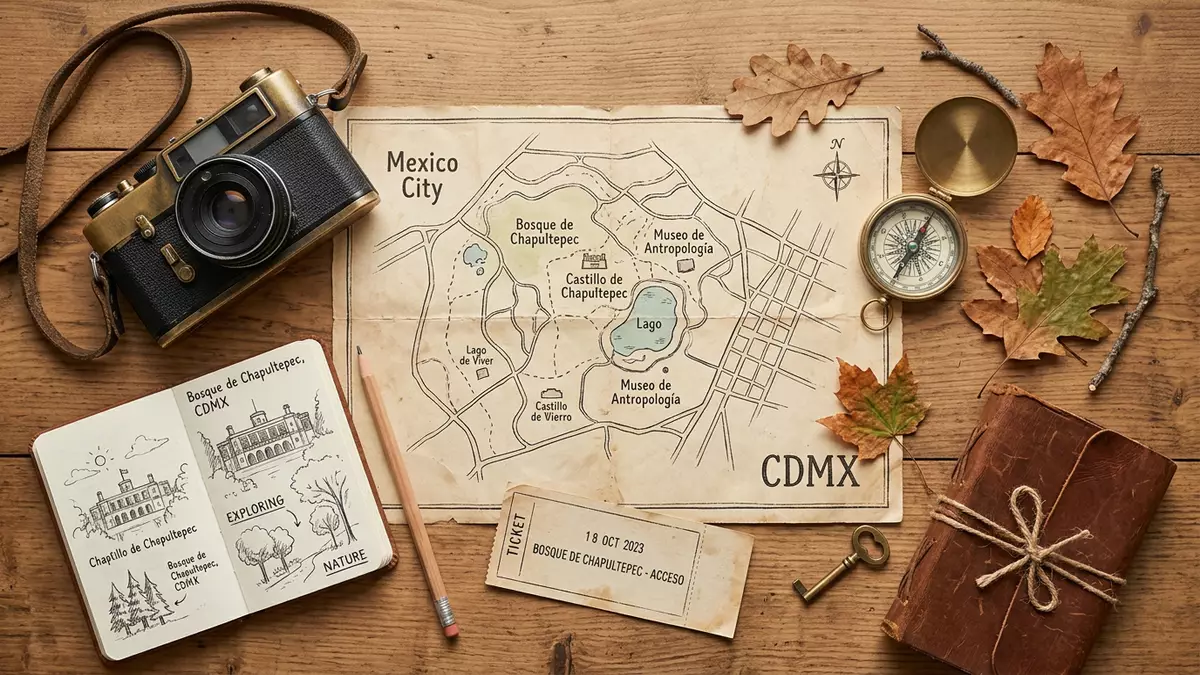
For Mexiko-Stadt, Bosque de Chapultepec is both a vast urban forest and a historical landscape shaped over many centuries, where woodland, water and cultural institutions share the same ground. Centered on Chapultepec Hill and long associated with Aztec rulers and modern presidents, it links pre-Hispanic gardens, colonial interventions and twentieth-century museums in one continuous parkland.
From imperial retreat to urban forest
Bosque de Chapultepec occupies a large swathe of the city in the Miguel Hidalgo borough, with its terrain organised around Chapultepec Hill, a rocky elevation that once stood near the shore of Lake Texcoco.Chapultepec Hill has long been a strategic and symbolic site, rising above the surrounding plain and offering views across what became the Mexican capital. The Nahuatl name “Chapultepec” refers to “grasshopper hill”, a term that survives in the park’s identity and in the castle crowning the slope.
During the fifteenth century, the forested area around Chapultepec was integrated into the Aztec imperial landscape as a reserved garden and water source associated with rulers such as Moctezuma.a garden and aqueduct Springs in the area supplied potable water to Tenochtitlan via hydraulic works, tying the woodland directly to the functioning of the island capital. The green space remained closely linked to political power through later periods, as colonial and nineteenth-century authorities kept much of it as a controlled landscape before opening it more widely to residents.
Sections, scale and environmental status
Chapultepec is formally recognised as an Área de Valor Ambiental, a category for urban forests protecting environmental resources in Mexiko-Stadt.Área de Valor Ambiental Official figures describe an area of around 866 hectares (approximately 2,140 acres), placing Bosque de Chapultepec among the largest city parks in Latin America.686.01 hectares declared Within this expanse the park is divided into multiple sections, with the first section the oldest and most visited, while later sections extend the woodland westward with additional recreational and conservation areas.
The first section concentrates historic features and water bodies, including artificial lakes laid out as part of early twentieth-century redesigns.redesigned and opened in 1910 Later in the twentieth century, more ground was incorporated to form second and third sections, with an emphasis on preserving green space in a growing metropolis.divided in four sections The mix of dense tree cover, open lawns and water surfaces provides habitat for birds and urban wildlife and gives Mexiko-Stadt what city officials describe as an important “lung”.
Chapultepec Castle and museums in the forest
Rising above the treetops, Chapultepec Castle occupies the crest of Chapultepec Hill and anchors the historic axis of the first section. A fortified residence in some form stood here from the sixteenth century, and the current castle became a presidential residence in the nineteenth century before being converted into a museum of history in the 1930s under President Lázaro Cárdenas.Chapultepec Castle as history museum Visitors reach the castle via a ramp and pathways climbing the hill, passing monuments and shaded viewpoints on the way.
Across and around the first section, Bosque de Chapultepec hosts several major museums that have become reference points for Mexican culture. On the northern side of the park stands the National Museum of Anthropology, inaugurated in the 1960s, with galleries devoted to pre-Hispanic civilisations and ethnographic collections.National Museum of Anthropology Nearby are institutions such as the Museum of Modern Art and other cultural centres, interspersed with gardens and sculpture, so that museum visits are framed by woodland and open air rather than dense streets.
Water, trails and everyday park life
Within the first section’s artificial lakes, rental boats and pathways underline the park’s role as a recreational landscape built into the city fabric.artificial lake in the first section Tree-lined avenues link plazas, playgrounds and food stalls, while quieter side paths lead into thicker woodland. The second and third sections open into more extensive wooded areas and sports facilities, where long trails run parallel to main roads yet remain partially screened by vegetation.
A zoo established in the 1920s sits within the park and has expanded over time alongside botanical gardens and children’s museums.zoo established in 1924 Together with the lakes and meadows, these elements make Bosque de Chapultepec a place where residential neighbourhoods, major avenues such as Paseo de la Reforma and institutional buildings are interwoven with natural features.
Visiting Bosque de Chapultepec: what travellers from Western Europe should know
- Bosque de Chapultepec lies west of Mexiko-Stadt’s historic centre in the Miguel Hidalgo borough and is bordered by arterial roads including Paseo de la Reforma and Avenida Constituyentes.
- The terrain combines paved avenues, long walking paths and slopes up Chapultepec Hill, with some routes involving a sustained climb to reach Chapultepec Castle.
- The official language is Spanish and the currency is the Mexican peso.
- Entry requirements depend on your nationality; UK travellers can check the FCDO travel advice at gov.uk/foreign-travel-advice, Irish travellers the Department of Foreign Affairs at ireland.ie.
Searching for Bosque de Chapultepec on social platforms
These links open searches for Bosque de Chapultepec on each platform.
Frequently asked questions about Bosque de Chapultepec
Where is Bosque de Chapultepec in Mexiko-Stadt?
Bosque de Chapultepec extends across the Miguel Hidalgo borough to the west of Mexiko-Stadt’s historic centre, framed by major avenues such as Paseo de la Reforma.
What can visitors expect on a first visit?
Visitors encounter extensive woodland, lakes, long walking routes and major institutions including Chapultepec Castle, museums and a zoo within an urban forest setting.
What makes Bosque de Chapultepec distinctive among city parks?
The combination of pre-Hispanic origins, its role in Mexican political history and its scale as an urban forest with major national museums gives Chapultepec a layered character.