Bosque de Chapultepec, Mexico City’s vast forest of history and art
Published on 08/20/2026 at 15:42 | Editorial responsibility: Rafael Müller, Editor-in-Chief AD HOC NEWS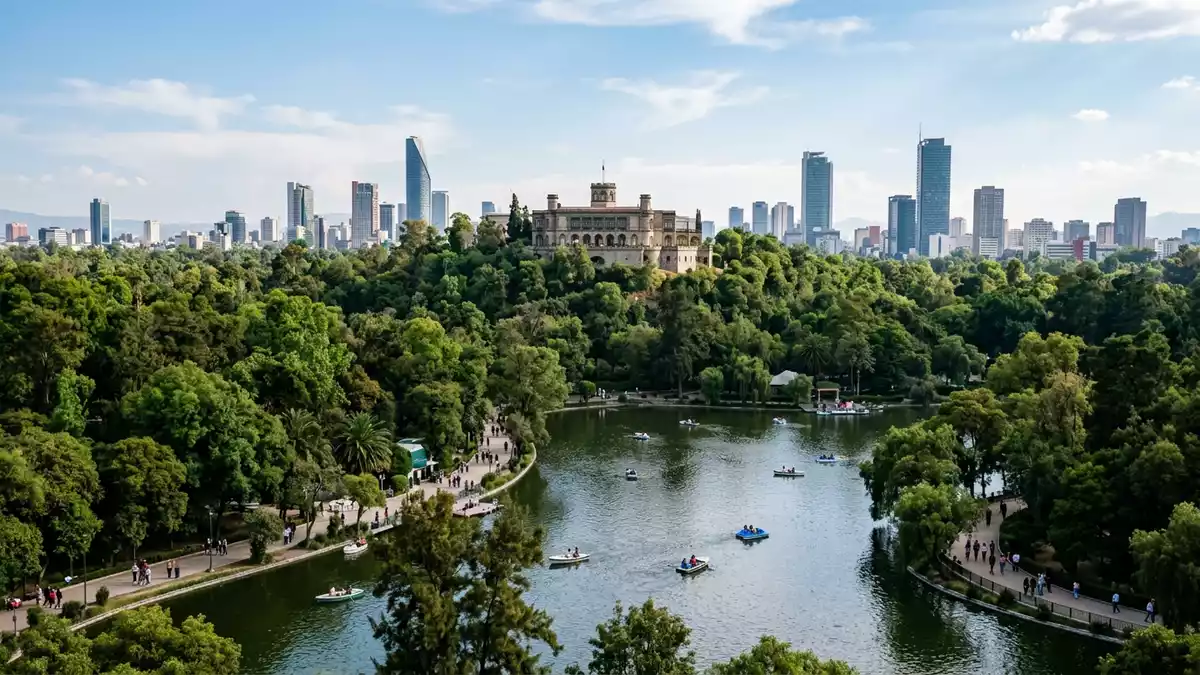
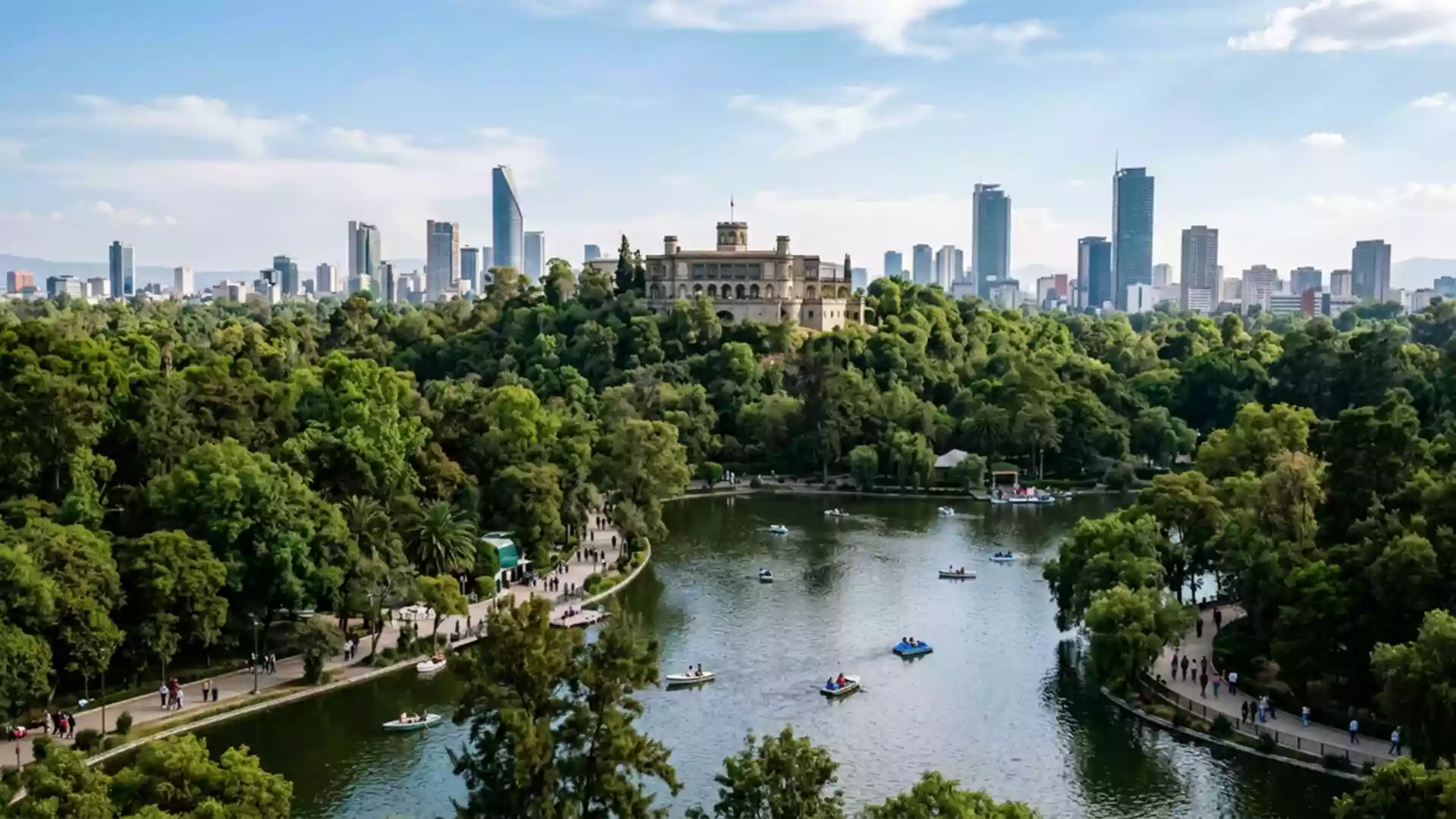
Bosque de Chapultepec in Mexiko-Stadt is a vast urban forest where pre-Hispanic sacred ground, colonial and republican power and contemporary culture occupy the same wooded hill and lakeshore. Its name comes from the Nahuatl “Chapoltep?c”, usually translated as “grasshopper hill”, a reminder that this is both a landscape and a historic site rather than a conventional city park.
A forested hill with three millennia of history
The core of Bosque de Chapultepec is Chapultepec Hill, a prominent rocky outcrop that rises above what was once the basin of Lake Texcoco, surrounded today by dense city streets. Archaeological evidence shows that people lived along the nearby lakeshore as far back as 3,000 years ago, making the hill part of one of the oldest settled landscapes in the Valley of Mexico.three thousand years For the Mexica, or Aztecs, Chapultepec was a sacred place connected to springs that supplied fresh water to their island capital, Mexico-Tenochtitlan, and it appears repeatedly in the stories of their migration and rise to power.springs that supplied fresh water
Mesoamerican rulers marked their presence on the hill and in the surrounding forest. Sources describe how Mexica emperors, including Moctezuma II, planted ahuehuete trees, traced garden boundaries and created baths and early zoological collections in this landscape.Moctezuma II planted trees An aqueduct carried water from Chapultepec towards the heart of the Mexica capital, and remains of pre-Hispanic hydraulic works are still part of the wider site. Later, in 1530, Emperor Charles V issued a royal decree making the forest the property of Mexico City, and during the nineteenth century the park took on its modern form under President Porfirio Díaz, with formal avenues, monuments and lakes laid out in the expanding capital.royal decree in 1530
Chapultepec Castle and the museums in the trees
High above the paths and lakes stands Chapultepec Castle, built in the late eighteenth century and later adapted as a military academy, imperial residence and presidential home.Chapultepec Castle built in the 1780s The castle now houses the National Museum of History, where galleries, terraces and courtyards look back over episodes from the colonial period, independence struggles and twentieth-century political change. From its balconies the tree canopy of the forest stretches away, with the skyline of Mexiko-Stadt framing the view.
Down on the flatter ground, the park is renowned for its concentration of museums and cultural centres. These range from the National Museum of Anthropology, with its monumental stone courtyard and collections from Mexico’s many Indigenous cultures, to the Museum of Modern Art and the Tamayo Museum, which focus on twentieth-century and contemporary art.museums and cultural centres Further spaces include the Museum of Natural History and environmental centres that look at the valley’s ecosystems and urban environment.several museums within the park Many of these institutions occupy modernist or mid-twentieth-century buildings set among mature trees, so that exhibition halls, sculpture gardens and open squares alternate with more informal woodland and lawns.
Lakes, sections and everyday green space
Bosque de Chapultepec is one of the largest urban parks in the Americas, extending across several hundred hectares in the boroughs of Miguel Hidalgo and Álvaro Obregón.one of the largest city parks in Mexico The park is divided into four main sections, with the First Section as the oldest area, containing the hill, castle, several lakes and the most visited museums.divided into four sections Curving avenues radiate away from the base of the hill, shaded by rows of ahuehuetes and other mature trees whose trunks and roots underline the age of the planting.
The lakes, bridges and islands give the central areas a strongly aquatic character reminiscent of the old lake basin. Pedestrian walkways cross the water, while open plazas provide space for monuments, fountains and public art. Other parts of the park include a zoological park, sports facilities and long, tree-lined paths that run alongside major roads such as Paseo de la Reforma, creating an extended green edge to the western side of Mexiko-Stadt’s central districts.official information on the forest
Visiting Bosque de Chapultepec: what travellers from Western Europe should know
- Bosque de Chapultepec lies west of the historic centre of Mexiko-Stadt, bordered by avenues including Paseo de la Reforma and Constituyentes, and is reached easily by the city’s Metro and bus networks.
- The terrain varies from gentle lakeside paths to the steeper ascent of Chapultepec Hill, where access to the castle involves a sustained uphill walk on paved ramps.
- The park’s four sections occupy high-altitude ground in the Valley of Mexico, and visitors cover significant distances on foot when moving between the lakes, museums and castle.
- The official language is Spanish and the currency is the Mexican peso. Entry requirements depend on your nationality; UK travellers can check the FCDO travel advice at gov.uk/foreign-travel-advice, Irish travellers the Department of Foreign Affairs at ireland.ie.
Searching for Bosque de Chapultepec on social platforms
These links open searches for Bosque de Chapultepec on each platform.
Frequently asked questions about Bosque de Chapultepec
Where is Bosque de Chapultepec?
Bosque de Chapultepec lies on the western side of Mexiko-Stadt, in the boroughs of Miguel Hidalgo and Álvaro Obregón, beside avenues such as Paseo de la Reforma.
What can visitors expect on a visit?
Visitors find wooded hills, lakes, Chapultepec Castle, major museums, sports facilities and long tree-lined paths that create an extensive green landscape within the Mexican capital.
What makes Bosque de Chapultepec distinctive?
The park combines ancient sacred ground, Porfirian-era avenues and a dense cluster of national museums within one of the largest urban forests in the Americas.