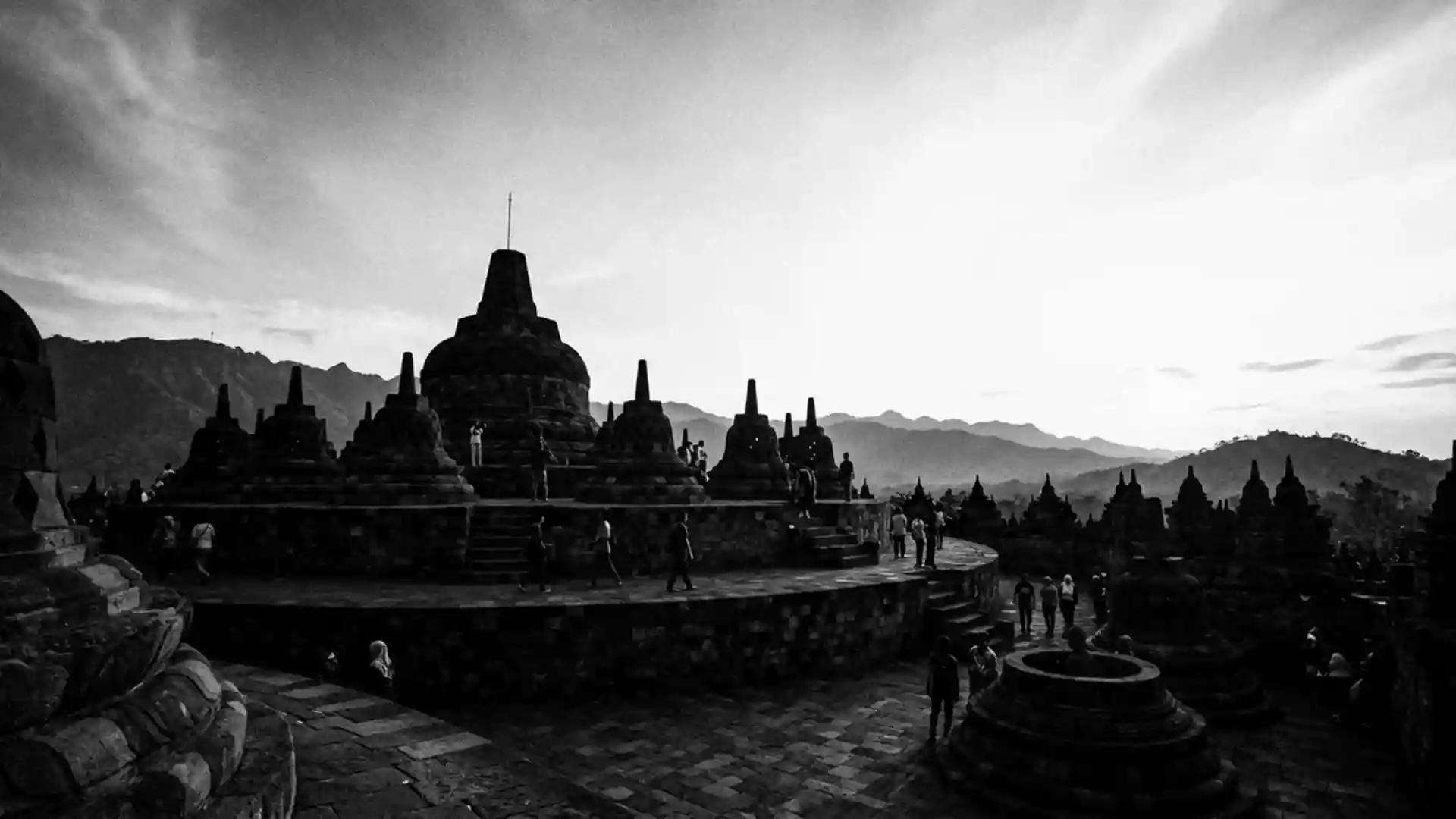
Candi Borobudur and its stepped stone terraces
Published on 08/08/2026 at 15:10 | Editorial responsibility: Rafael Müller, Editor-in-Chief AD HOC NEWS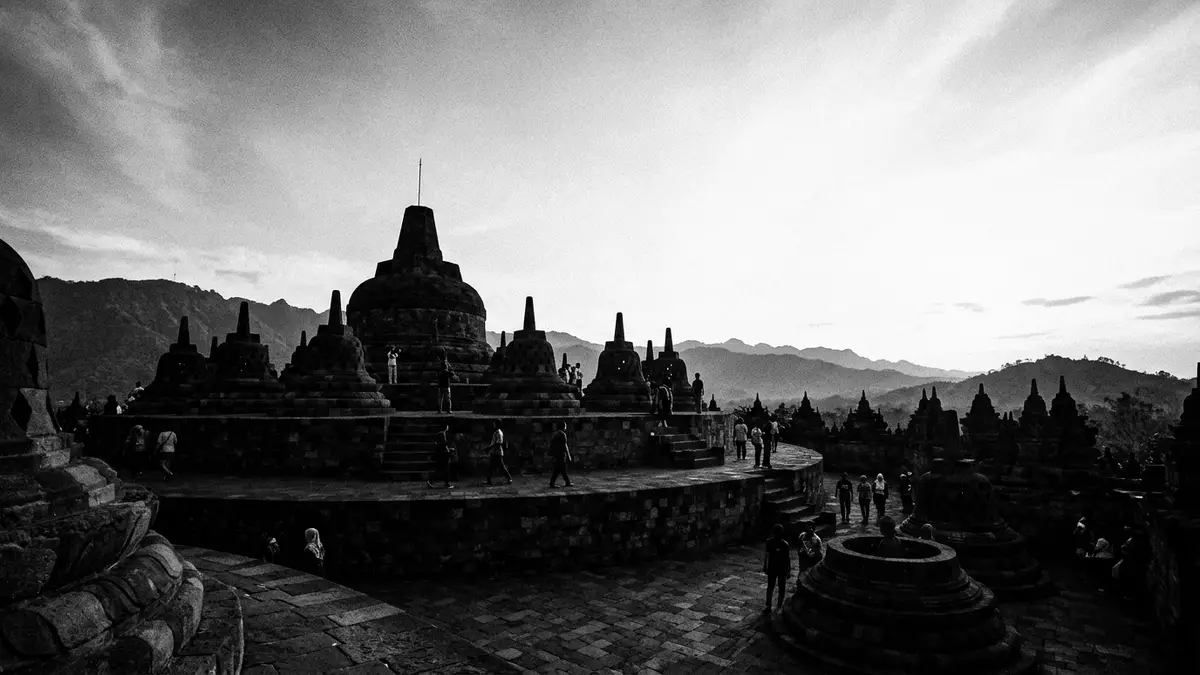
Candi Borobudur rises from the Kedu Plain near Magelang as a vast volcanic-stone monument from the Sailendra period. Its stepped terraces, relief bands and Buddha figures make the structure legible from the ground and from the upper walkways.
Stone terraces on a mountain plain
The monument is built of dark stone blocks and arranged as a layered pyramid with a square base and circular upper terraces. The overall form is unmistakable: a broad, heavy mass that becomes progressively more open towards the top.
That transition is carried by galleries lined with carved reliefs and niches containing seated Buddhas. The monument reads as both architecture and sculpted surface, with every terrace adding another ring of detail.
Reliefs, stupas and Buddhist imagery
The upper levels hold perforated stupas and a large central stupa at the summit. The reliefs below show narrative scenes, while the circular terraces above shift the emphasis towards repeated forms and open space.
Buddhist cosmology is embedded in the plan, from the square lower sections to the circular upper levels. The result is a sequence of solid walls, carved corridors and open terraces that visitors can trace with the eye as well as by foot.
From Sailendra patronage to world heritage status
Candi Borobudur is associated with the Sailendra dynasty and the late eighth and ninth centuries. Its masonry, iconography and scale place it among the major monuments of Buddhist Java.
The site later became a heritage landmark of international standing and is widely recognised for its dense relief programme and preserved stone fabric. The monument’s presence in central Java connects courtly history, pilgrimage and landscape in one compact setting.
Visiting Candi Borobudur: what travellers from Western Europe should know
- The site is in Magelang, in Central Java, and is reached from Yogyakarta or Semarang by road.
- Admission arrangements and opening hours are set by the site's operator and change with the season; the official website is the only binding source.
- Late morning and early afternoon bring strong light on the stone surfaces, while the cooler parts of the day are more comfortable for walking the terraces.
- The monument has steps, uneven stone and long terrace circuits, so comfortable shoes are sensible.
- Local payment practices vary, and some smaller purchases may need cash rather than card.
- Entry requirements depend on your nationality. UK travellers should check the FCDO travel advice at gov.uk/foreign-travel-advice; Irish travellers the Department of Foreign Affairs at ireland.ie; EU and EEA citizens their own national foreign ministry.
Searching for Candi Borobudur on social platforms
These links open searches for Candi Borobudur on each platform.
Frequently asked questions about Candi Borobudur
Where is Candi Borobudur?
It stands near Magelang in Central Java, on the volcanic plain between the island’s interior and its northern routes.
What should a visit feel like?
Expect a sequence of terraces, stairs and carved corridors, with the upper platforms opening onto broader views of the monument’s geometry.
What makes it distinctive?
The combination of narrative reliefs, seated Buddhas and circular stupas gives the monument a strong visual rhythm across its lower and upper levels.