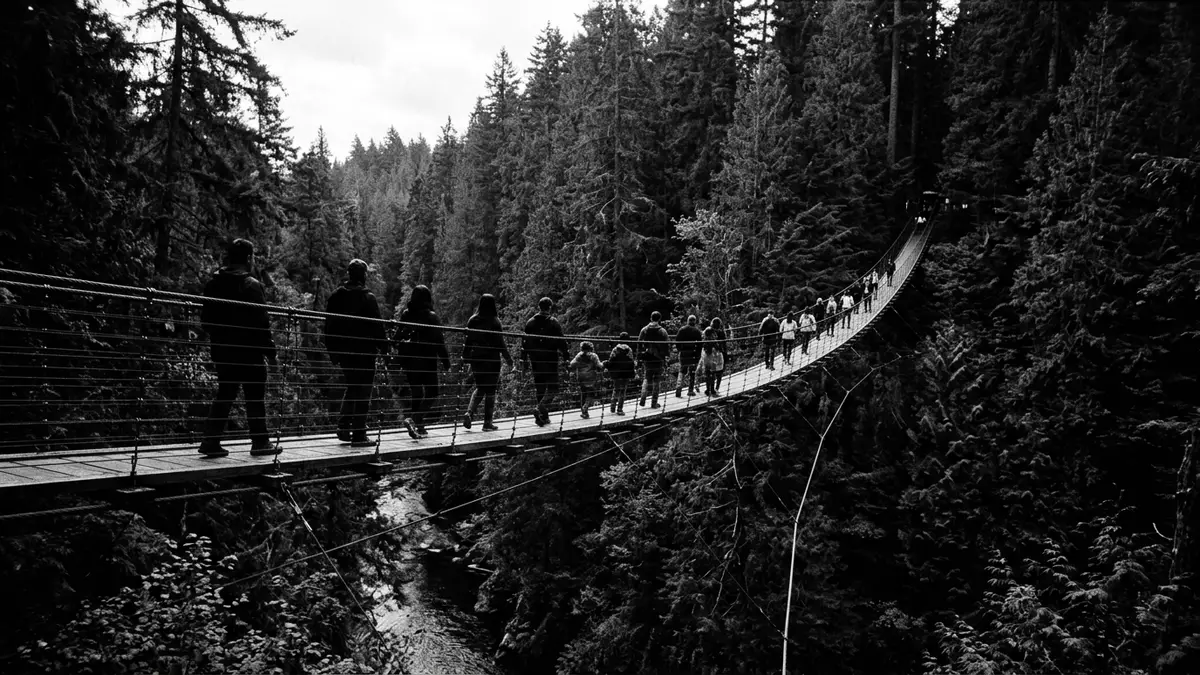
Capilano Suspension Bridge spans the gorge in North Vancouver
Published on 08/08/2026 at 15:00 | Editorial responsibility: Rafael Müller, Editor-in-Chief AD HOC NEWS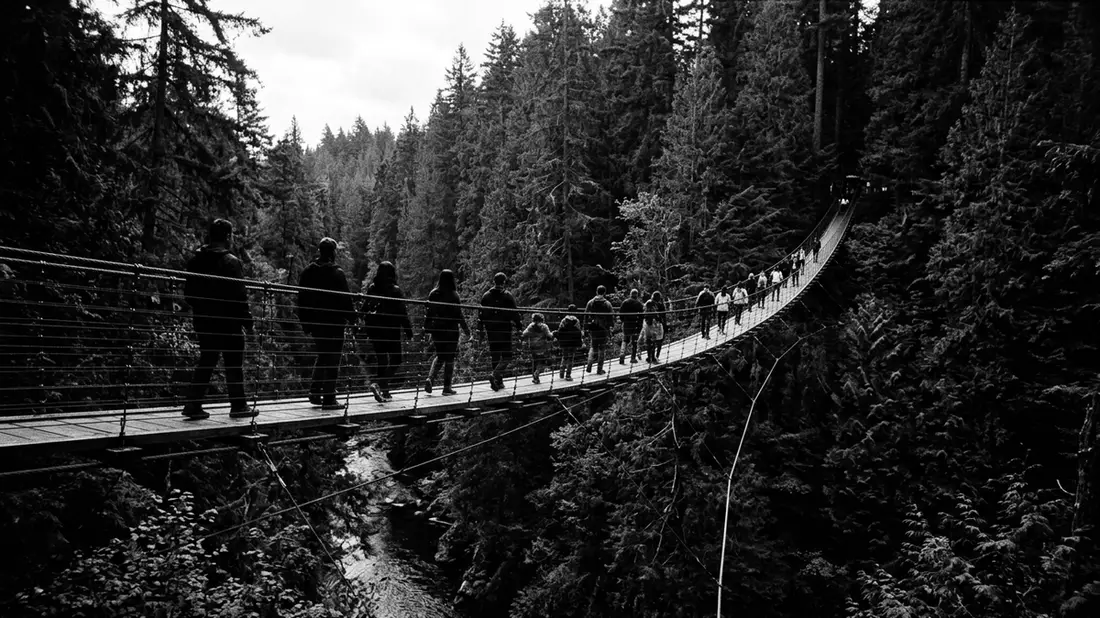
Capilano Suspension Bridge in North Vancouver crosses the Capilano River on a long suspended span that has become the park’s defining feature. The bridge, first completed in 1889, sits within a landscape of Douglas fir, cedar and steep rock.
The bridge and its forest setting
The span itself is the reason many visitors come, but the setting matters just as much. The river runs below, the gorge is narrow and wooded, and the bridge links the two sides with a light structure that contrasts with the dark forest around it.
The bridge is part of Capilano Suspension Bridge Park, where walkways, viewing areas and raised platforms extend the visit beyond the main crossing. The place combines a late nineteenth-century crossing with a managed woodland site.
From crossing to visitor landscape
Originally associated with the practical problem of moving across the river, the bridge has long been part of North Vancouver’s identity. Its timber and cable form belongs to the era of suspension bridges that shaped access across difficult ground in British Columbia.
The experience of the site now includes the bridge, the river below and the surrounding forest rather than a single viewpoint. That mix gives the place its character: a historic span inside a larger park environment, with the gorge as a constant backdrop.
Capilano in the context of British Columbia
Capilano Suspension Bridge belongs to the wider story of settlement and infrastructure in late nineteenth-century British Columbia. It reflects a period when bridges, rail links and new town sites were transforming the region’s relationship with forest and river.
The name Capilano is tied to the local landscape and to the river itself. Today the bridge remains the best-known element of the site, but the surrounding trees, cliffs and suspended walkways complete the picture.
Visiting Capilano Suspension Bridge: what travellers from Western Europe should know
- North Vancouver is reached from Vancouver by road and by local transport connections serving the city.
- Admission arrangements and opening hours are set by the site's operator and change with the season; the official website is the only binding source.
- Late spring and early autumn are good times for milder weather and clearer views through the forest canopy.
- The site includes steps, suspended walkways and uneven surfaces, so steady footwear is useful.
- English is the main language on site, and card payment is widely used in Canada.
- Entry requirements depend on your nationality. UK travellers should check the FCDO travel advice at gov.uk/foreign-travel-advice; Irish travellers the Department of Foreign Affairs at ireland.ie; EU and EEA citizens their own national foreign ministry.
Searching for Capilano Suspension Bridge on social platforms
These links open searches for Capilano Suspension Bridge on each platform.
Frequently asked questions about Capilano Suspension Bridge
Where is Capilano Suspension Bridge?
It is in North Vancouver, across the Capilano River in British Columbia. The site sits in a forested gorge setting.
What should visitors expect?
A suspended bridge, woodland paths and additional walkways form the core of the visit. The terrain includes steps, height and uneven surfaces.
What makes it distinctive?
The bridge’s late nineteenth-century origin and its forest setting define the place. The main crossing remains the most recognisable feature.