
Casco Historico de Toledo, hilltop city of stone and converging cultures
Published on 09/14/2026 at 18:34 | Editorial responsibility: Rafael Müller, Editor-in-Chief AD HOC NEWS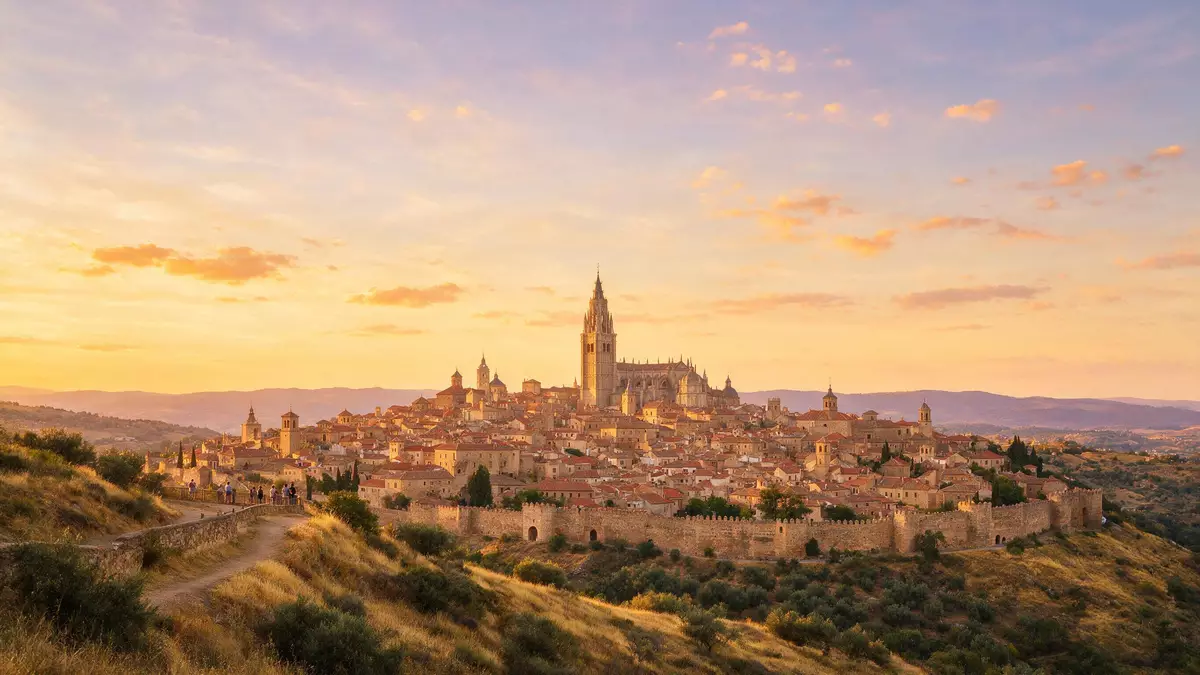
Casco Historico de Toledo, the historic centre of Toledo in central Spain, occupies a rocky hill almost encircled by a bend of the Tagus River and enclosed by medieval walls. Within this compact quarter, streets, plazas and monumental buildings condense more than twenty centuries of urban history, recognised in 1986 when the Historic City of Toledo was inscribed as a UNESCO World Heritage site.
A hilltop city wrapped in river and walls
The Casco Historico de Toledo rises on a steep spur above the Tagus River, its outline following a broad loop of water that defines the quarter as a near-island of stone. Medieval fortifications trace the crest, forming a walled perimeter that separates the old city from the newer districts on the surrounding plateau.Historic City of Toledo description Within this protected area, the historic urban fabric extends across roughly 260 ha, including both the hilltop core and selected zones on the opposite river bank that share in the ensemble.extent of the World Heritage site
Approached from the plains of Castilla-La Mancha, the old town appears as a dense cluster of stone volumes above the river, punctuated by towers and the bulk of the Alcázar. Two historic bridges, the Puente de Alcántara and Puente de San Martín, cross the Tagus at different points and connect the quarter with the wider region.bridges and rocky site Inside the walls, narrow streets climb and curve with the rock, creating sudden openings onto small squares such as Plaza del Zocodover, which anchors the commercial and social heart of the historic centre.
Layers of power and faith across twenty centuries
The hill now known as Casco Historico de Toledo has carried successive civilisations, each leaving structures and street patterns that remain visible. Toledo was a municipium of the Roman Empire, which left traces including a circus and elements of an aqueduct at the edges of the later medieval city.Roman remains in Toledo In the early medieval period it became the capital of the Visigothic Kingdom, a status reflected in fortifications and church foundations that shaped parts of the historic core.
Under the Emirate of Córdoba, Toledo functioned as a frontier stronghold, and gates such as the Puerta Vieja de Bisagra attest to this Islamic phase within the casco historico.successive roles of Toledo After the Christian conquest in 1085, the city developed as an important centre for the kingdoms of Castile and later for the Habsburg monarchy under Charles V in the sixteenth century, when Toledo served for a time as a seat of imperial power.Roman municipium and Charles V era Across these phases, Christian, Muslim and Jewish communities shared the urban space, leaving churches, synagogues and former mosques within walking distance of one another, a pattern that underpins Toledo’s enduring character as a “city of three cultures”.
Streets, monuments and the UNESCO inscription
At street level, Casco Historico de Toledo is a compact maze where building fronts and alleys reflect the overlapping histories of the city. Tall stone and brick facades line lanes that climb towards the Alcázar and the cathedral, their irregular courses following earlier plots rather than modern grids. Courtyards sit behind gates and archways, while small stairways open between houses to connect terraces at different levels.
Among the monuments that define the skyline, the Gothic Catedral Primada Santa María de Toledo rises near the centre of the old town, its mass and tower visible from many approaches. The fortified Alcázar crowns the highest point of the hill, occupying a commanding position above the Tagus and the bridges. Synagogues and former mosques stand within the same quarter, contributing to a range of religious architecture that spans several centuries.cathedral, Alcázar and synagogues The ensemble received national protection in 1940 when the historic city was declared a monument, and in 1986 the Historic City of Toledo was inscribed on the World Heritage List for its concentration of cultural heritage and its preserved urban fabric.1940 declaration and 1986 inscription
Visiting Casco Historico de Toledo: what travellers from Western Europe should know
- Casco Historico de Toledo sits in the city of Toledo in the Castilla-La Mancha region of central Spain, on a hill almost enclosed by a loop of the Tagus River; rail services connect Madrid with Toledo’s railway station below the historic centre.
- The terrain in the old town includes steep gradients and cobbled streets, with many routes involving stairways or sloping lanes between different levels of the hill.
- The Tagus River curves around the historic quarter, and viewpoints near the bridges of Alcántara and San Martín offer perspectives back towards the walled skyline.
- Spanish is the official language and the currency is the euro.
Searching for Casco Historico de Toledo on social platforms
These links open searches for Casco Historico de Toledo on each platform.
Frequently asked questions about Casco Historico de Toledo
Where is Casco Historico de Toledo located?
Casco Historico de Toledo forms the historic centre of Toledo in the Castilla-La Mancha region of central Spain, occupying a hill within a bend of the Tagus River.
What can visitors expect when walking through the historic quarter?
Visitors encounter steep, narrow streets, small plazas and a dense concentration of monuments, including the cathedral, the Alcázar, synagogues and historic churches.
What makes Casco Historico de Toledo distinctive among historic cities?
The quarter combines Roman, Visigothic, Islamic, Jewish and Christian heritage within a compact walled hilltop, recognised as the Historic City of Toledo on the UNESCO World Heritage List.


