
Castillo de los Tres Reyes del Morro above Havana Bay
Published on 09/24/2026 at 12:13 | Editorial responsibility: Rafael Müller, Editor-in-Chief AD HOC NEWS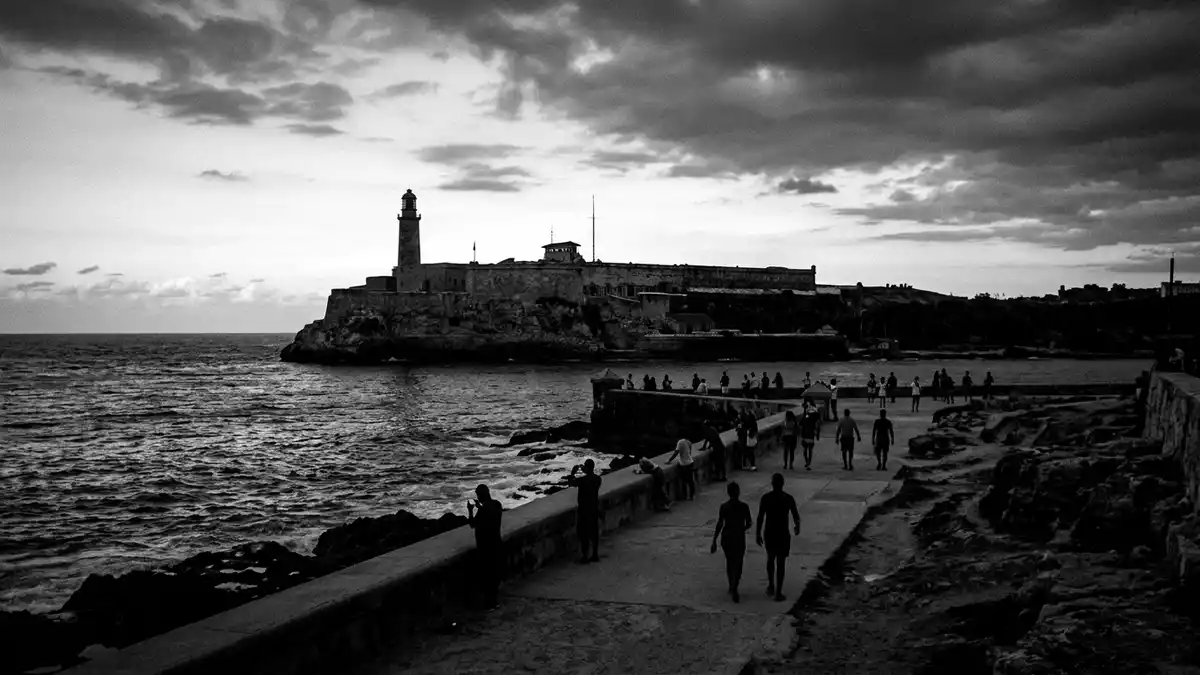
Castillo de los Tres Reyes del Morro rises on a rocky promontory at the entrance to Havana Bay. Its bastioned walls, harbour-facing position and lighthouse form a single fortified silhouette above the water. Construction began in 1589 under Philip II of Spain and reached completion in 1630.
Castillo de los Tres Reyes del Morro and the shape of the harbour
The fortress occupies the eastern side of Havana’s harbour entrance, across the water from the historic centre. Its walls follow the elevated rock, with angular bastions, terraces, galleries and defensive works arranged around the promontory.
The building’s form belongs to late Renaissance military architecture. Stone surfaces, sloping sections and heavy masonry give the complex a clear relationship with the coastline. The harbour-facing walls remain the most recognisable part of the composition, while the lighthouse rises above the fortifications as a separate vertical marker.
From Spanish fortification to Havana heritage site
Castillo de los Tres Reyes del Morro was designed by the Italian military engineer Giovanni Battista Antonelli. Juan de Tejeda directed the early works, which began on 27 June 1589 during the Spanish colonial period.
The fortress became part of Havana’s defensive system with Castillo de la Real Fuerza and Castillo de San Salvador de la Punta. British forces captured El Morro during the siege of Havana in 1762, and Spain recovered the fortress under the Treaty of Paris in 1763. The castle remained a major harbour defence until La Cabaña was completed in 1774.
The lighthouse, the stone walls and the museum
A lighthouse stands above the fortress, joining the maritime function of the site to its military architecture. From the elevated position, the castle faces Havana Bay, the harbour channel and the colonial core of the city.
In its present form, Castillo de los Tres Reyes del Morro functions as a museum and heritage site. Its displays address maritime and military history, while the surrounding Morro-Cabaña complex preserves a substantial part of Havana’s historic fortifications. The fortress and the historic centre form part of Havana’s World Heritage site, inscribed in 1982. Havana’s defensive triangle began with the fortifications at the harbour entrance.
The castle’s identity remains architectural as much as historical. Its name refers to the Three Kings of the Hill, while its position links the fortress to the sea route entering Havana. The walls, rock, lighthouse and channel can be read together as parts of one military landscape.
Visiting Castillo de los Tres Reyes del Morro: what travellers from Western Europe should know
- Castillo de los Tres Reyes del Morro stands east of Havana’s historic centre, on the rocky promontory at the entrance to Havana Bay. It is reached across the harbour by road, taxi or organised excursion.
- The approach follows a fortified site on elevated rock. Visitors encounter stone surfaces, sloping passages, bastions, terraces and stairways within the complex.
- The official language is Spanish and the currency is the Cuban peso.
- Entry requirements depend on your nationality; UK travellers can check the FCDO travel advice at gov.uk/foreign-travel-advice, Irish travellers the Department of Foreign Affairs at ireland.ie.
Searching for Castillo de los Tres Reyes del Morro on social platforms
These links open searches for Castillo de los Tres Reyes del Morro on each platform.Frequently asked questions about Castillo de los Tres Reyes del Morro
Where is Castillo de los Tres Reyes del Morro?
The fortress stands on the eastern side of Havana Bay’s entrance, across the harbour from Havana’s historic centre. It occupies the rocky promontory known as El Morro.
What can visitors expect at the fortress?
The complex contains bastioned walls, terraces, galleries, stone passages, a lighthouse and museum spaces. Its elevated position faces the harbour channel and the city.
What makes the castle distinctive?
Its distinctive character comes from the combination of a late Renaissance fortress, a lighthouse and a harbour-facing position. Giovanni Battista Antonelli’s design was built between 1589 and 1630.


