
Cataratas del Iguazu and the river that breaks into a forest
Published on 09/23/2026 at 20:15 | Editorial responsibility: Rafael Müller, Editor-in-Chief AD HOC NEWS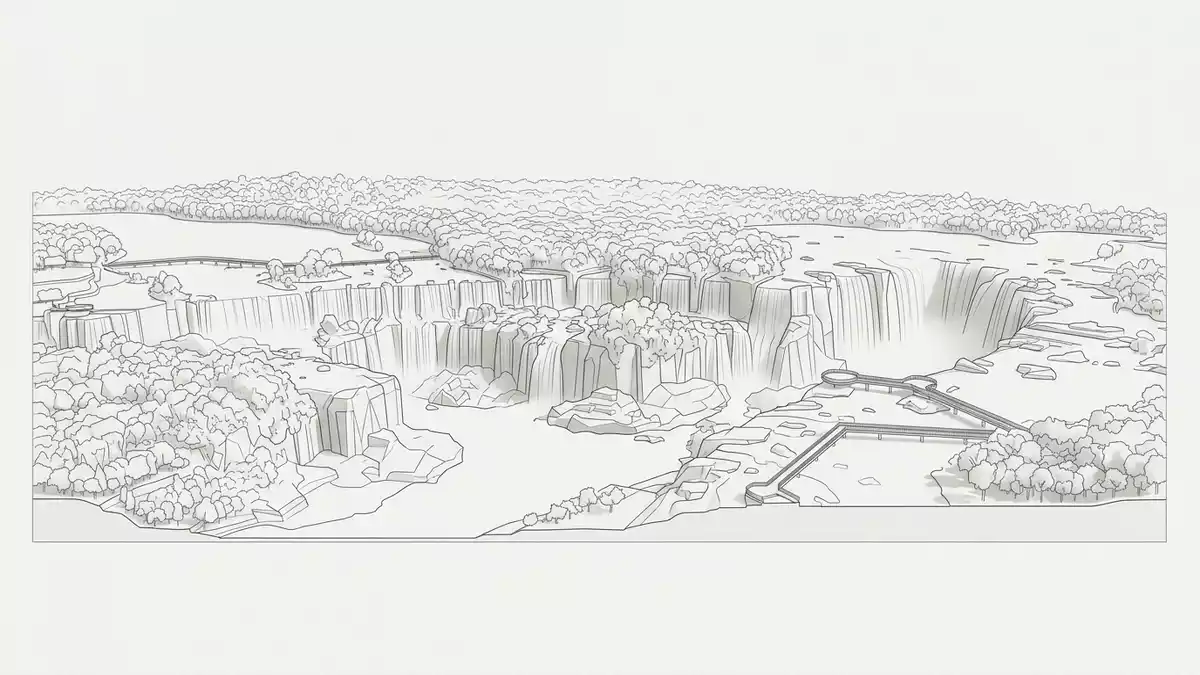
Cataratas del Iguazu spread across a basaltic gorge between Brazil and Argentina. The waterfall system extends for about 2,700 m (8,858 ft), with the Iguazu River breaking into a broad series of cataracts surrounded by subtropical forest.
Cataratas del Iguazu: a waterfall spread across the border
The falls are not a single narrow drop. They form a wide, broken front of channels, ledges and plunging water, with the main semicircular cataract reaching about 80 m (262 ft) in height. The river crosses the boundary between the two countries through a landscape shaped by dark basalt.
The Brazilian side lies within Iguaçu National Park in Paraná, near Foz do Iguacu. Across the river, Iguazú National Park occupies the Argentine side near Puerto Iguazú in Misiones. Together, the parks preserve the waterfall landscape and extensive subtropical forest.
Basalt, forest and the Garganta del Diablo
Water dominates the view, but the setting is equally defined by rock and vegetation. Basalt forms the geological platform beneath the falls, while forest surrounds the river and the paths, platforms and viewpoints on both national-park sides.
The Garganta del Diablo, or Devil’s Throat, is the best-known named section of the waterfall system. At this point, several channels gather around a deep horseshoe-shaped chasm, where spray rises above the moving water. the main waterfall dimensions are recorded as about 80 m high and 2,700 m across.
Two national parks, one natural landscape
The falls belong to two adjoining protected areas rather than a single cross-border park. Iguazú National Park in Argentina was established in 1934, while Iguaçu National Park in Brazil was established in 1939.
The Argentine park entered the UNESCO World Heritage List in 1984, followed by the Brazilian park in 1986. Their designations recognise the waterfall landscape and the forest habitats associated with it. the two national parks remain distinct administrations on opposite sides of the river.
The protected landscape also carries a human history. Álvar Núñez Cabeza de Vaca recorded the falls during a sixteenth-century expedition, while the national parks belong to the twentieth-century history of conservation in southern Brazil and northeastern Argentina.
Visiting Cataratas del Iguazu: what travellers from Western Europe should know
- Foz do Iguacu is the Brazilian gateway, with access to Iguaçu National Park from the city. The Argentine side is reached from Puerto Iguazú across the national border.
- The landscape includes forest paths, viewing platforms, bridges and changes in level. Water spray, exposed rock and steep river margins are part of the setting.
- The official languages are Portuguese in Brazil and Spanish in Argentina. The currencies are the Brazilian real and the Argentine peso.
- Entry requirements depend on your nationality; UK travellers can check the FCDO travel advice at gov.uk/foreign-travel-advice, Irish travellers the Department of Foreign Affairs at ireland.ie.
Searching for Cataratas del Iguazu on social platforms
These links open searches for Cataratas del Iguazu on each platform.Frequently asked questions about Cataratas del Iguazu
Where are Cataratas del Iguazu?
They lie on the Iguazu River between Brazil and Argentina. Foz do Iguacu is the principal Brazilian city associated with the falls.
What can visitors expect at the falls?
Visitors encounter forest, basalt, bridges, platforms, spray and multiple views of the cataracts. The landscape is divided between two national parks.
What makes Cataratas del Iguazu distinctive?
The waterfall system stretches across about 2,700 m and combines a broad basaltic cataract with subtropical forest. Its protected landscape belongs to both Brazil and Argentina.


