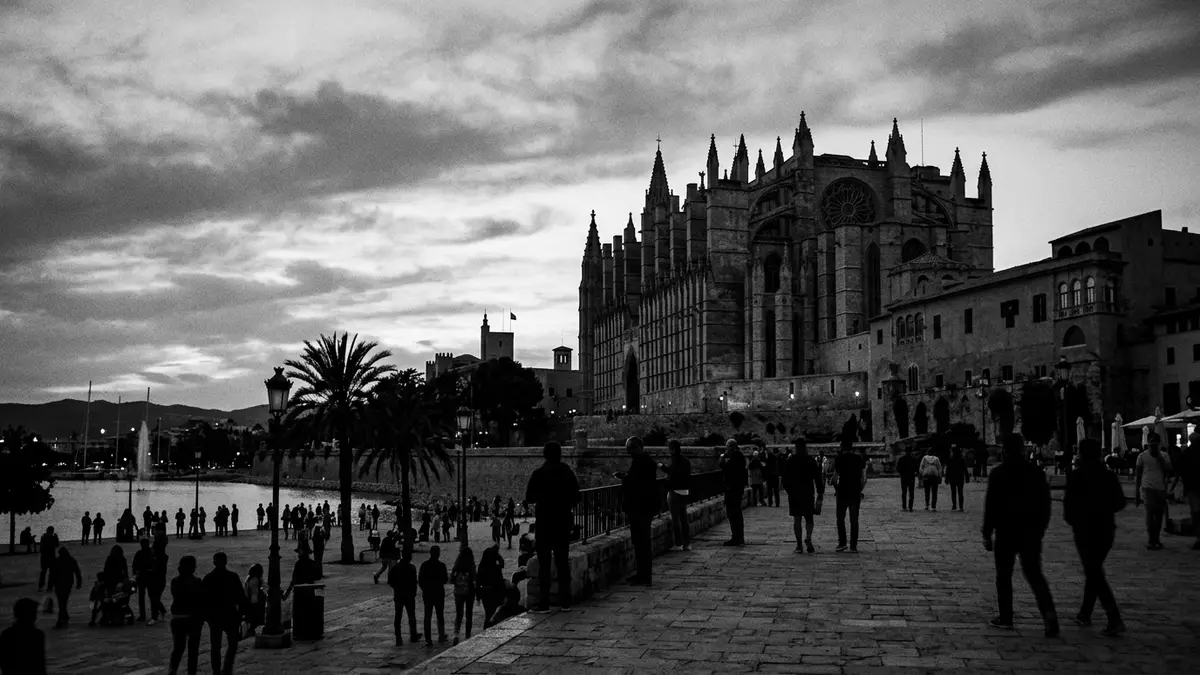
Catedral de Mallorca and its soaring Gothic stone
Published on 08/08/2026 at 15:02 | Editorial responsibility: Rafael Müller, Editor-in-Chief AD HOC NEWS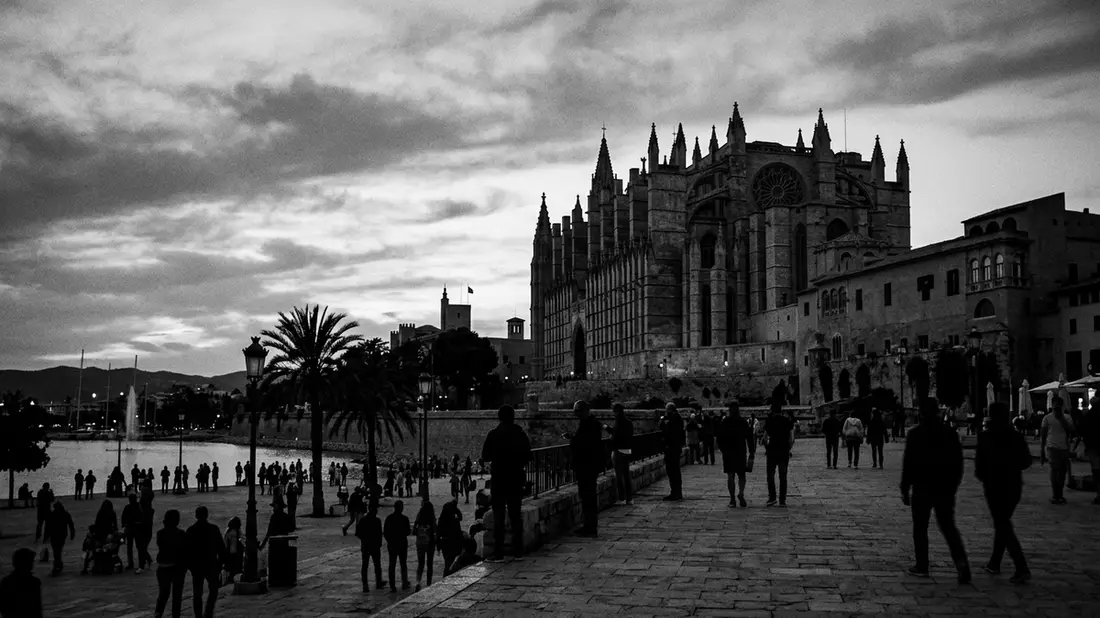
Catedral de Mallorca rises above Palma in yellow sandstone, with a long Gothic body and a profile that changes as you move around the bay. The cathedral is closely tied to the Crown of Aragon and the medieval city, and its scale gives the seafront a strong vertical line.
Gothic stone on Palma’s waterfront
The main body belongs to the Gothic period and was begun in the thirteenth century after the Christian conquest of Mallorca in 1229. The building’s buttresses, tall nave and narrow openings give it a severe exterior, while the sandstone softens in colour under the Mediterranean light.
From the harbour side, the cathedral reads as a long masonry wall above the old city. Close by, the details become more varied: pinnacles, tracery and carved stonework gather around the side elevations and the main fronts.
Gaudí, Miquel Barceló and later layers
The interior includes work associated with Antoni Gaudí, who took part in an early twentieth-century reworking of the liturgical space. That intervention belongs to a different age from the Gothic shell, and the contrast is visible in the use of light, furnishings and decorative detail.
One of the most talked-about modern additions is the chapel of Sant Pere, where Miquel Barceló created a ceramic surface with marine imagery. It sits within the broader historic structure rather than apart from it, and it adds a vivid contemporary layer to the cathedral’s older stone fabric.
The nave, the rose window and the chapels
Inside, the nave feels unusually broad and high, with slender columns and a long run of vaulting. The great rose window in the east end is one of the building’s best-known features, and the light through it is a central part of the interior composition.
The side chapels line the nave in sequence, each with its own altar, fittings and decoration. Together they create a dense interior of stone, timber, metal and painted surfaces, with the cathedral’s history visible in the mixture of forms.
Visiting Catedral de Mallorca: what travellers from Western Europe should know
- The cathedral stands in Palma, on the old-city waterfront, and is reached on foot from the centre or by local transport in the city.
- Admission arrangements and opening hours are set by the site's operator and change with the season; the official website is the only binding source.
- Late afternoon suits the exterior well, while the interior rewards time spent under the vaults and beside the chapels.
- Expect stone steps, uneven surfaces and a large building that takes time to explore on foot.
- Palma uses Spanish and Catalan in everyday life, and card payment is widely accepted in visitor areas.
- Entry requirements depend on your nationality. UK travellers should check the FCDO travel advice at gov.uk/foreign-travel-advice; Irish travellers the Department of Foreign Affairs at ireland.ie; EU and EEA citizens their own national foreign ministry.
Searching for Catedral de Mallorca on social platforms
These links open searches for Catedral de Mallorca on each platform.
Frequently asked questions about Catedral de Mallorca
Where is Catedral de Mallorca?
It stands in Palma, overlooking the waterfront and the historic centre. Its position makes the stone mass visible from several angles around the city.
What should visitors expect inside?
A large Gothic interior with a high nave, side chapels and later artistic additions. The building rewards unhurried walking, especially if you want to take in the contrast between medieval structure and modern interventions.
What makes it distinctive?
The combination of Palma’s sandstone, the Gothic scale and the later work associated with Antoni Gaudí gives the cathedral a layered character. The rose window and the ceramic chapel by Miquel Barceló are among its most memorable features.