
Catedral de Valencia and its layered Gothic interior
Published on 09/18/2026 at 07:06 | Editorial responsibility: Rafael Müller, Editor-in-Chief AD HOC NEWS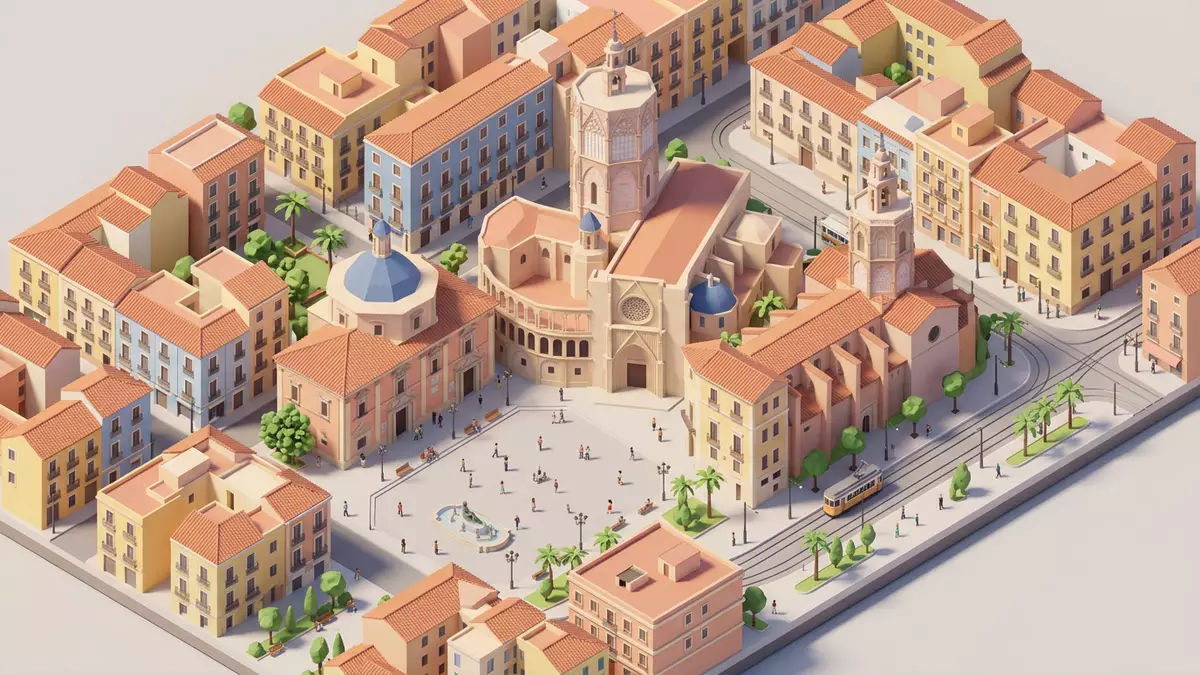
Catedral de Valencia, the metropolitan cathedral of Saint Mary in Valencia, brings several centuries of architecture together in a single church whose core remains firmly Gothic. Most of its present structure rose between the thirteenth and fifteenth centuries, and the building still reads as a Gothic volume even where later interventions have altered individual parts.
A Gothic church shaped over centuries
The main fabric of Catedral de Valencia was started in 1262, under Bishop Fray Andrés de Albalat, on ground already marked by earlier Christian and Islamic worship.Bishop Fray Andrés de Albalat The building belongs to the medieval kingdom formed after James I of Aragon’s conquest of Valencia in 1238, and the dates of its early phases tie it closely to that period.James I’s conquest in 1238
Valencian Gothic is the predominant style of the cathedral, and much of the structure that visitors see was raised between the thirteenth and fifteenth centuries.Valencian Gothic style The church is organised in three naves, with chapels set between the buttresses and a crossing marked by a lantern tower, so the interior feels taller than the footprint alone would suggest.lantern tower and chapels Later centuries added Renaissance and Baroque furnishings and Neoclassical cladding, but the ribs, pointed arches and stone structure of the medieval church still form the backbone.
Doors, tower and the Holy Chalice chapel
Several distinct components help visitors read the different stages of Catedral de Valencia. On one side, the Almoina doorway shows late Romanesque work from the thirteenth century, marking the moment when the foundation stone of the new cathedral was laid.late Romanesque Almoina doorway The Gothic “apostles’ door”, begun around 1300, presents sculpted figures and tracery in a style characteristic of the fourteenth century.apostles’ door from 1300
Above the crossing, a lantern tower and the main bell tower, known as Micalet or Miguelete, rise from the Gothic core of the building. The lantern tower and chapter hall, which now houses the chapel of the Holy Chalice, were under construction in the fourteenth century, while work on the bell tower began in 1381 under master builder Andreu Julià.Micalet tower work in 1381 The Holy Chalice chapel itself began as a chapter house in the mid-fourteenth century and later became the setting for the chalice that is associated with the Holy Grail.Holy Chalice chapel origins
Layers of style inside the cathedral
Inside Catedral de Valencia, the Gothic structure coexists with elements from other architectural periods. The main vaults, arcades and many chapels keep the character of austere thirteenth-century Gothic work, which becomes more elevated and bright around the lantern and tower built in the fourteenth century.thirteenth and fourteenth century Gothic Decorative programmes from the Renaissance and Baroque periods enrich the main chapel and other parts of the interior, reflecting the cathedral’s role in the religious life of the city over several generations.
In the eighteenth century, Neoclassical cladding was added, adjusting the surfaces and profiles of some interior and exterior elements; in the twentieth century, work was carried out to recover the Gothic structure and adapt the presbytery to renewed liturgical practice.Neoclassical and twentieth-century work The result is a church where Romanesque, Valencian Gothic, Renaissance, Baroque and Neoclassical features stand together, and where specific spaces such as the Holy Chalice chapel, the chapels between the buttresses and the tower base offer different views of that layered history.mix of styles
Visiting Catedral de Valencia: what travellers from Western Europe should know
- Catedral de Valencia stands in central Valencia between Plaza de la Reina and Plaza de la Virgen, within the city’s historic core and surrounded by narrow streets.
- The interior is arranged across three naves with chapels between buttresses, and reaching the tower viewing area involves climbing a long staircase inside the stone structure.
- The official language is Spanish and the currency is the euro.
Searching for Catedral de Valencia on social platforms
These links open searches for Catedral de Valencia on each platform.
Frequently asked questions about Catedral de Valencia
Where is Catedral de Valencia located in the city?
Catedral de Valencia stands within Valencia’s historic centre, between Plaza de la Reina and Plaza de la Virgen, surrounded by medieval and later streets.
What can visitors expect inside the cathedral?
Visitors find a predominantly Gothic interior with three naves, chapels between buttresses, and a mixture of Romanesque, Renaissance, Baroque and Neoclassical details.
What makes Catedral de Valencia distinctive among Spanish cathedrals?
Its layered architecture, with a Valencian Gothic core begun in 1262 and later additions such as the Holy Chalice chapel and Micalet tower, gives it a particularly dense historical character.


