
Catedral de Valencia and its layered Gothic spaces
Published on 09/23/2026 at 17:58 | Editorial responsibility: Rafael Müller, Editor-in-Chief AD HOC NEWS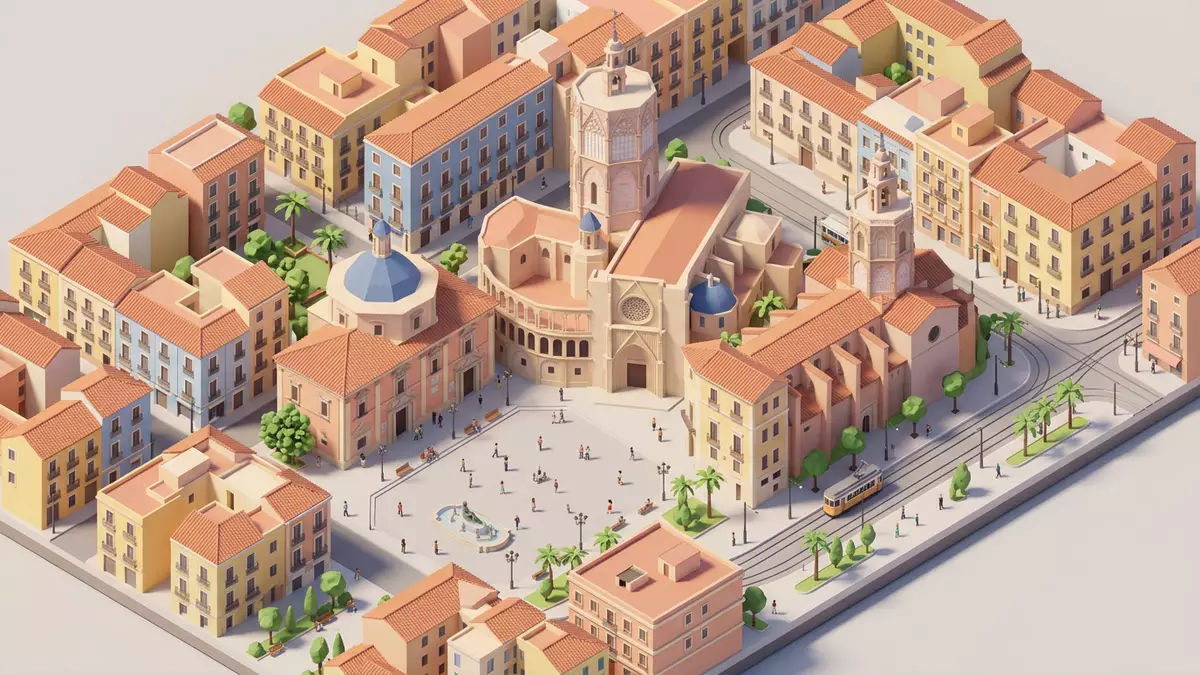
Catedral de Valencia rises in the old centre of Valencia as a building assembled across several centuries. Romanesque foundations, Gothic chapels, a Renaissance interior and Baroque decoration meet around the Chapel of the Holy Chalice.
The cathedral’s story begins with James I and continues through the work of Andrés de Albalat, Andreu Juliá, Francesc Baldomar and Pere Compte.
From 1262 foundations to a Gothic cathedral
The first stone of the present cathedral was laid on 22 June 1262, during the reign of James I of Aragon’s Christian Kingdom of Valencia. The project began with the Almoina doorway and the ambulatory, both linked to the building’s early Romanesque phase. The cathedral’s first stone marks the start of a long architectural sequence.
Gothic work shaped much of the cathedral between the thirteenth and fifteenth centuries. The Apostles’ Door began in 1300, while the lantern tower, chapter house and Micalet bell tower belong to the fourteenth century. The nave was extended between 1458 and 1487 by Francesc Baldomar and Pere Compte.
The Micalet and the cathedral’s changing surfaces
The Micalet stands beside the cathedral as a separate bell tower with a strong Valencian Gothic character. Construction began in 1381, and the tower was completed in the early fifteenth century. Its masonry rises above the surrounding historic streets and forms a clear vertical companion to the cathedral’s broad body.
The cathedral’s surfaces record successive changes in taste. Gothic stonework appears beside Renaissance details, Baroque chapels and a neoclassical transformation from the eighteenth century. Restoration during the twentieth century returned parts of the Gothic interior to a more visible form. The cathedral’s historical chronology includes the construction of the Micalet and the later changes to the building.
The Holy Chalice Chapel and Valencia’s sacred identity
The Chapel of the Holy Chalice occupies the former chapter house, whose construction began in 1356. It contains the Santo Cáliz, a vessel venerated in Valencia as the cup associated with the Last Supper. Alfonso V transferred the chalice to the cathedral in 1437.
The chapel gives the cathedral a second focus beyond its architecture. Visitors encounter a medieval space connected with a relic, while the surrounding cathedral presents layers of Romanesque, Gothic, Renaissance, Baroque and neoclassical design. The cathedral’s origin in 1262 links the relic’s setting to the building’s documented foundation date.
The cathedral is dedicated to Saint Mary and belongs to Valencia’s historic religious centre. Its doors, chapels, lantern tower, nave and bell tower present different stages of the city’s medieval and early modern architecture within one complex.
Visiting Catedral de Valencia: what travellers from Western Europe should know
- Catedral de Valencia stands in Valencia’s Ciutat Vella, beside Plaza de la Reina. Valencia’s urban public transport connects the historic centre with the city’s rail and airport networks.
- The complex includes stone doorways, chapels, the lantern tower, the Holy Chalice Chapel and the Micalet. The bell tower is reached by a narrow internal stairway.
- The official language is Spanish and Valencian, and the currency is the euro.
- The cathedral forms part of a historic centre filled with named civic and religious landmarks, including the Plaza de la Reina and the Almoina area.
Searching for Catedral de Valencia on social platforms
These links open searches for Catedral de Valencia on each platform.
Frequently asked questions about Catedral de Valencia
Where is Catedral de Valencia?
Catedral de Valencia stands in Ciutat Vella, Valencia’s historic centre, beside Plaza de la Reina and close to the Almoina area.
What can visitors expect inside?
The interior contains Gothic naves, the lantern tower, chapels, the Holy Chalice Chapel and later Renaissance, Baroque and neoclassical details.
What makes the cathedral distinctive?
Its identity comes from the combination of a foundation begun in 1262, the Micalet bell tower and the Santo Cáliz, housed in the cathedral since 1437.


