
Centro Historico de Lima and its colonial grid of plazas
Published on 09/23/2026 at 01:08 | Editorial responsibility: Rafael Müller, Editor-in-Chief AD HOC NEWS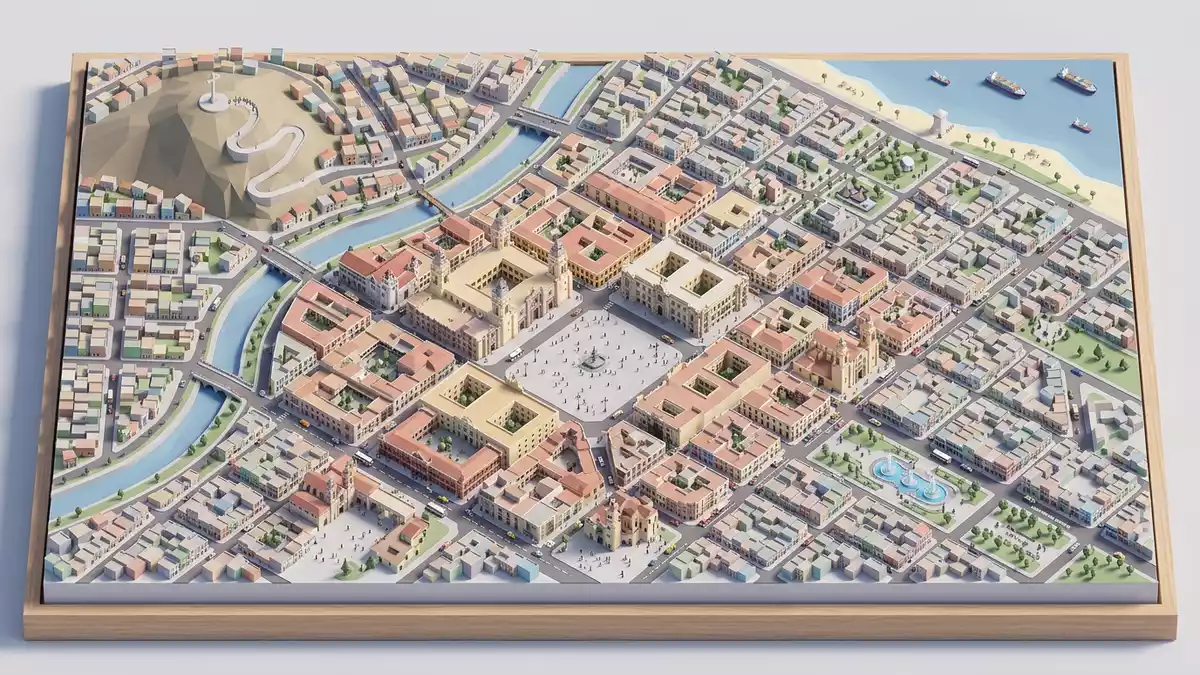
Centro Historico de Lima is a city centre arranged around plazas, churches, civic buildings and long wooden balconies. Francisco Pizarro founded Lima in January 1535 as Ciudad de los Reyes, and the surviving urban fabric records the city’s colonial and viceregal history.
Centro Historico de Lima: a city organised around plazas
The clearest way to understand Centro Historico de Lima is to look at its street plan. The central area follows a Spanish colonial grid, with Plaza Mayor at its principal focus and streets extending towards religious, administrative and commercial buildings. The Rímac River separates the historic districts of Lima and Rímac, while the protected urban area occupies both sides of the valley.
Plaza Mayor gathers several of the centre’s most recognisable buildings. The Cathedral of Lima, the Archbishop’s Palace, the Government Palace and the Municipal Palace form a civic and religious ensemble around the square. Each building belongs to a different institutional tradition, yet together they show how the colonial capital was arranged around public authority and worship. The UNESCO heritage listing records the centre as an example of Spanish colonial urban development in Latin America.
Wood, stone and colour in the colonial centre
Wooden balconies are among the most recognisable details in Centro Historico de Lima. Enclosed and projecting from façades, they appear on mansions and civic buildings along streets near the main plazas. Their carved surfaces and dark timber contrast with painted walls, stone portals and the pale façades of churches.
The centre’s architecture reflects several periods of construction and repair. Baroque churches, convent complexes, colonial houses and public buildings stand within the same street network. San Francisco de Lima forms a particularly substantial convent ensemble, with churches, cloisters and associated spaces gathered within the historic city. Its architecture combines European forms with work by local craftspeople, creating a built record of cultural exchange.
Religious buildings remain central to the character of the district. The Cathedral, La Merced, Santo Domingo, San Pedro and San Agustín belong to a wider collection of churches distributed through the historic core. Their façades, towers, courtyards and interiors give the streets a sequence of formal architectural landmarks. The San Francisco convent ensemble is associated with the colonial period when Lima served as the principal city of Spain’s South American dominions.
From Ciudad de los Reyes to World Heritage centre
Lima’s colonial identity began with its foundation by Francisco Pizarro in 1535. The city became the political, administrative, religious and economic capital of the Viceroyalty of Peru, linking government, trade and ecclesiastical institutions across Spanish South America. Centro Historico de Lima preserves the physical framework of that role through its plazas, churches, palaces and street grid.
The district also contains layers older than the Spanish foundation. The Rímac valley had pre-Hispanic settlements and routes before the colonial city took shape, while the buildings that survive represent a later urban period. Earthquakes damaged Lima repeatedly, and the centre therefore contains both colonial forms and rebuilt or altered structures. The result is not a single architectural moment, but a historic city assembled through different periods.
The protected area entered the World Heritage List in 1988, with the designation expanded in 1991. Its recognised value lies in the relationship between architecture and urban form: individual monuments matter, but so do the plazas, streets and building groups that connect them. The 1991 World Heritage inscription identifies the historic centre as an important example of Latin American colonial architecture and urban development.
Visiting Centro Historico de Lima: what travellers from Western Europe should know
- Centro Historico de Lima lies in central Lima, across the historic districts of Lima and Rímac. The centre is reached through Lima’s urban transport network, with Plaza Mayor serving as the principal geographic reference.
- The area is a dense urban district of paved streets, plazas, church interiors, courtyards and monumental façades. Comfortable footwear suits the long sequence of streets and stone or tiled surfaces.
- The Rímac River forms a major geographic feature beside the historic centre. Bridges and road crossings connect the districts on either side of the river.
- The official language is Spanish and the currency is the Peruvian sol.
Searching for Centro Historico de Lima on social platforms
These links open searches for Centro Historico de Lima on each platform.Frequently asked questions about Centro Historico de Lima
Where is Centro Historico de Lima?
It occupies the historic centre of Lima in the Rímac valley, including areas in the districts of Lima and Rímac. The Rímac River runs beside and between parts of the historic urban area.
What can travellers expect to see?
The district contains Plaza Mayor, colonial churches, convent complexes, civic palaces, tiled courtyards, stone portals and timber balconies. Streets and squares connect these buildings within a colonial urban grid.
What makes the centre distinctive?
Its distinctive character comes from the combination of a Spanish colonial street plan, viceregal monuments and architectural details shaped by European and local craft traditions. The historic centre became a World Heritage site in 1988, with an expansion in 1991.


