
Champasak Cultural Landscape enters state management on 1 September
Published on 09/27/2026 at 15:30 | Editorial responsibility: Rafael Müller, Editor-in-Chief AD HOC NEWS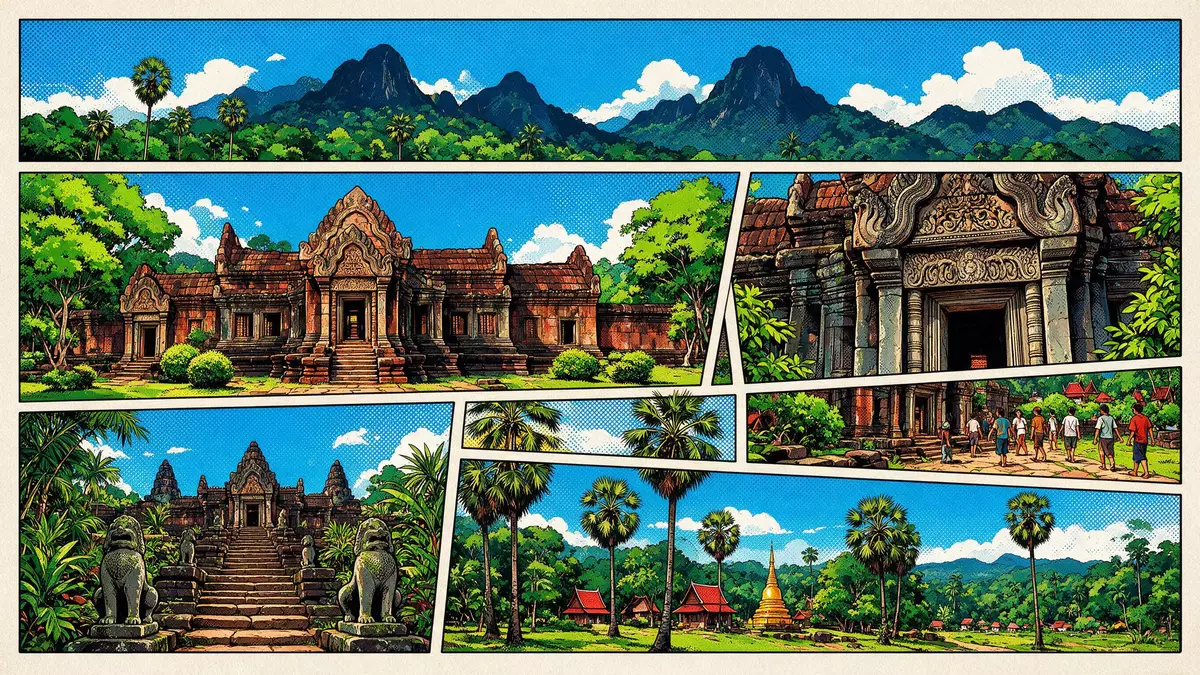
Champasak Cultural Landscape entered state management on 1 September 2026, a change announced for the temple complex in Champasak, Laos on 4 September 2026. The transfer followed the expiry of a private concession and leaves the heritage property open to visitors.
Champasak Cultural Landscape changes hands after concession ends
The Lao government now oversees management and conservation of the World Heritage site. The concession held by Ying Chokchai Sole Co., Ltd. expired on 22 June 2026, and the Champasak Provincial Administrative Committee authorised the provincial Department of Culture and Tourism to take responsibility.
A site management committee began operating on 1 September 2026. The Lao state news agency announced the management change on 4 September 2026, stating that ticketing, golf cart shuttle services and central parking continued. The report also said visitors could still reach Ho Nang Sida and other key historical structures.
UNESCO landscape links mountain, temples and Mekong
UNESCO describes the Champasak Cultural Landscape as a planned setting more than 1,000 years old. Its layout follows an axis from Phou Kao mountain to the Mekong River, with temples, shrines and waterworks arranged across more than 10 km (6.2 miles).
The property includes two ancient cities as well as the temple complex. Its development runs from the fifth to the fifteenth centuries and is mainly associated with the Khmer Empire, while the landscape expresses a Hindu understanding of the relationship between nature and humanity, according to UNESCO's cultural landscape description. The 1 September transfer therefore changes who manages a site whose significance extends well beyond its principal sanctuary.
Visiting Champasak Cultural Landscape: what travellers from Western Europe should know
- The management change took effect on 1 September 2026 and was announced on 4 September 2026 for the heritage site in Champasak.
- The site remains open to domestic and international visitors, with ticketing, central parking and golf cart shuttle services continuing under the new committee.
- The property lies in Champasak District in southern Laos, between Phou Kao mountain and the Mekong River. Its cultural landscape extends across more than 10 km (6.2 miles).
- Visitors encounter a broad historic landscape containing temples, shrines, waterworks and the remains of two ancient cities, rather than a single isolated building.
- Entry requirements depend on your nationality; UK travellers can check the FCDO travel advice at gov.uk/foreign-travel-advice, Irish travellers the Department of Foreign Affairs at ireland.ie.
Searching for Champasak Cultural Landscape on social platforms
These links open searches for Champasak Cultural Landscape on each platform.
Frequently asked questions about Champasak Cultural Landscape
What has changed at Champasak Cultural Landscape?
The Lao government assumed full management and conservation on 1 September 2026 after the private concession expired.
Where is Champasak Cultural Landscape and how do you get there?
The property is in Champasak District in southern Laos, on a planned axis between Phou Kao mountain and the Mekong River.
What is Champasak Cultural Landscape?
It is a UNESCO World Heritage cultural landscape containing a temple complex, ancient cities, shrines and waterworks developed mainly between the fifth and fifteenth centuries.


