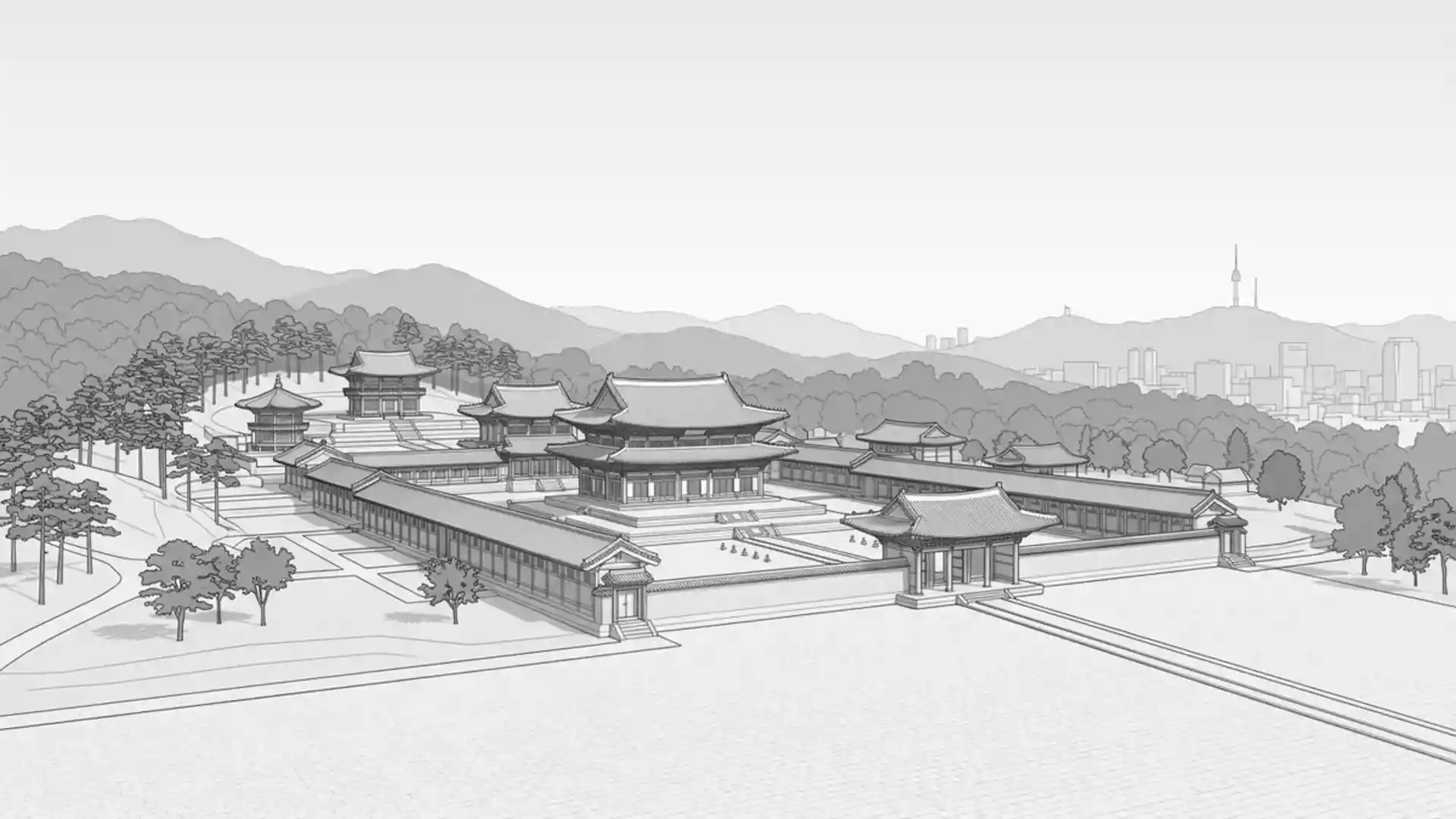
Changdeokgung and its palace garden shaped by nature
Published on 08/30/2026 at 14:58 | Editorial responsibility: Rafael Müller, Editor-in-Chief AD HOC NEWS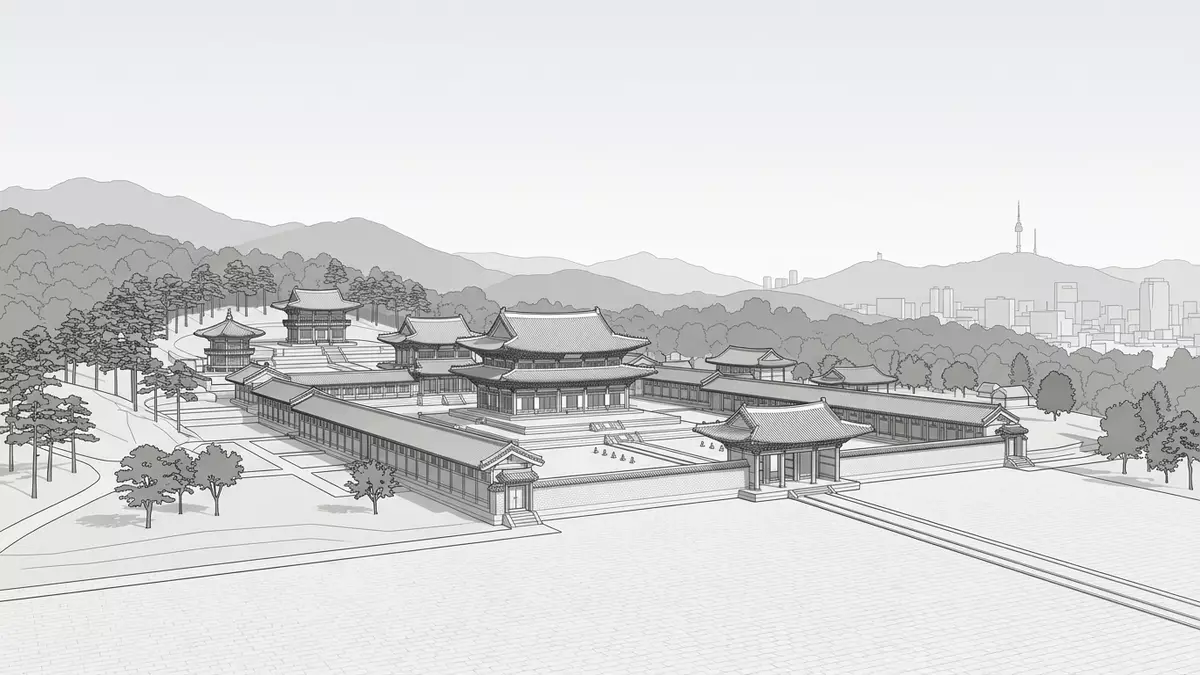
Changdeokgung in Seoul is a former royal palace of the Joseon dynasty where buildings and gardens follow the contours of low wooded hills rather than an imposed formal grid. Built in 1405 under King Taejong and later recognised as a UNESCO World Heritage Site in 1997, it remains one of Korea’s best-preserved palace complexes and a rare example of court architecture closely aligned with its landscape.
A Joseon palace shaped around its site
Changdeokgung stands in Jongno-gu in northern Seoul, at the foot of Mount Baegaksan, on a site chosen in the early fifteenth century when the Joseon kings were establishing their capital’s palaces.Changdeokgung Palace Complex Construction began in 1405 during the reign of King Taejong and the main court buildings were completed within the following years, making it one of the earliest Joseon palaces in the city.Changdeokgung Palace and Its History
The palace was conceived as a secondary residence to Gyeongbokgung, yet it became the principal seat for many rulers after the original main palace was destroyed by fire during the Japanese invasions of 1592.one of the five Royal Palaces of the Joseon dynasty Rebuilding in the early seventeenth century retained the palace’s characteristic approach: instead of forcing a strict axial plan, its halls align with slopes, valleys and tree cover, making the complex feel remarkably integrated with its terrain.
Courtyards, timber halls and stone platforms
Walking through Changdeokgung brings a sequence of courtyards edged by timber halls raised on stone platforms, the typology that defined Joseon royal architecture. The main throne hall, Injeongjeon, stands on a high stone base facing a broad ceremonial court, with ancillary halls stepping back behind it along the shallow hillside. The palace complex extends over dozens of hectares, with clusters of official, residential and service buildings arranged to follow the natural lie of the land rather than a rigid orthogonal grid.the most well-preserved of the five remaining royal Joseon palaces
Materials are consistent with court architecture of the late medieval Korean state: timber frames carry gently pitched roofs, eaves are painted in the colourful dancheong tradition, and stone is used for stairways, terraces and courtyards. The sequence from public courts to more enclosed inner quarters is legible in the way spaces narrow and planting becomes more prominent, yet the underlying organising principle remains the terrain itself. Rather than imposing a flat parade ground, the palace’s architects let slopes, rock and existing tree lines guide where halls, walls and gates sit.
The Huwon, or Secret Garden, behind the palace
Behind the main palace buildings lies the Huwon, the rear garden that occupies a large portion of the Changdeokgung site and is central to its character. Spread over forested hillsides and valleys, this garden was reserved for the royal family and their close circle, and it combines pavilions, ponds and planted terraces with extensive areas of woodland.The Secret Garden, or Huwon Paths climb and descend along the contours, connecting small architectural episodes that feel embedded in the landscape rather than set against it.
The Huwon makes up a significant share of the overall palace grounds and demonstrates the same approach that led UNESCO to highlight Changdeokgung’s harmony with its natural setting.an outstanding example of Far Eastern palace architecture and garden design Pavilions are placed beside water or above gentle slopes, views are framed through existing tree cover, and cultivated plots sit within a wider matrix of woodland. For a visitor, moving from the formality of the throne hall’s court into this expansive garden conveys how closely royal leisure and contemplation were linked to the terrain around the palace.
Visiting Changdeokgung: what travellers from Western Europe should know
- Changdeokgung stands in Jongno-gu in central Seoul, north of the Han River, and is reached easily by city public transport, including metro lines serving nearby stations.
- Within the palace complex the ground rises and falls over low hills, with numerous stone steps and slopes between courtyards, halls and the extensive rear garden.
- The Huwon garden occupies wooded hillsides behind the main buildings, and visiting it involves sustained walking on uneven paths rather than a short level stroll.
- The official language is Korean and the currency is the South Korean won.
- Entry requirements depend on your nationality; UK travellers can check the FCDO travel advice at gov.uk/foreign-travel-advice, Irish travellers the Department of Foreign Affairs at ireland.ie.
Searching for Changdeokgung on social platforms
These links open searches for Changdeokgung on each platform.
Frequently asked questions about Changdeokgung
Where is Changdeokgung and what kind of place is it?
Changdeokgung is a former Joseon royal palace complex in Jongno-gu, central Seoul, built in 1405 as a secondary residence and later used as a principal court.
What should visitors expect when exploring Changdeokgung?
Visitors encounter broad ceremonial courtyards, timber throne halls on stone platforms and extensive rear gardens spread over low wooded hills, with many steps and sloping paths.
What makes Changdeokgung distinctive among Seoul’s palaces?
Its layout follows the site’s contours and tree cover, integrating halls and the Huwon garden into the existing terrain, a harmony with nature that contributed to its UNESCO inscription in 1997.