
Changdeokgung lets palace buildings follow the landscape
Published on 09/24/2026 at 08:37 | Editorial responsibility: Rafael Müller, Editor-in-Chief AD HOC NEWS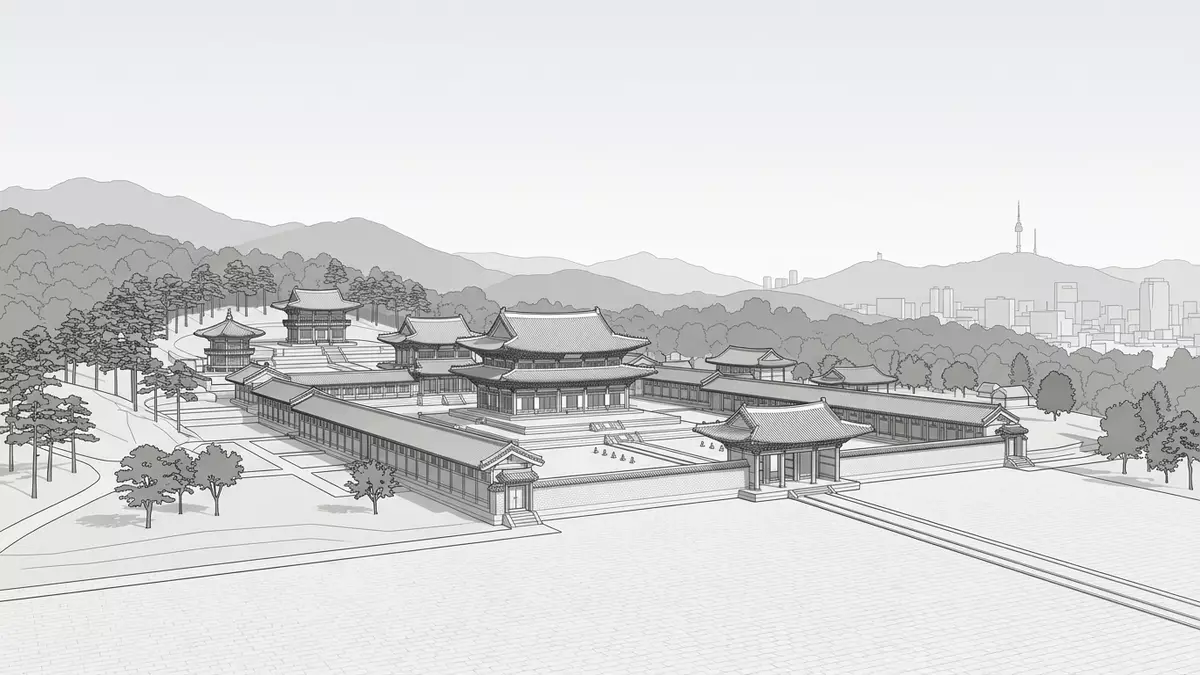
Changdeokgung is a royal palace in Seoul where halls, gates, courtyards and a wooded rear garden occupy uneven ground. Founded by King Taejong in 1405, the complex belongs to the Joseon Dynasty and remains closely associated with architecture shaped around its setting.
Changdeokgung and the Joseon court
Changdeokgung was established as a secondary palace to Gyeongbokgung, the principal palace of the Joseon capital. Its first buildings formed part of a royal compound for official business and residence, with the palace placed in Jongno-gu at the foot of Ungbong Peak on Mount Baegaksan.
The complex was damaged during the Japanese invasion of 1592 and reconstructed in 1610 under King Gwanghaegun. Changdeokgung then served as the main royal residence for a long period, while successive rulers added buildings, studies, pavilions and garden features. Changdeokgung’s recorded history traces these changes across the Joseon period.
Halls, gates and courts in timber and stone
The palace buildings combine wooden construction with stone platforms and tiled hipped roofs. Their arrangement includes official areas, administrative quarters, royal residences and audience spaces, linked through gates and courtyards rather than gathered around a single monumental axis.
Injeongjeon is the principal hall, while Injeongmun forms its formal entrance. Seonjeongjeon served as an administrative hall, and Huijeongdang and Daejojeon belong to the residential part of the compound. Donhwamun, the main gate, introduces the palace from the city side. The palace complex covers 57.9 hectares and includes official and residential buildings within a larger garden landscape.
These spaces express the hierarchy of the Joseon court through their position and use. Stone steps, timber columns, painted brackets, tiled roofs and enclosed courts provide the visible vocabulary of the palace, while the surrounding trees remain part of the setting rather than a distant backdrop.
Huwon, the garden behind the palace
Behind the palace buildings lies Huwon, also known as the Secret Garden. It contains wooded slopes, terraces, ponds, lawns, flowering trees and pavilions, with paths connecting distinct garden spaces across the uneven terrain.
Buyongji is a major pond in the garden, with Buyongjeong Pavilion and Juhamnu Pavilion nearby. Ongnyucheon Stream, Aeryeonji Pond, Uiduhap and Yeongyeongdang add further named places to the garden landscape. The area was formed during the reign of King Taejong and expanded under later Joseon rulers.
Huwon was associated with royal leisure, study and ceremonial life. Its buildings are smaller than the principal palace halls, but their setting gives the rear garden a separate architectural character. Changdeokgung’s rear garden includes ponds, pavilions and planted areas within the palace grounds.
Changdeokgung became a UNESCO World Heritage Site in 1997. The designation recognises the relationship between the palace buildings, the garden and the natural terrain, a relationship that gives the complex its distinct visual identity within Seoul.
Visiting Changdeokgung: what travellers from Western Europe should know
- Changdeokgung stands at 99 Yulgok-ro in Jongno-gu, Seoul. Anguk Station on Subway Line 3 is the named rail connection for the palace.
- The grounds include stone platforms, steps, sloping paths and garden routes across uneven terrain. Huwon extends behind the formal palace buildings into wooded ground.
- The official language is Korean and the currency is the South Korean won.
- Nearby landmarks include Changgyeonggung, another Joseon royal palace, and the traditional streets of Jongno.
Searching for Changdeokgung on social platforms
These links open searches for Changdeokgung on each platform.
Frequently asked questions about Changdeokgung
Where is Changdeokgung?
Changdeokgung is in Jongno-gu, northern Seoul, at 99 Yulgok-ro. It occupies ground near Mount Baegaksan and lies close to other historic palace districts.
What can visitors expect at Changdeokgung?
The complex contains formal gates, courtyards, timber halls, stone platforms, residential buildings, ponds, pavilions and wooded garden routes. Huwon extends the palace experience beyond the official court spaces.
What makes Changdeokgung distinctive?
Changdeokgung combines Joseon palace architecture with a large rear garden laid across uneven ground. Its buildings and landscape form the basis of its UNESCO World Heritage status from 1997.


