
Chichén Itzá marks autumn equinox on 22 September
Published on 09/27/2026 at 12:51 | Editorial responsibility: Rafael Müller, Editor-in-Chief AD HOC NEWS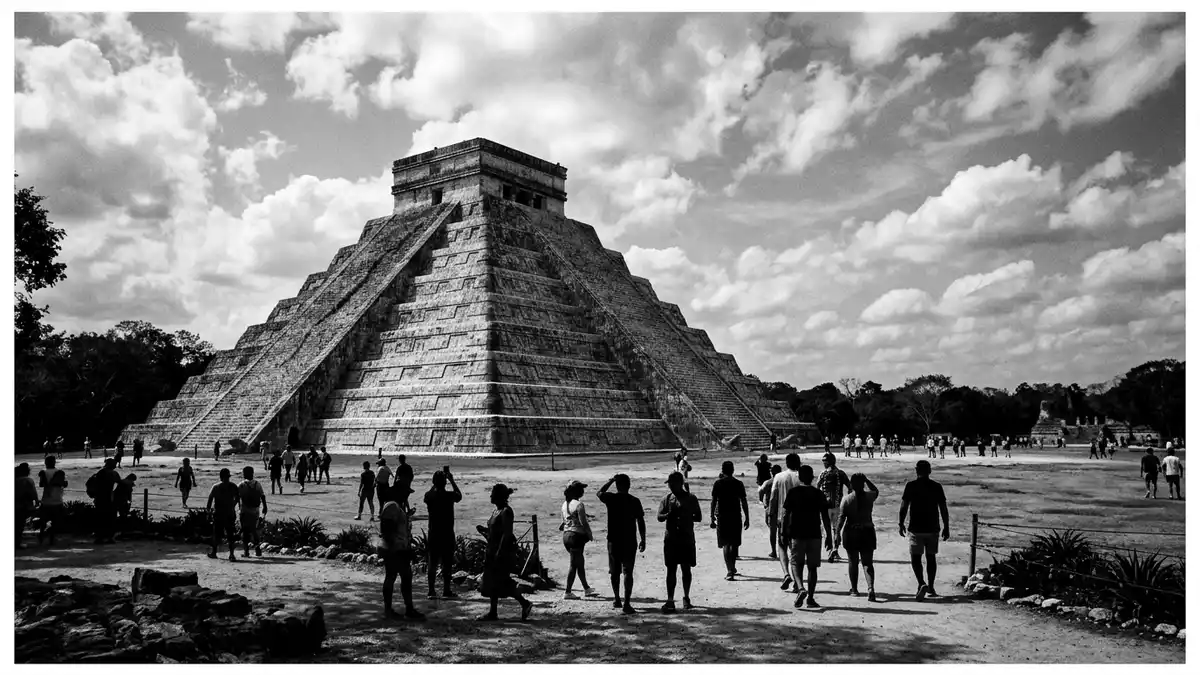
Chichén Itzá marked the autumn equinox on 22 September 2026, when a light-and-shadow effect appeared at the Maya archaeological site near Valladolid in Mexico. The phenomenon is associated with Chichén Itzá, the local name used for the pre-Hispanic city, and the northern staircase of El Castillo, also called the Temple of Kukulcán.
Autumn equinox placed El Castillo at the centre
The equinox occurred at 6.06pm on 22 September 2026, according to the National Institute of Anthropology and History (INAH). The institute described the event as a light-and-shadow phenomenon that projects the shape of a serpent on the northern balustrade of El Castillo.
INAH and the Cultur trust of the Yucatán government prepared a special operation for visitors on 20 and 21 September 2026. The operation was linked to the equinox and to the period in which the serpent effect could be observed at the archaeological site. The official notice placed the expected viewing period between 3pm and 4.30pm during those two days. The INAH autumn equinox notice also named the site and the authorities responsible for the arrangements.
Chichén Itzá connects the equinox with Maya architecture
The effect relates directly to El Castillo, the best-known pyramid within the northern group of the archaeological city. The structure is also known as the Temple of Kukulcán, linking the visitor event to one of the surviving monuments rather than to a separate festival venue.
UNESCO describes the site as one of the major Maya centres of the Yucatán Peninsula. Its surviving buildings include the Temple of the Warriors, El Castillo and the circular observatory known as El Caracol. The organisation lists the UNESCO World Heritage site as an important example of Maya-Toltec civilisation, with monuments reflecting architectural traditions from the Yucatán and central Mexico.
That architectural setting gives the 22 September event its specific character: the seasonal sunlight was observed on the northern side of the pyramid, while the wider site contains the ball court, the Temple of the Warriors and El Caracol. Chichén Itzá therefore served both as the location of the equinox observation and as the historic monument that shaped what visitors came to see.
Visiting Chichén Itzá: what travellers from Western Europe should know
- The autumn equinox took place on 22 September 2026 at 6.06pm. INAH organised related visitor measures at the site on 20 and 21 September 2026.
- During the special operation, the last entry was at 4pm. From that time, access was restricted to the Great Ball Court, the Temple of the Thousand Columns, Casa Maya, Cenote Xtoloc, the Ossuary and the Observatory.
- Chichén Itzá is in Mexico's Yucatán Peninsula, with Valladolid as the nearest regional reference in the supplied location. The visitor operation directed ticket purchases to the Centro de Atención a Visitantes.
- The site contains open archaeological plazas, monumental stairways and stone structures, including the stepped El Castillo. Visitors should expect exposed outdoor terrain and uneven historic surfaces.
- Spanish is used in Mexico, and the national currency is the Mexican peso.
- Entry requirements depend on your nationality; UK travellers can check the FCDO travel advice at gov.uk/foreign-travel-advice, Irish travellers the Department of Foreign Affairs at ireland.ie.
Searching for Chichén Itzá on social platforms
These links open searches for Chichén Itzá on each platform.
Frequently asked questions about Chichén Itzá
When did the autumn equinox take place at Chichén Itzá?
The autumn equinox occurred on 22 September 2026 at 6.06pm. The related light-and-shadow effect was associated with El Castillo, or the Temple of Kukulcán.
What changed at Chichén Itzá during the equinox operation?
INAH restricted access to several named areas from 4pm during the operation on 20 and 21 September 2026. The notice also excluded Chichén Viejo and the Grand Museum from access during those two days.
Where is Chichén Itzá and what is it?
Chichén Itzá is a Maya archaeological city in Mexico's Yucatán Peninsula, near Valladolid. UNESCO lists it as a World Heritage site with surviving buildings including El Castillo, the Temple of the Warriors and El Caracol.


