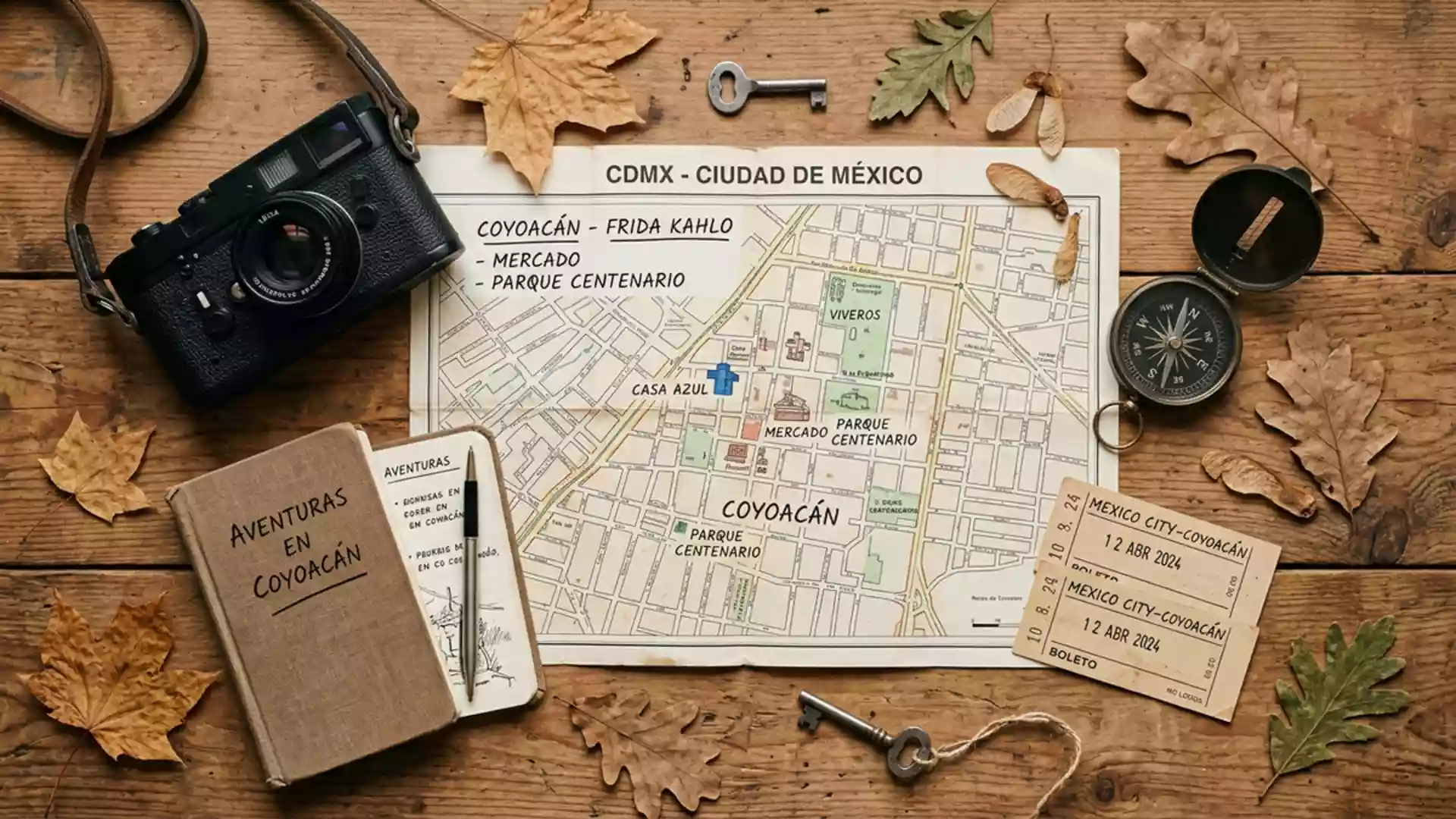
Coyoacan’s blue houses and leafy plazas in Mexiko-Stadt
Published on 08/29/2026 at 12:56 | Editorial responsibility: Rafael Müller, Editor-in-Chief AD HOC NEWS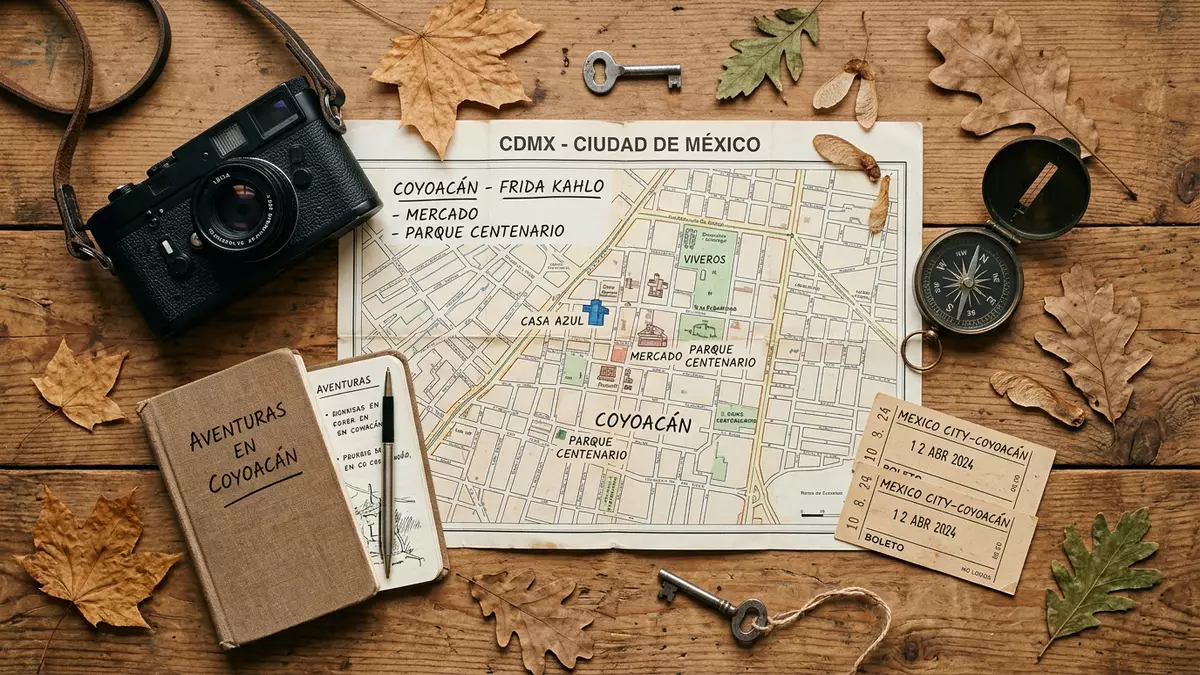
Coyoacan in Mexiko-Stadt is a former village that became an urban borough yet still feels like a self-contained town wrapped inside the capital. Its cobbled streets, low houses and shaded plazas make a striking contrast with the wide avenues and towers elsewhere in Mexico City, and the district is closely associated with the life and work of Frida Kahlo in the twentieth century.
From pre-Hispanic settlement to colonial town
The name Coyoacan refers both to a borough of Mexico City and to the historic centre that once formed a separate town to the south-west of the old capital of New Spain.a borough of Mexico City The area was an important settlement in the pre-Hispanic period and became a base for the Spanish conquest of central Mexico in the sixteenth century, when it developed into a colonial administrative centre.
Coyoacan’s historic core retains a street pattern and building scale that reflect this long history, with plazas framed by churches and civic buildings rather than high-rise blocks. The borough in its modern form was created in 1928, when the Federal District of Mexico City was divided into sixteen administrative entities, and Coyoacan became one of them with the former town at its heart.created in 1928
Streets of painted houses and leafy squares
Walking through central Coyoacan, the scale stays resolutely low and domestic, with houses and small public buildings lining narrow streets that still follow the outlines of the colonial town. Many facades carry strong colours, from deep reds to bright blues, broken by doorways and balconies that sit directly on to the pavement.
The district’s social life gathers around plazas such as the Jardin Centenario and neighbouring spaces, where trees, paving and benches structure open areas between the surrounding streets. Churches from the colonial period rise beside these squares, giving the centre an architectural rhythm of enclosed streets opening into wider spaces. Coyoacan forms part of the wider urban fabric of Mexico City, yet the historic streets present a setting that feels more like a provincial town than a capital district.historic streets present a setting
Frida Kahlo’s Casa Azul and artistic Coyoacan
Coyoacan is closely linked with Mexican painter Frida Kahlo, whose former family home stands in the Colonia del Carmen neighbourhood of the borough. The house, widely known as La Casa Azul for its deep blue exterior walls, became the Frida Kahlo Museum in 1958, four years after her death, and preserves both works of art and everyday objects related to her life.became the Frida Kahlo Museum in 1958 Frida Kahlo was born in this house in 1907 and spent her final years there, and the museum today occupies the same early twentieth-century structure built in 1904.she was born in this house in 1907
Inside La Casa Azul, rooms open one after another around an interior patio, displaying paintings, photographs, furniture and clothing associated with Kahlo and her husband Diego Rivera. The courtyard brings planting, paths and seating into the middle of the house, so the museum visit includes both interior rooms and outdoor spaces enclosed by the blue walls.enclosed by the blue walls Around the wider borough, other cultural venues, cafes and bookshops reinforce Coyoacan’s reputation as a place where art, literature and everyday neighbourhood life intersect.
Visiting Coyoacan: what travellers from Western Europe should know
- Coyoacan lies to the south of Mexico City’s traditional centre, forming one of the capital’s boroughs; the historic quarter sits within easy reach of central Mexiko-Stadt by public transport or taxi.
- Streets in the old centre are paved and can be narrow, with uneven surfaces in places, so exploring the area on foot involves crossing cobbles and kerbs between plazas, churches and museums.
- The Frida Kahlo Museum, La Casa Azul, stands on Londres Street in the Colonia del Carmen neighbourhood of Coyoacan in Mexico City, in a residential area with tree-lined streets.stands on Londres Street
- The official language is Spanish and the currency is the Mexican peso. Entry requirements depend on your nationality; UK travellers can check the FCDO travel advice at gov.uk/foreign-travel-advice, Irish travellers the Department of Foreign Affairs at ireland.ie.
Searching for Coyoacan on social platforms
These links open searches for Coyoacan on each platform.Frequently asked questions about Coyoacan
Where is Coyoacan within Mexiko-Stadt?
Coyoacan is a borough in the south of Mexico City, with a historic centre that once formed a separate town and is now absorbed into the wider metropolis.a borough in the south of Mexico City
What should visitors expect when walking around Coyoacan?
Visitors encounter cobbled streets, painted low-rise houses, leafy plazas and churches from the colonial period, along with cafes, markets and cultural venues.
What makes Coyoacan distinctive compared with other parts of Mexico City?
Coyoacan combines the atmosphere of a small historic town with major cultural landmarks such as Frida Kahlo’s Casa Azul, set within a borough of the modern capital.Frida Kahlo’s Casa Azul