
Dai Noi Hue, the imperial city within Hue’s great citadel
Published on 09/21/2026 at 07:13 | Editorial responsibility: Rafael Müller, Editor-in-Chief AD HOC NEWS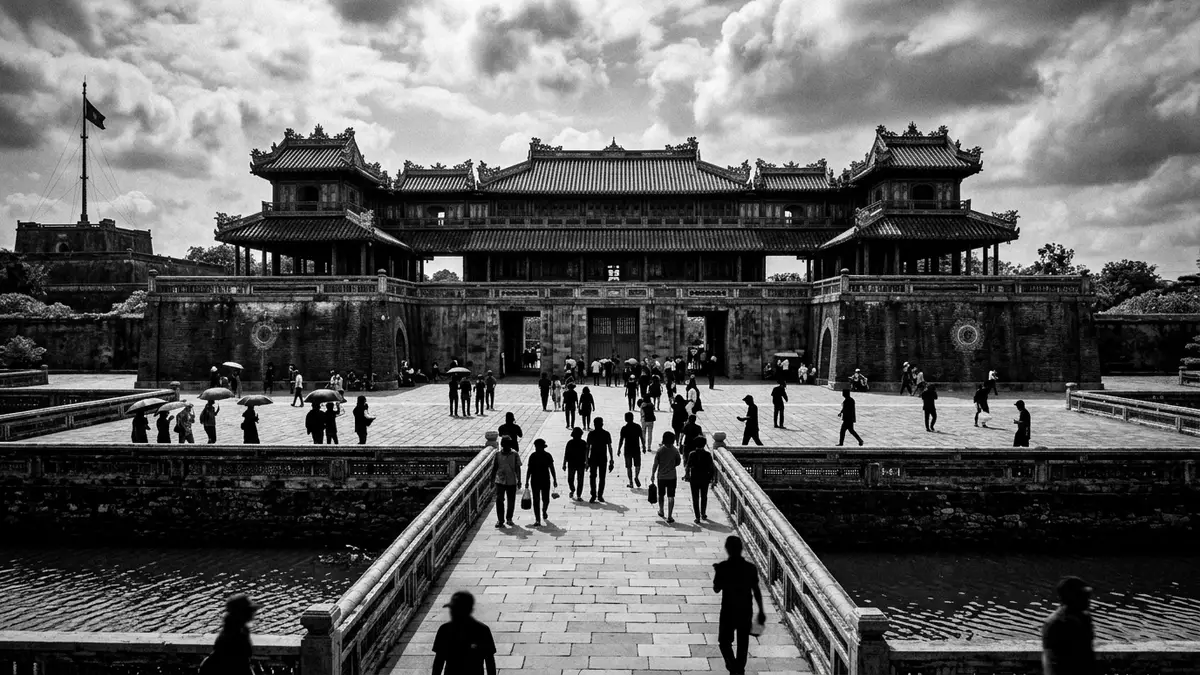
Dai Noi Hue is the inner imperial city at the core of Hue’s historic citadel, a walled royal enclosure on the north bank of the Perfume River in central Vietnam. It formed the centre of power for the Nguyen emperors in the nineteenth and early twentieth centuries and still preserves a geometric layout of walls, gates and palace compounds.
The royal enclosure inside Hue’s walled citadel
Dai Noi Hue sits within the larger Hue Citadel, a Chinese-style imperial stronghold whose long walls and earth ramparts frame the older quarters of the city on the left bank of the Perfume River.Hue Citadel on the river’s left bank The citadel’s outer fortifications form an extended polygon surrounded by a moat, with city gates arranged along its sides to control entry into the historic core.
Within this outer frame, Dai Noi Hue, known locally as the Imperial City or Hoang Thanh, occupies a more compact inner precinct aligned on a north–south axis and enclosed by its own brick walls and water channels.Imperial City or Dai Noi inside the walled city It functioned as the royal enclosure and administrative heart of the Nguyen dynasty, containing the main audience halls, working courtyards and the ceremonial axis leading towards the Forbidden Purple City where the monarch’s household was based.Hue Imperial City and Forbidden Purple City
Nineteenth-century Nguyen dynasty architecture and layout
The Hue imperial complex, including Dai Noi Hue, was begun in the early nineteenth century under Emperor Gia Long, founding ruler of the Nguyen dynasty, who established Hue as the capital of a unified Vietnam.Construction began in 1804 under Gia Long Construction of the inner royal precinct drew heavily on palace models from East Asia, with axial planning, layered courtyards and timber halls resting on stone platforms.
The walled circumference of Dai Noi Hue contains palace compounds, administrative buildings and ritual spaces that reflect the court life of the nineteenth century, with decorative roofs, carved woodwork and gates carrying imperial motifs.Dai Noi as Vietnamese imperial citadel Within the walls, the Forbidden Purple City formed a further enclosed zone that housed the royal residence and private inner courts, extending the layered sequence from outer city to citadel, from citadel to imperial city, and from imperial city to the most restricted residential quarters.Forbidden Purple City inside Dai Noi
Dai Noi Hue as a World Heritage royal landscape
Dai Noi Hue forms part of the wider complex of monuments at Hue that has been inscribed on the UNESCO World Heritage List, recognising the citadel, imperial city and associated structures along the Perfume River as a cultural landscape of national significance.UNESCO World Cultural Heritage site The ensemble includes fortifications, palaces, temples and tombs that together illustrate the ceremonial and political structures of the Nguyen period.
Within this setting, Dai Noi Hue remains the most concentrated expression of imperial spatial order in Hue, with its square plan, layered enclosures and alignment towards the riverfront gates of the citadel.Citadel’s walled circumference The site preserves architectural forms, decorative schemes and courtyard arrangements linked to the last feudal dynasty in Vietnam and sits at the heart of the historic city’s relationship with the Perfume River.
Visiting Dai Noi Hue: what travellers from Western Europe should know
- Dai Noi Hue lies within the Hue Citadel in central Vietnam, on the north bank of the Perfume River opposite the city’s later commercial districts and riverfront streets. It is reached across bridges from the streets south of the river.
- The imperial city is enclosed by fortified walls and a surrounding moat, and movement within the precinct involves crossing causeways and walking through palace courtyards laid out along a central axis.
- The ground inside the citadel consists largely of paved courts, stone platforms and garden areas, and visiting can involve extended periods on foot through gateways and along formal routes.
- The official language is Vietnamese and the currency is the Vietnamese dong.
- Entry requirements depend on your nationality; UK travellers can check the FCDO travel advice at gov.uk/foreign-travel-advice, Irish travellers the Department of Foreign Affairs at ireland.ie.
Searching for Dai Noi Hue on social platforms
These links open searches for Dai Noi Hue on each platform.
Frequently asked questions about Dai Noi Hue
Where is Dai Noi Hue located?
Dai Noi Hue is within the Hue Citadel in Hue in central Vietnam, on the north bank of the Perfume River opposite the city’s later commercial districts.
What can visitors expect inside Dai Noi Hue?
Visitors encounter a sequence of walled enclosures, palace courtyards and gateways arranged along a north–south axis, with historic halls, gardens and defensive works from the Nguyen court.
What makes Dai Noi Hue distinctive among Vietnamese sites?
Dai Noi Hue is the inner imperial city of the Nguyen dynasty, combining a square royal precinct, the Forbidden Purple City and a surrounding citadel that together form a major World Heritage ensemble on the Perfume River.


