
Daibutsu in Kamakura, a bronze Buddha under open sky
Published on 09/21/2026 at 09:07 | Editorial responsibility: Rafael Müller, Editor-in-Chief AD HOC NEWS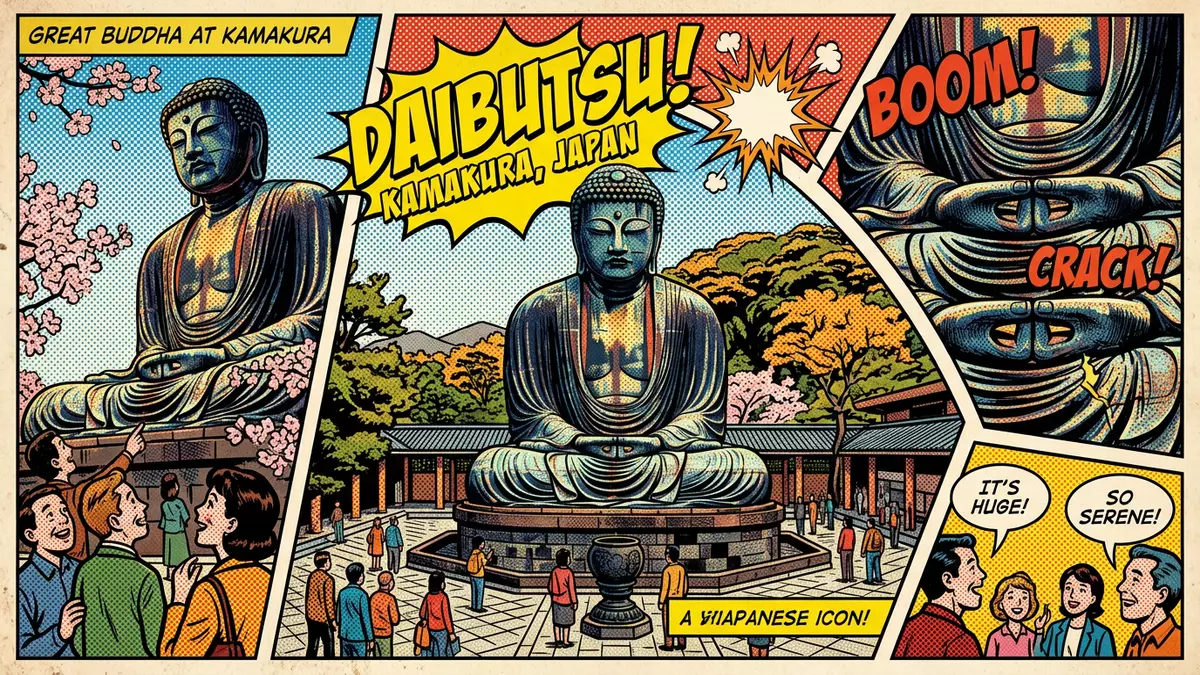
Daibutsu in Kamakura is a monumental bronze statue of Amida Buddha dating from the thirteenth century, seated outdoors within the grounds of Kotoku?in temple in Japan. Cast in 1252 during the Kamakura period, this open?air Buddha has become a defining figure of Kamakura’s landscape and a clear example of how religious sculpture can shape a whole temple site.
A thirteenth?century bronze Buddha at Kotoku?in
Daibutsu stands within Kotoku?in, a J?do?sh?, or Pure Land, Buddhist temple in the Hase district of Kamakura in Kanagawa Prefecture on the main island of Honshu.Kotoku?in temple in Kamakura The statue depicts Amida Buddha, also known as Amida Nyorai or Amitabha, associated with infinite light and the Western Paradise in Pure Land belief.a depiction of Amida Buddha In English it is widely known as the Great Buddha of Kamakura, but on site the shorter name Daibutsu is used.
The bronze figure was cast in 1252 in the Kamakura period, a time when Kamakura served as a seat of samurai government and Buddhist temples flourished across the region.completed in 1252 in the Kamakura period Earlier wooden images at the site had been damaged by storms, and the surviving statue is a substantial work of cast bronze associated with that era.a bronze replacement completed in 1252 The statue has been formally affiliated with the Pure Land school since the Edo period, strengthening its connection to Amida worship.
Scale, materials and open?air presence
Daibutsu is notable for its size and proportions, which can be appreciated even before measurements are known. Government and temple sources describe a statue that stands around 11.3 m (37 ft) from base to head, with a total height including its stone base in the region of 13.35 m (43.8 ft), and a weight of about 121 tonnes (133 tons).around 11.3 m tall and weighing 121 tonsstands 11.35 metres high and weighs 121 tons These figures place Daibutsu among the larger historic bronze Buddha statues in Japan without turning its scale into a ranking claim.
The statue is made of cast bronze with a surface weathered over centuries into the familiar green associated with aged copper alloys.a bronze Amida Buddha cast in 1252 It sits on a stone base in a seated meditation posture, with hands resting to form a mudra and a calm facial expression that visitors can observe from various angles. One distinctive feature of Daibutsu is that it stands in the open air rather than inside a large hall, a condition recorded in temple descriptions as unusual for a Buddha of this size in Japan.sits in the open air This open?air setting makes the statue and its immediate surroundings visibly part of the wider landscape of Kamakura rather than enclosed within an interior.
Kamakura, Kotoku?in and the surrounding temple grounds
Daibutsu stands at Kotoku?in temple in Hase, a district of Kamakura that lies close to the sea in Kanagawa Prefecture south of Tokyo.in the grounds of Kotokuin in Kamakura The temple belongs to the Pure Land school of Buddhism and serves both as a place of worship and as a site where visitors can experience historic religious architecture in a coastal town setting.a J?do?sh? temple in Hase, Kamakura Around the statue, the temple grounds provide paved areas, smaller structures and planting that frame views of the Buddha from different points.
The wider city of Kamakura contains several other historic temples and shrines, and Daibutsu forms one part of this ensemble. Within Kotoku?in itself, the statue functions as the principal image of the temple, and its bronze presence becomes a focus for both religious practice and quiet observation.the principal image of Kotoku?in The coastal location of Kamakura means that weather and light conditions change the way the statue’s surface appears across the day, emphasising the open?air character that distinguishes Daibutsu from many indoor Buddha images.
Visiting Daibutsu: what travellers from Western Europe should know
- Daibutsu stands at Kotoku?in temple in the Hase district of Kamakura in Kanagawa Prefecture, south of Tokyo on the island of Honshu. Trains run from central Tokyo to Kamakura, with a local railway connecting Kamakura Station to Hase Station for the short walk to the temple grounds.
- The approach to the statue within Kotoku?in includes an entrance area and paths across the temple grounds. The immediate space around Daibutsu is level, with steps leading to certain vantage points and structures nearby, so visitors encounter a mixture of flat paving and short stairways.
- Kamakura lies on the Pacific coast of Honshu, and Kotoku?in is situated inland from the shoreline but within a coastal town environment. The official language is Japanese and the currency is the yen.
- Entry requirements depend on your nationality; UK travellers can check the FCDO travel advice at gov.uk/foreign-travel-advice, Irish travellers the Department of Foreign Affairs at ireland.ie.
Searching for Daibutsu on social platforms
These links open searches for Daibutsu on each platform.Frequently asked questions about Daibutsu
Where is Daibutsu located?
Daibutsu stands at Kotoku?in temple in the Hase district of Kamakura, a coastal city in Kanagawa Prefecture on the island of Honshu in Japan.
What should visitors expect on a visit to Daibutsu?
Visitors encounter a large seated bronze statue of Amida Buddha in an open?air temple setting, with paved approaches, short flights of steps and views framed by surrounding structures and planting.
What makes Daibutsu distinctive among Buddha statues?
Daibutsu is a thirteenth?century bronze Amida Buddha of notable height and weight that stands outdoors at Kotoku?in, an arrangement described as unusual for Japanese Buddha images of comparable scale.


