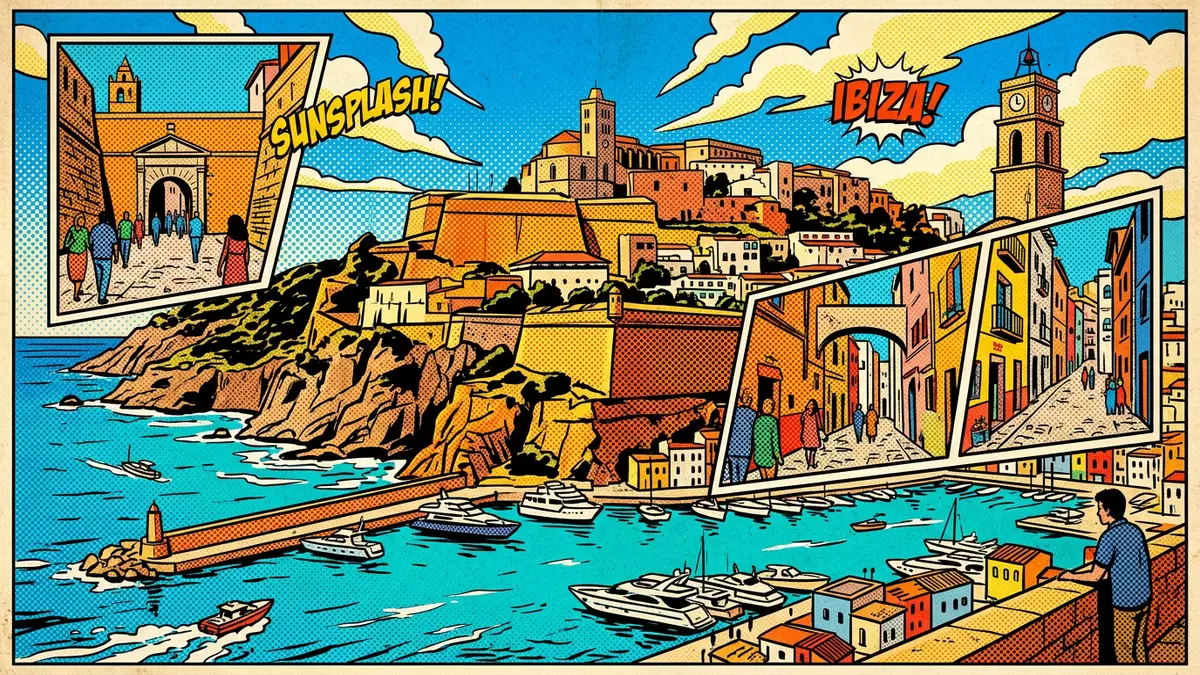
Dalt Vila’s stone ramparts above Ibiza’s harbour
Published on 08/12/2026 at 14:23 | Editorial responsibility: Rafael Müller, Editor-in-Chief AD HOC NEWS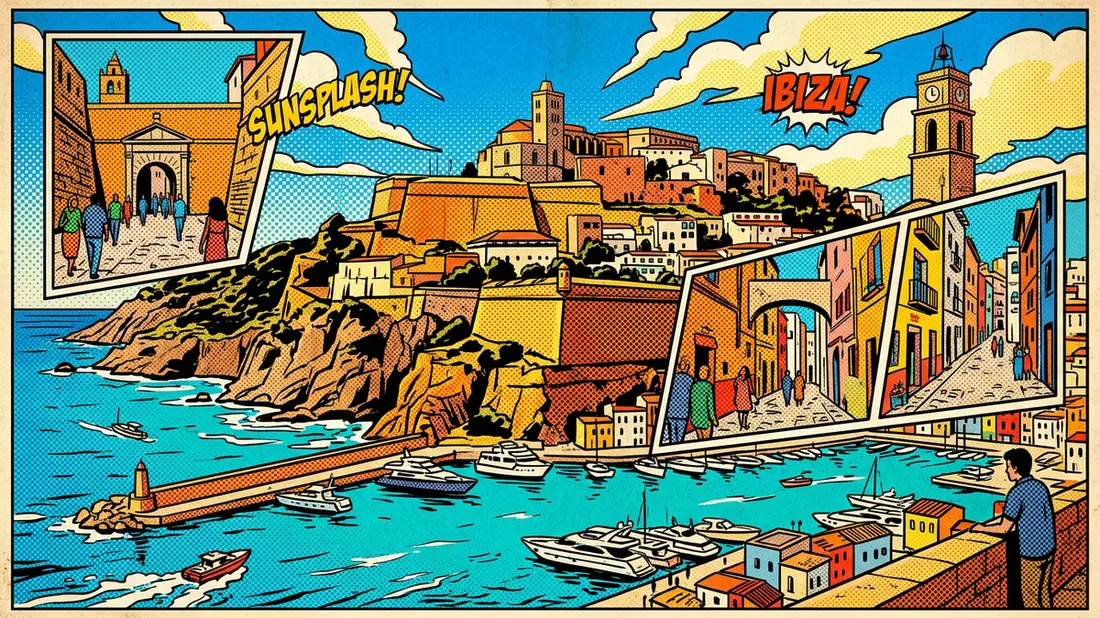
Dalt Vila, the fortified upper town of Ibiza, rises above the harbour on the hill of Puig de Vila, its stone ramparts enclosing a dense historic quarter recognised as part of the UNESCO World Heritage property “Ibiza, biodiversity and culture” since 1999.UNESCO World Heritage property The Renaissance walls and bastions that encircle this old town give the hill a distinctive profile, turning a compact Mediterranean port into a fortified acropolis layered with more than two millennia of history.more than 2,500 years of history
Renaissance walls around a living hilltop town
The most striking feature of Dalt Vila is the ring of sixteenth-century fortifications that wrap around the upper town, forming a continuous defensive enclosure above Ibiza’s waterfront.Renaissance town walls These walls, begun in the 1550s under the direction of the Italian military engineer Giovanni Battista Calvi, were developed further by Jacobo Paleazzo Fratín and stand as a substantial example of Renaissance military architecture commissioned by Philip II of Spain.Italian engineers Giovanni Battista Calvi and Jacobo Paleazzo Fratin
Projecting bastions give the circuit its characteristic angular outline and provide elevated viewpoints over Ibiza Town, the marina and the surrounding sea. The walls enclose a compact maze of streets and alleys where whitewashed houses, small squares and historic public buildings are fitted into the contours of the hill. Within the circuit, the cathedral of Santa Maria rises near the summit, accompanied by the former Almudaina castle and the church and convent of Santo Domingo, which together underline the status Dalt Vila held within the medieval and early modern city.cathedral, castle and convent
Streets, gateways and layers of history
Dalt Vila’s layout reflects its long occupation, with a street pattern that preserves a dense medieval core built over earlier Phoenician, Roman, Islamic and Catalan phases.layers of civilisation in Dalt Vila Narrow lanes climb the slope in irregular arcs, meeting at small plazas and passing under arches that recall successive periods of urban growth. The fortified upper town forms part of a broader World Heritage ensemble that also includes the Sa Caleta Phoenician settlement, the Puig des Molins necropolis and the surrounding Posidonia oceanica seagrass meadows, highlighting how the hill, harbour and sea have been connected across different eras.World Heritage ensemble on Ibiza
Entry into the enclosure is marked by fortified gates, among them the Portal de ses Taules, which leads from the lower town up through a ramped passage into a plaza inside the walls.access to Dalt Vila from Ibiza Town Within the perimeter, stone pavements and cobbled inclines express the hill’s gradient, so that each turn can reveal a glimpse of battlements, a church façade or a sudden view across the harbour. The combination of military structures, religious buildings, civil institutions and residential streets in such a compact area makes the upper town a concentrated summary of Ibiza’s historical development from the thirteenth century onwards, layered over much older foundations.
Cathedral hill, harbour views and everyday life
Near the highest point of Dalt Vila stands Ibiza Cathedral, dedicated to Santa Maria, whose present form dates largely from the fourteenth century with later alterations.Ibiza Cathedral in Dalt Vila Its position beside the remains of the Almudaina fortress emphasises the way sacred and secular authority were once concentrated at the summit of the town. From the surrounding terraces and stretches of rampart, the view takes in the modern harbour, the lower quarters of Eivissa and the coastline, underlining how the fortified hill and the sea approach are visually bound together.
Despite its heritage status, Dalt Vila functions as a lived-in district as well as a historic monument. Residential houses line the lanes, small museums and cultural institutions occupy restored buildings, and local life shares the same spaces as visitors tracing the route along the walls.a living neighbourhood within the walls The contrast between the massive sixteenth-century masonry and the everyday scale of doorways, balconies and street-side cafes underlines how the quarter has adapted to changing times while retaining the outline set by its Renaissance engineers.
Visiting Dalt Vila: what travellers from Western Europe should know
- Dalt Vila crowns the hill directly above Ibiza’s harbour in Ibiza Town, on the island of Ibiza in Spain, and is reached on foot from the surrounding streets.
- The upper town climbs steeply, with cobbled slopes, uneven stone steps and sections of rampart walkways that demand sure footing and comfortable footwear.
- Summer heat can be strong on the exposed ramparts, while shaded alleys and interior streets provide some relief from direct sun.
- The official language is Spanish and the currency is the euro.
Searching for Dalt Vila on social platforms
These links open searches for Dalt Vila on each platform.
Frequently asked questions about Dalt Vila
Where is Dalt Vila in relation to the rest of Ibiza?
Dalt Vila occupies the upper part of Ibiza Town (Eivissa) on the island of Ibiza, rising directly above the main harbour on the hill of Puig de Vila.
What should visitors expect when exploring Dalt Vila?
Visitors encounter steep cobbled streets, substantial sixteenth-century stone walls, gateways such as the Portal de ses Taules and viewpoints over Ibiza’s harbour and coastline.
What makes Dalt Vila distinctive compared with other historic quarters?
The combination of intact Renaissance fortifications, the hilltop cathedral and castle, and the ongoing residential life within a UNESCO-listed walled acropolis gives Dalt Vila its particular character.