
Dotonbori’s canal, bridge and theatre line
Published on 09/16/2026 at 13:39 | Editorial responsibility: Rafael Müller, Editor-in-Chief AD HOC NEWS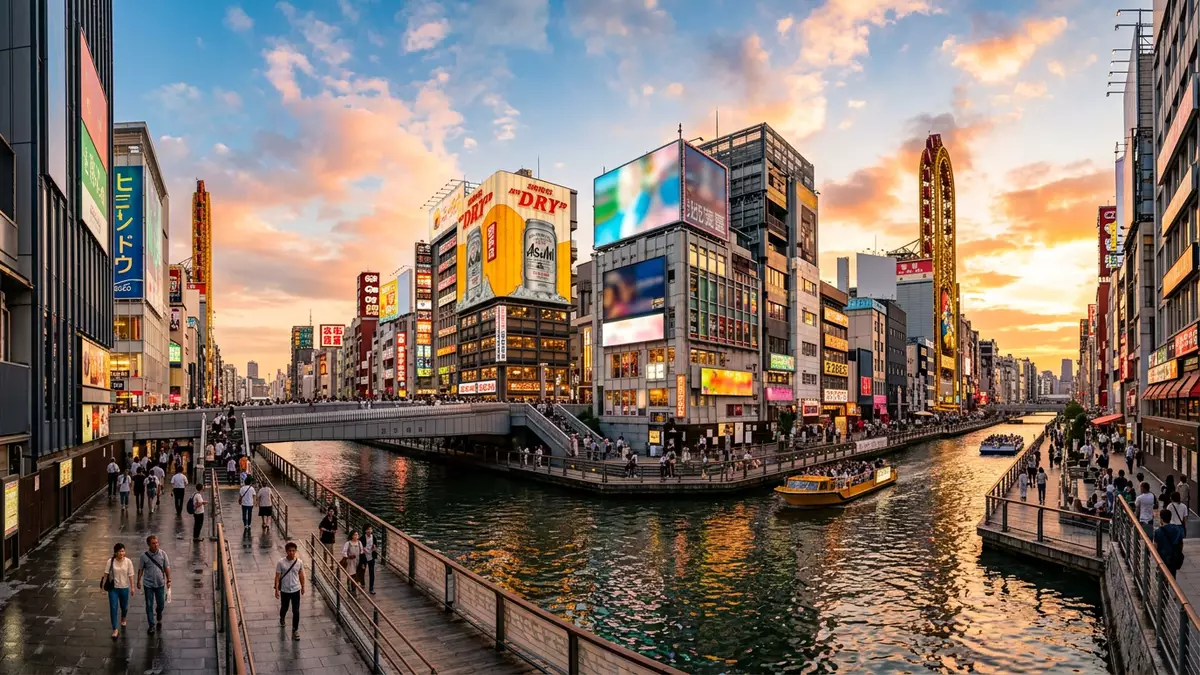
Dotonbori in Osaka is a canal-side district whose identity rests on water, bridges and theatre fronts. Its name is tied to Yasui Doton and the early seventeenth century, when the canal was begun in 1612.
Dotonbori’s canal-side frame
The district takes its name from the Dotonbori canal, a waterway that began as a local canal project on Osaka’s southern side. The place developed around that line of water, and the canal remains the clearest way to read the district’s plan and edge.
The area is now a compact urban strip with a canal at its centre and busy streets on both banks. The riverfront character is visible in the bridges, the waterline walkways and the dense frontage of shops and entertainment buildings.
Yasui Doton and the early Edo period
The history of Dotonbori is linked to Yasui Doton, a merchant and canal organiser remembered in the district’s name. The canal dates to 1612, placing the place firmly in the early Edo period and in Osaka’s commercial expansion.
After the canal was completed, the area took on a life tied to performance and trade. The connection between the canal and entertainment is part of Dotonbori’s long identity, and the district later became associated with theatres, food and signage.
1612 canal origins and early 1600s development anchor the district in a documented historical frame.
Signs, bridges and theatre fronts
Dotonbori is recognised for large signage, especially around Ebisubashi Bridge, where illuminated advertising fronts the canal. The bridge crossing and the sign beside it have become part of the district’s visual shorthand.
The Osaka Shochikuza Theatre adds another layer, with a formal theatre building standing among the commercial facades of the district. That mix of bridge, water, signboards and theatre frontage gives Dotonbori its crowded urban look.
Osaka Shochikuza Theatre and Dotonbori’s historic profile support the theatre and district setting, though the landmark mix is visible even without naming every sign.
Visiting Dotonbori: what travellers from Western Europe should know
- Dotonbori lies in Osaka’s Chuo ward, near the Namba and Shinsaibashi area. The district is reached on foot from nearby metro stations and bridges over the canal.
- The canal edge is flat, but the district is dense with crossings, narrow streets and heavy street-front signage. The most recognisable view comes from the bridge line over the water.
- The official language is Japanese and the currency is the yen.
- Entry requirements depend on your nationality; UK travellers can check the FCDO travel advice at gov.uk/foreign-travel-advice, Irish travellers the Department of Foreign Affairs at ireland.ie.
Searching for Dotonbori on social platforms
These links open searches for Dotonbori on each platform.
Frequently asked questions about Dotonbori
Where is Dotonbori?
Dotonbori is a canal district in Osaka, in the Chuo ward near Namba. It sits beside the waterway that gives the area its name.
What does a visit involve?
The district is an urban walk through bridges, shopfronts, signs and theatre buildings. The canal edge and the surrounding streets give it a tight, layered streetscape.
What makes Dotonbori distinctive?
Its strongest features are the early seventeenth-century canal setting and the dense mix of entertainment architecture. Yasui Doton, Ebisubashi Bridge and the Osaka Shochikuza Theatre all belong to that identity.


