
Duomo di Milano: a cathedral shaped by six centuries
Published on 09/24/2026 at 01:55 | Editorial responsibility: Rafael Müller, Editor-in-Chief AD HOC NEWS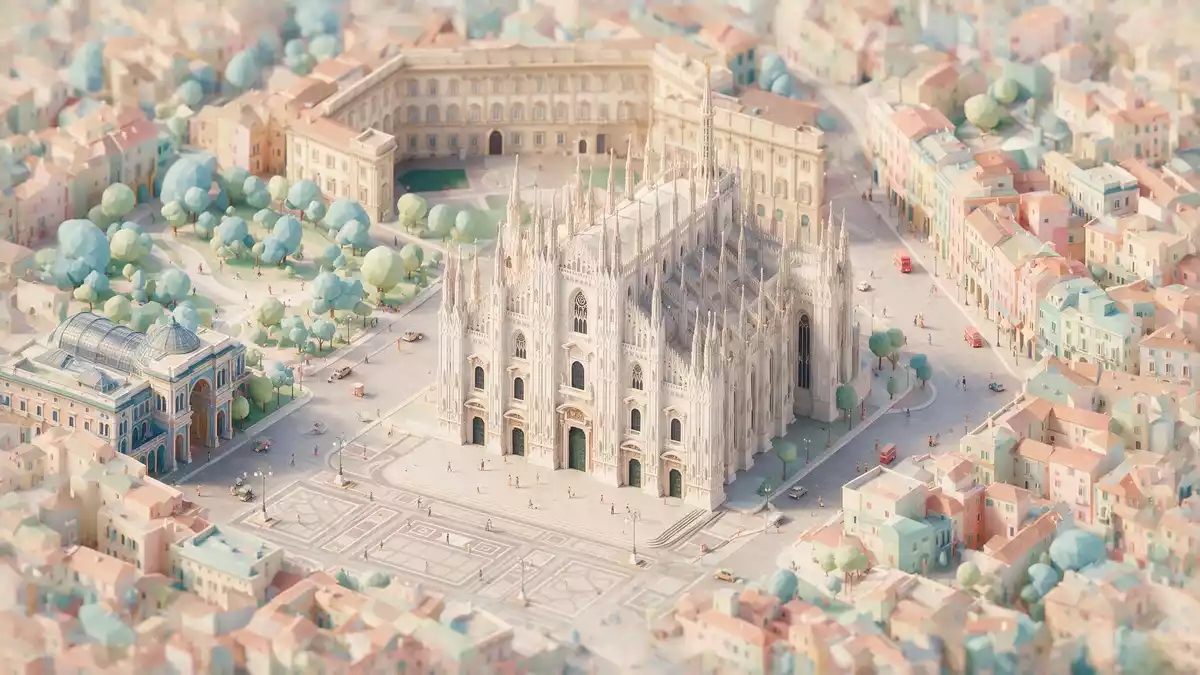
Duomo di Milano is a cathedral of pale Candoglia marble, Gothic tracery and countless sculpted details in the centre of Mailand. Its construction began in 1386, and the building carries architectural work from the late Middle Ages through the twentieth century.
Duomo di Milano and its long Gothic beginning
The cathedral’s story begins in 1386, when Archbishop Antonio da Saluzzo initiated a new building for Milan. Gian Galeazzo Visconti, Lord of Milan, became closely associated with the project, and the Veneranda Fabbrica del Duomo was established in 1387 to organise its construction. the cathedral’s 1386 beginning belongs to the period when European Gothic architecture had reached a highly developed form.
The building was consecrated in 1418, although its fabric continued to evolve for centuries. French Gothic influence appears in the soaring vertical composition, pointed arches, elaborate tracery and dense sculptural decoration. Italian traditions remain visible in the plan, the interior arrangement and the use of local marble.
Candoglia marble, pinnacles and the Madonnina
Candoglia marble gives Duomo di Milano its characteristic pale colour. The stone covers the exterior, lines the interior and forms the setting for an immense collection of architectural sculpture. Buttresses, pinnacles and spires rise across the roofline, creating a detailed silhouette above Piazza del Duomo.
The cathedral follows a cruciform plan with five aisles. Its principal nave measures about 148 metres from the main entrance to the choir, while the transept reaches a width of about 77 metres. The central roof carries the Madonnina, a gilded copper statue of the Virgin Mary that has become a recognised symbol of Mailand. the cathedral’s measured plan records the scale of its nave, transept and summit statue.
A building assembled across changing artistic periods
No single style accounts for every part of Duomo di Milano. Medieval Gothic work forms the core, while the façade includes contributions from later centuries. Renaissance, Mannerist, Baroque, Neoclassical and Neo-Gothic elements appear across the building’s long sequence of construction and completion.
The façade was completed in stages, with major work taking place from the late eighteenth century into the nineteenth century. The final details were completed in 1965, giving the cathedral an unusually extended architectural chronology. the five-century construction connects the medieval foundations with the finished exterior seen from the piazza.
Inside, tall columns divide the nave and aisles beneath vaulted spaces. Coloured glass fills the large windows, while chapels, altars, monuments and carved surfaces add layers of religious art. Beneath the cathedral, the archaeological area contains remains associated with earlier Christian buildings, including Santa Maria Maggiore, Santa Tecla and the Baptistery of San Giovanni alle Fonti.
Visiting Duomo di Milano: what travellers from Western Europe should know
- Duomo di Milano stands in Piazza del Duomo, at the centre of Mailand. Milan Metro lines M1 and M3 serve the nearby Duomo station.
- The cathedral interior contains extensive vertical space, broad aisles, columns and uneven historic stone surfaces. The rooftop route includes stairs and elevated walkways.
- The terraces expose the cathedral’s marble pinnacles, flying buttresses and sculpted roofline at close range. The Madonnina stands above the central roof.
- Italian is the official language of Italy, and the currency is the euro.
Searching for Duomo di Milano on social platforms
These links open searches for Duomo di Milano on each platform.
Frequently asked questions about Duomo di Milano
Where is Duomo di Milano?
Duomo di Milano stands in Piazza del Duomo in central Mailand, Italy. The cathedral occupies the city’s principal civic square.
What can visitors see inside?
The interior contains five aisles, tall columns, stained-glass windows, chapels, altars and carved marble decoration. The rooftop terraces reveal pinnacles, spires and the Madonnina at close range.
What makes Duomo di Milano distinctive?
Its identity comes from the combination of Candoglia marble, Gothic verticality and a construction history beginning in 1386. The building also contains work completed across several later architectural periods.


