
El Castillo at Chichen Itza, the stone pyramid that counts time
Published on 09/02/2026 at 15:36 | Editorial responsibility: Rafael Müller, Editor-in-Chief AD HOC NEWS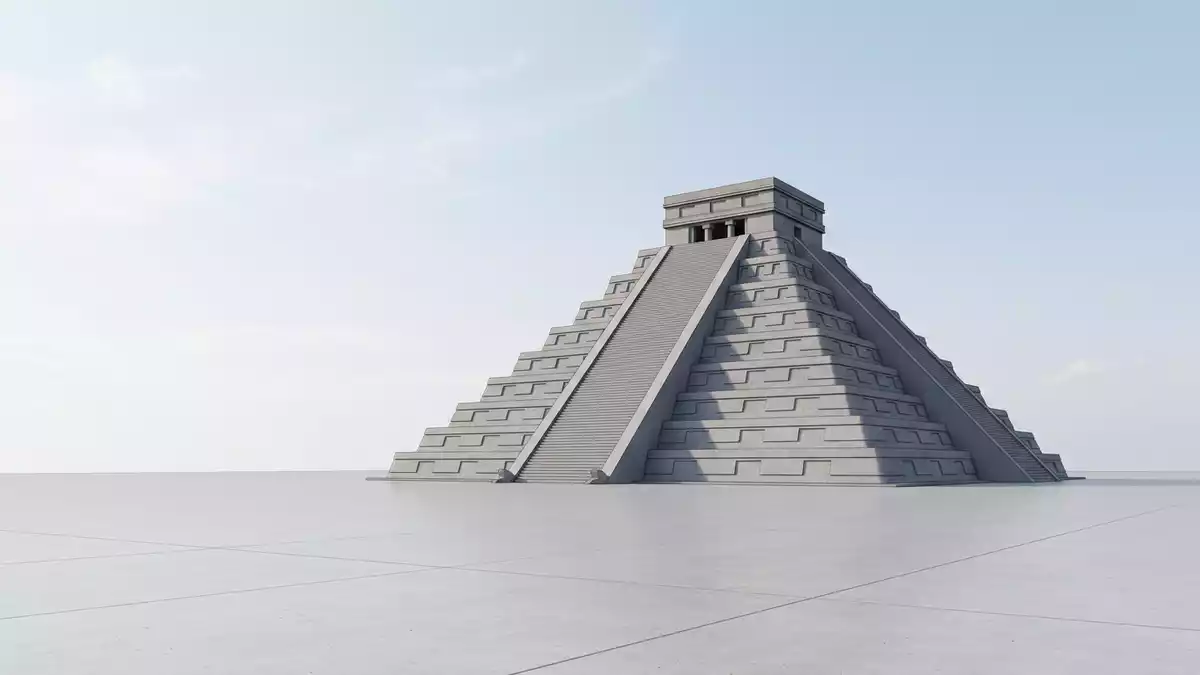
El Castillo at Chichen Itza, also known as the Temple of Kukulkán, is a stepped limestone pyramid that stands at the centre of this Maya city in eastern Mexico. Rising to about 30 m (98 ft), it combines monumental architecture with precise references to the Maya solar calendar.
El Castillo as the calendar pyramid of Chichen Itza
El Castillo is a Mesoamerican step pyramid built in stone on the northern platform of Chichen Itza in the state of Yucatán in Mexico. Archaeological studies place its construction between roughly the ninth and twelfth centuries AD, during the peak of Chichen Itza as a regional capital under the Toltec-Maya or Itza Maya rulers.Built between 1050 and 1300 CE The pyramid is dedicated to Kukulkán, the feathered serpent deity of the Yucatec Maya, a god closely linked to rulership and the cycles of time.Dedicated to Kukulkán
The structure takes the form of a square radial pyramid with four staircases, one on each side, climbing from the base to a small rectangular temple on the summit. Each staircase has 91 steps, and together with the shared upper platform this gives a total of 365, mirroring the days of the Maya solar year.365 steps for the solar year The nine stacked terraces of the pyramid are divided by these staircases into 18 sections, echoing the 18 twenty-day months of the Maya Haab’ calendar.Nine terraces and 18 sections
Stone, proportions and the serpent of light
El Castillo is built of local limestone blocks arranged in nine broad tiers, with the main stepped platform rising to about 24 m (79 ft) and the summit temple adding further height to reach around 30 m (98 ft). Each side of the base measures approximately 55 m (181 ft), giving the pyramid a nearly square footprint that dominates the surrounding plaza.About 55 m per side The staircases climb centrally on each face, flanked by carved balustrades whose lower ends carry sculpted serpent heads associated with Kukulkán.Serpent heads at the base
Twice each year, around the March and September equinoxes, late afternoon sunlight and the geometry of the terraces and staircases combine to cast triangular shadows down the northern staircase.Equinox shadow on the pyramid These dark triangles appear to join the sculpted serpent head at the base, forming a luminous body that seems to descend the pyramid. The effect draws attention to the precise alignment of the building and to the way its stepped profile interacts with the movement of the sun.
Layers of construction and the wider city
Archaeological investigations have shown that the visible pyramid encloses earlier temple structures, forming a nested sequence of constructions within the same footprint.Nested earlier pyramid These findings point to a long building history in which new stone masses were added around existing cores as Chichen Itza developed. In its present form, El Castillo belongs to the Terminal Classic and early Postclassic periods of Maya architecture, when influences from central Mexico blended with local traditions.Terminal Classic Toltec-Maya phase
The pyramid stands within the Chichen Itza archaeological zone, surrounded by other stone structures including the Great Ballcourt, platforms, smaller temples and colonnaded halls. From the open area around El Castillo, its staircases and terraces can be seen against the low Yucatán landscape, with the summit temple marking the meeting point between the ceremonial plaza and the sky. The building functions as a central reference point for the site, both in spatial terms and in discussions of Maya architecture and astronomy.
Visiting El Castillo: what travellers from Western Europe should know
- El Castillo stands in the Chichen Itza archaeological zone in the interior of Yucatán in Mexico. The nearest major city is Mérida, and the site is reached by road, with access points signposted from regional highways.
- The pyramid rises from a broad, level stone and earth platform, and the surrounding plazas involve walking on uneven ground in open sun. Paths around El Castillo include low steps and packed surfaces rather than formal pavements.
- The official language is Spanish and the currency is the Mexican peso.
- Entry requirements depend on your nationality; UK travellers can check the FCDO travel advice at gov.uk/foreign-travel-advice, Irish travellers the Department of Foreign Affairs at ireland.ie.
Searching for El Castillo on social platforms
These links open searches for El Castillo on each platform.
Frequently asked questions about El Castillo
Where is El Castillo located?
El Castillo stands at the centre of the Chichen Itza archaeological site in the state of Yucatán in south-eastern Mexico, within the municipality of Tinum.
What can visitors expect when seeing El Castillo?
Visitors encounter a stepped limestone pyramid rising from a wide plaza, with four staircases, nine terraces and a small summit temple that together form a large stone presence.
What makes El Castillo distinctive among Maya pyramids?
El Castillo combines its role as a temple to Kukulkán with precise calendar symbolism, using 365 steps, nine terraces and equinox light effects to embody solar time in its architecture.


