
Ercolano between Vesuvius and its buried Roman streets
Published on 09/21/2026 at 08:27 | Editorial responsibility: Rafael Müller, Editor-in-Chief AD HOC NEWS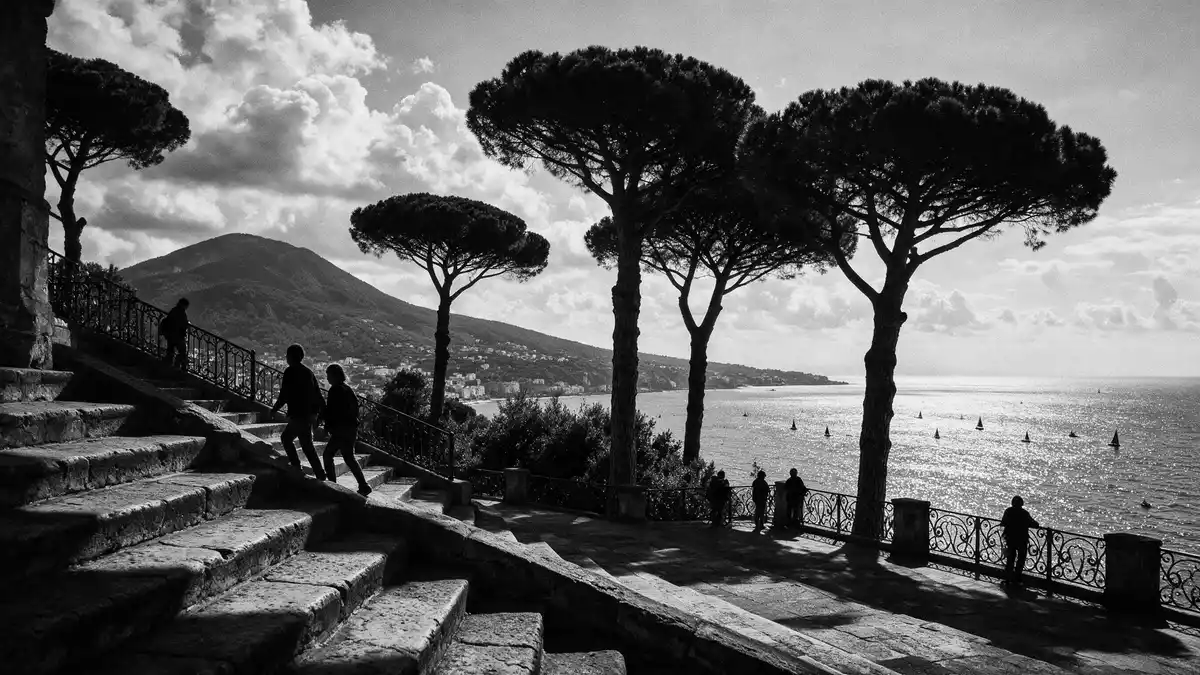
Ercolano in southern Italy is a coastal comune where present-day streets slope towards an excavated Roman quarter preserved beneath volcanic deposits from the eruption of Mount Vesuvius in AD 79. The town occupies the lower slopes between the volcano and the Bay of Naples, with the archaeological park lying within its urban fabric and forming part of a UNESCO-listed Roman landscape around Vesuvius.
Ercolano between the volcano and the sea
Ercolano stands in Campania south-east of central Naples, on the western foot of Mount Vesuvius and close to the shoreline of the Bay of Naples.Ercolano stands in Campania The modern comune occupies a strip of ground between rising volcanic slopes and the coastal plain, so streets in the built-up area run across ground laid down during the eruption that destroyed the ancient town in AD 79.eruption of Vesuvius in 79 AD
The medieval settlement known as Resina grew on the volcanic material left after that eruption and was later renamed Ercolano in the twentieth century, adopting an Italian form of the ancient town’s name.medieval town of Resina In the late twentieth century the archaeological area was formally recognised within the UNESCO World Heritage property Archaeological Areas of Pompeii, Herculaneum and Torre Annunziata, underlining its place in the wider Roman landscape around the volcano.World Heritage property
Descending from Ercolano to the buried Roman town
The archaeological park at Ercolano occupies a cut into the volcanic deposits on the seaward side of the modern town, reached from urban streets such as Corso Resina that follow the present city grid.Corso Resina in Ercolano From the modern pavement the ground falls away into a trench where rows of Roman houses, workshops and public buildings stand exposed, their upper levels framed by the retaining walls that hold back later construction.
Within this excavated quarter, ancient streets run roughly parallel to the shoreline, lined with masonry facades, colonnades and entrances opening onto intact interiors preserved by the hot material that covered the town. The volcanic layers rise above upper floors and rooflines, so the Roman urban fabric appears as a slice through time lying below twentieth-century buildings and traffic routes.excavated streets between Vesuvius and the sea
Ercolano’s archaeological park and its wider setting
The excavations at Ercolano are administered as the Parco Archeologico di Ercolano, with the main access reached from Corso Resina in the built-up zone of the comune.Parco Archeologico di Ercolano Within the park, paths follow the line of ancient streets, passing Roman houses with preserved upper storeys, public spaces and the shoreline warehouses that once stood near the harbour zone.
The site forms part of the Archaeological Areas of Pompeii, Herculaneum and Torre Annunziata inscribed on the UNESCO World Heritage List in 1997, which together preserve several Roman towns and villas affected by the eruption of AD 79.UNESCO listing in 1997 Around the park, the present-day resort town of Ercolano provides streets, local services and views up towards the crater of Mount Vesuvius and down towards the Bay of Naples, making the buried Roman quarter part of a wider volcanic and coastal landscape.
Visiting Ercolano: what travellers from Western Europe should know
- Ercolano lies south-east of central Naples in Campania, on the lower slopes of Mount Vesuvius and beside the Bay of Naples, with the archaeological park reached from streets such as Corso Resina.
- The archaeological area occupies a cut into the volcanic deposits below the present city grid, with stairways and sloping paths leading down from the modern street level to the Roman streets.
- The official language is Italian and the currency is the euro.
- Ercolano is in Italy, a member of the European Union, so the standard entry-requirements sentence for non-EU destinations does not apply here.
Searching for Ercolano on social platforms
These links open searches for Ercolano on each platform.
Frequently asked questions about Ercolano
Where is Ercolano?
Ercolano is a coastal town and comune in Campania in southern Italy, on the Bay of Naples south-east of the city of Naples and below Mount Vesuvius.
What can visitors expect at Ercolano’s archaeological park?
Visitors descend from modern streets into an excavated Roman quarter, walking along ancient lanes between preserved houses, workshops and public buildings cut into the volcanic deposits.
What makes Ercolano distinctive among Roman sites near Vesuvius?
The ancient town lies beneath a living coastal city, so the archaeological park sits within the present urban area, linking the buried streets of a Roman settlement with the surrounding slopes of Mount Vesuvius and the Bay of Naples.


