Foro Romano and the stone core of ancient Rom
Published on 09/03/2026 at 17:48 | Editorial responsibility: Rafael Müller, Editor-in-Chief AD HOC NEWS
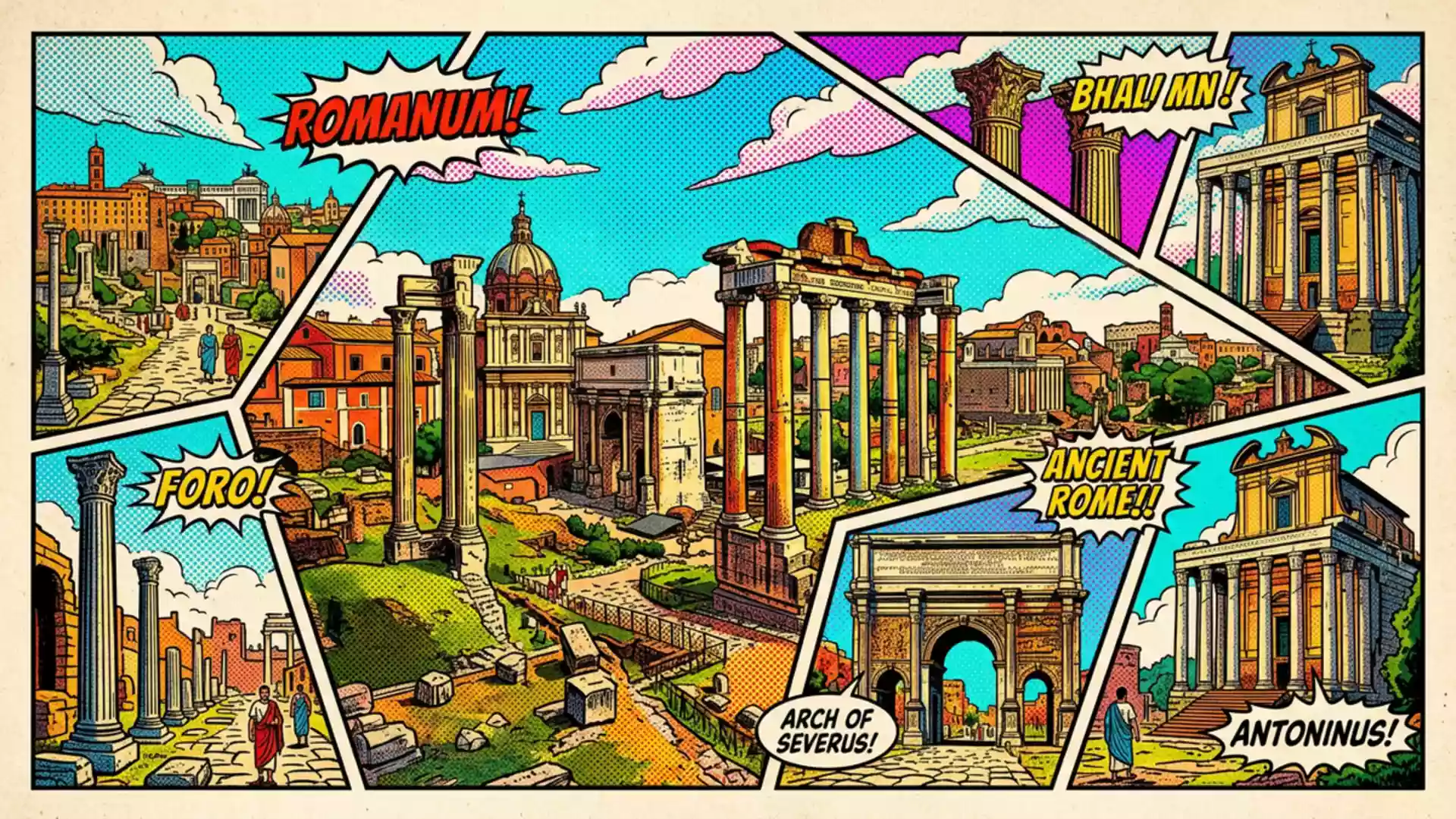
Foro Romano in Rom is the most important forum of ancient Rome, set on low ground between the Palatine and Capitoline hills. Its surviving arches, temples and civic buildings give the site a dense stone profile that still dominates the valley.
Foro Romano between the hills
The forum lay in a valley that became the civic centre of ancient Rome, with space for public meetings, law courts and processions. A later imperial layer added temples and monuments, while the older ground plan remained legible across the ruins.ancient Rome
Britannica places the Roman Forum on low ground between the Palatine and Capitoline hills, and describes it as the scene of public life in republican times. It also notes surviving structures such as the Curia, the Temple of Saturn, the Temple of Vesta and the Arch of Titus.between the Palatine
Temples, arches and civic remains
The remains include religious buildings, administrative spaces and ceremonial monuments rather than a single monumental block. That mixture is part of the site’s interest: the visitor sees the civic machinery of the Roman Republic and Empire across one archaeological landscape.
The Temple of Vesta, the Temple of Saturn, the Curia and the Arch of Septimius Severus survive in whole or in part, and each marks a different function of Roman public life. The result is a field of fragments rather than a closed ensemble, with columns, stairways and masonry walls standing in uneven alignment.
From republican forum to archaeological landscape
The forum developed from the early public space of Rome into a ceremonial centre under the empire. Classical writers and later historians place its origin in the early history of the city, and its later layers preserve that long sequence of use.
John Foot’s Britannica account describes the valley as a ringed space that accumulated layers of debris, earth and ashes after repeated destruction and rebuilding, and says excavation stripped much of that cover away. The present landscape is therefore a compact record of stone, fill and ruin, with the Regia, basilicas and triumphal arches still readable among the fragments.record of stone
Visiting Foro Romano: what travellers from Western Europe should know
- The forum lies in central Rom, between the Palatine and Capitoline hills, beside the Colosseum area. The nearest Metro stop is Colosseo on Line B.Colosseo on Line B
- The ground is uneven, with surviving steps, broken paving and changes in level across the ruins. Good footwear matters more than a straight route.
- The main remains are spread across an open archaeological zone, so the visit unfolds as a walk among dispersed monuments and fragments.
- The official language is Italian and the currency is the euro.
- Entry requirements depend on your nationality; UK travellers can check the FCDO travel advice at gov.uk/foreign-travel-advice, Irish travellers the Department of Foreign Affairs at ireland.ie.
Searching for Foro Romano on social platforms
These links open searches for Foro Romano on each platform.
Frequently asked questions about Foro Romano
Where is Foro Romano?
It lies in central Rom, between the Palatine and Capitoline hills, close to the Colosseum area. The site belongs to the ancient centre of the city.
What can be seen there?
Visitors see temple remains, the Curia, arches, basilica ruins and stretches of ancient paving. The setting is open and broken into many separate fragments.
What makes Foro Romano distinctive?
Its value lies in the way religious, civic and ceremonial remains occupy the same valley. The result is an archaeological landscape where major Roman monuments stand within a compact public space.