
Fremantle Markets beneath a Victorian market hall
Published on 09/24/2026 at 10:28 | Editorial responsibility: Rafael Müller, Editor-in-Chief AD HOC NEWS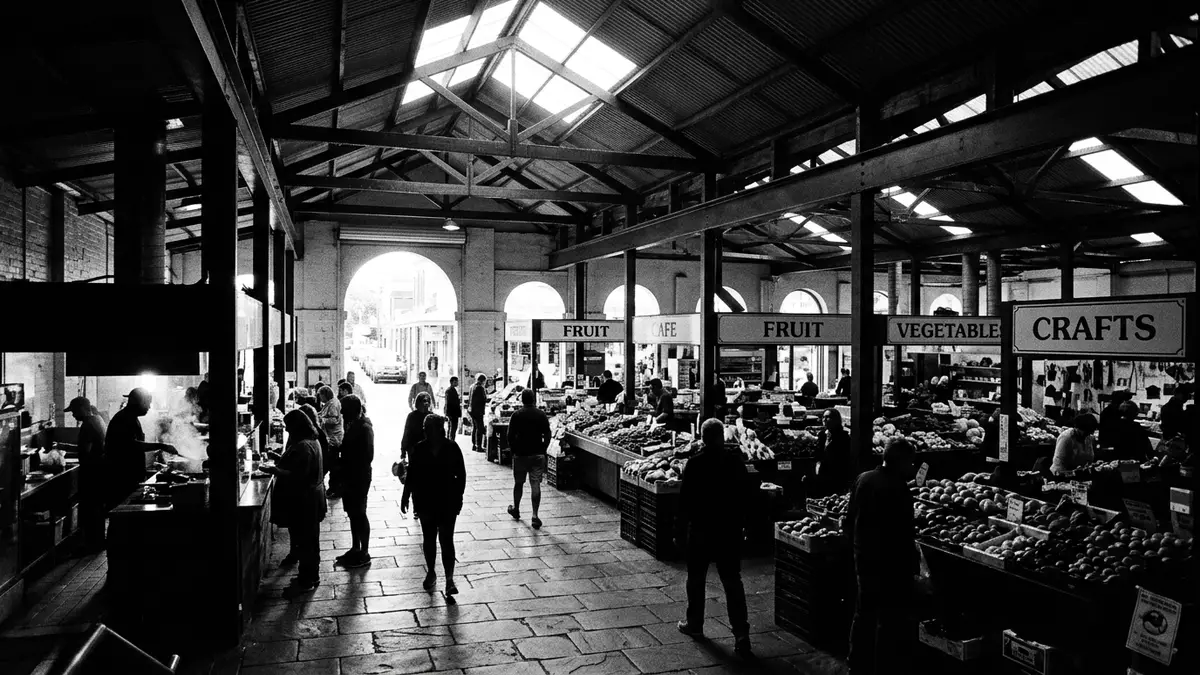
Fremantle Markets brings a working market into a Victorian-era hall of brick, limestone and corrugated iron. At the corner of South Terrace and Henderson Street in Fremantle, the building combines Federation Romanesque architecture with stalls, produce and small independent businesses.
Fremantle Markets and the 1897 market hall
Construction began in 1897 and the market opened in 1898. Sir John Forrest, Premier of Western Australia, laid the foundation stone on 6 November 1897. The architects were Charles Lancelot Oldham and Herbert Joseph Eales of Oldham and Eales, whose design used the Federation Romanesque style. the heritage record identifies the building as a municipal market of brick and limestone.
The hall belongs to Fremantle’s late nineteenth-century commercial landscape. Its architecture has a sturdy, low-slung character, with pointed brickwork, rendered surfaces, limestone walls and a metal roof. Parapeted gables, large semicircular openings, tourelles and ornamental motifs give the exterior its Federation Romanesque vocabulary.
Brick, limestone and the market interior
The market building is a single-storey structure with a broad roof, clerestory windows and a lantern. Its principal elevations face South Terrace and Henderson Street Mall, while a reconstructed verandah follows the street frontages. The different surfaces remain legible from outside: red brick, pale limestone, smooth render and metal roofing form the main palette.
Inside, the market is arranged around covered trading spaces and smaller shopfronts. The original building is accompanied by a former caretaker’s cottage, a service yard, a cool store and sheds. A fruit and vegetable hall was added in 1991, creating another part of the market complex without replacing the nineteenth-century core. the heritage trail brochure places the hall’s construction between 1897 and 1898.
From wholesale produce to Fremantle marketplace
Fremantle Markets opened as a wholesale food and produce market serving the port town. Fruit, vegetables, meat and everyday goods were traded under the municipal roof. The market’s original role connected the building with Fremantle’s maritime economy, migrant communities and the wider growth of Western Australia during the gold-rush era.
The building functioned as a wholesale market until the 1950s, then became a packing and distribution centre. Fremantle City Council restored it in 1975, after which it returned to use as a public market. That change of function is visible in the relationship between the historic hall and the varied stalls occupying it. the State heritage entry records the building’s 1897–98 origins and its continuing market use.
Fremantle Markets entered the State Register of Heritage Places in November 1993. The address is also recorded as 74 South Terrace, with associated land extending towards Henderson Street, William Street and Parry Street. The market therefore functions as both a destination for shopping and a surviving part of Fremantle’s civic architecture.
Visiting Fremantle Markets: what travellers from Western Europe should know
- Fremantle Markets stands at the corner of South Terrace and Henderson Street in Fremantle, at the southern end of the South Terrace commercial strip.
- The covered market occupies a historic building with street entrances, shopfronts and several connected sections, including the former service yard and later produce hall.
- The official language is English and the currency is the Australian dollar.
- Fremantle lies in Western Australia, on Whadjuk Noongar Country, and the market forms part of the port city’s historic urban area.
Searching for Fremantle Markets on social platforms
These links open searches for Fremantle Markets on each platform.Frequently asked questions about Fremantle Markets
Where are Fremantle Markets?
Fremantle Markets stands at 74 South Terrace, on the corner of Henderson Street in Fremantle, Western Australia. The market is part of the city’s historic commercial district.
What can visitors expect inside?
The covered hall contains food, produce, crafts and independent retail stalls. Historic shopfronts, connected market sections and the broad iron roof remain central features of the setting.
What makes Fremantle Markets distinctive?
The market continues a municipal market use in a building constructed in 1897–98. Its Federation Romanesque architecture combines brick, limestone, render and metal around an active trading interior.


