
Gravensteen and the stone castle of Gent
Published on 08/16/2026 at 13:34 | Editorial responsibility: Rafael Müller, Editor-in-Chief AD HOC NEWS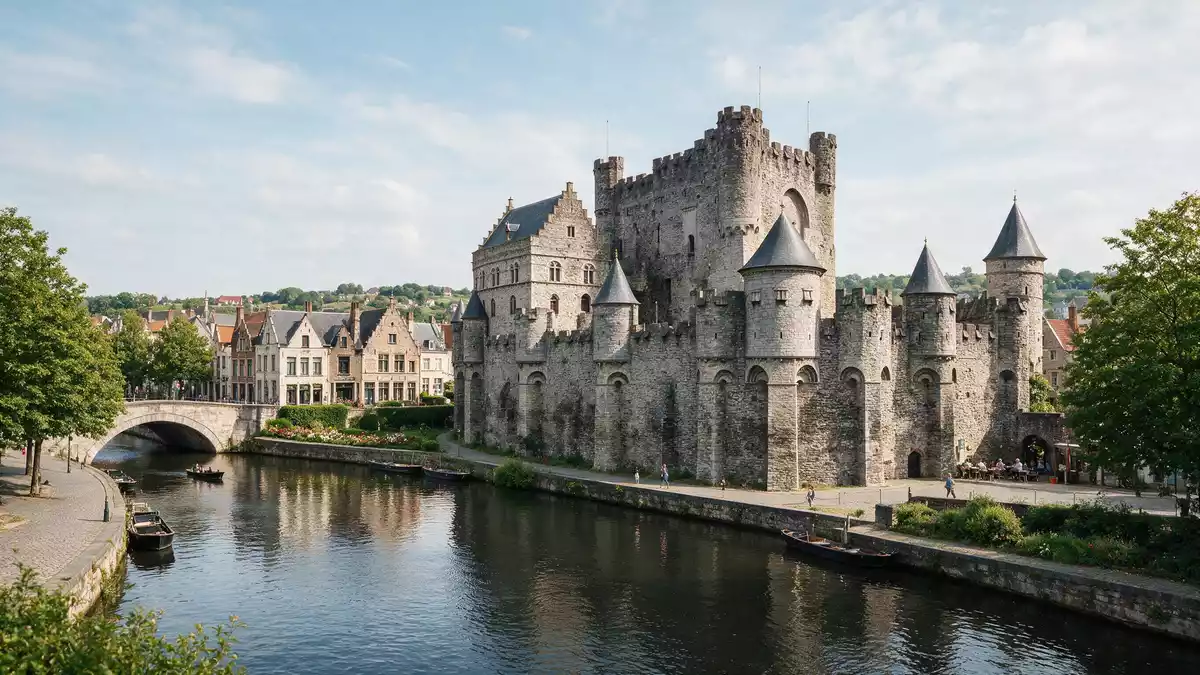
Gravensteen in Gent is a medieval castle of stone, set by the water in the city centre. Its present form dates from 1180, under Philip of Alsace, Count of Flanders, and the building still reads as a compact fortress.
The 12th-century castle of Philip of Alsace
The current castle dates from 1180 and was built under Philip of Alsace, Count of Flanders. It stands on a site fortified from earlier centuries, and the name Gravensteen means the Counts’ stone castle. 1180 and Philip of Alsace
The castle keeps a strong medieval massing. Its central keep, outer walls and moat still define the complex, and the stonework gives it a severe, compact profile in the city fabric.
From comital residence to civic reuse
Gravensteen served the Counts of Flanders as a residence until 1353, then took on judicial and administrative roles. It later became a mint, a prison and a cotton mill, before restoration returned it to public use. residence until 1353
The castle’s later history is visible in its layered identity. A fortress can hold court, confine prisoners and house industry without losing its medieval shell.
Stone, wall and moat in the centre of Gent
The castle rises in Gent, in East Flanders, close to the old urban core. Its position by the river branches places water and masonry in direct contact, and the moat remains part of the setting. Gent, in East Flanders
The stone exterior and the enclosed layout give the building a dense, enclosed character. Philip of Alsace, Count of Flanders, and the city of Gent form the main historical frame, while the castle itself remains the visible subject.
Visiting Gravensteen: what travellers from Western Europe should know
- Gravensteen stands in central Gent, in East Flanders, and is reached on foot through the old city streets. The building sits close to the river branches that shape the historic centre.
- The castle has walls, towers and a keep, so the visit involves enclosed masonry spaces rather than open parkland. The stone surfaces and stair-led circulation are part of the place.
- The castle’s identity combines a comital residence, a court, a prison and a mint. That sequence remains legible in the building’s fabric and in its medieval silhouette.
- The name Gravensteen means the Counts’ stone castle in Dutch. That association with the Counts of Flanders remains central to its historical character.
Searching for Gravensteen on social platforms
These links open searches for Gravensteen on each platform.
Frequently asked questions about Gravensteen
Where is Gravensteen?
Gravensteen stands in Gent, in East Flanders, Belgium. It is part of the historic city centre and sits close to the river branches.
What does a visit involve?
The castle is a stone fortress with a keep, walls and enclosed internal spaces. A visit brings together medieval masonry and later layers of use.
What makes Gravensteen distinctive?
Its identity combines a 12th-century castle, a comital residence and later judicial and industrial uses. That mix remains visible in the surviving stone structure.


