Gravensteen, Gent’s stone fortress above the Leie
Published on 08/06/2026 at 20:10 | Editorial responsibility: Rafael Müller, Editor-in-Chief AD HOC NEWS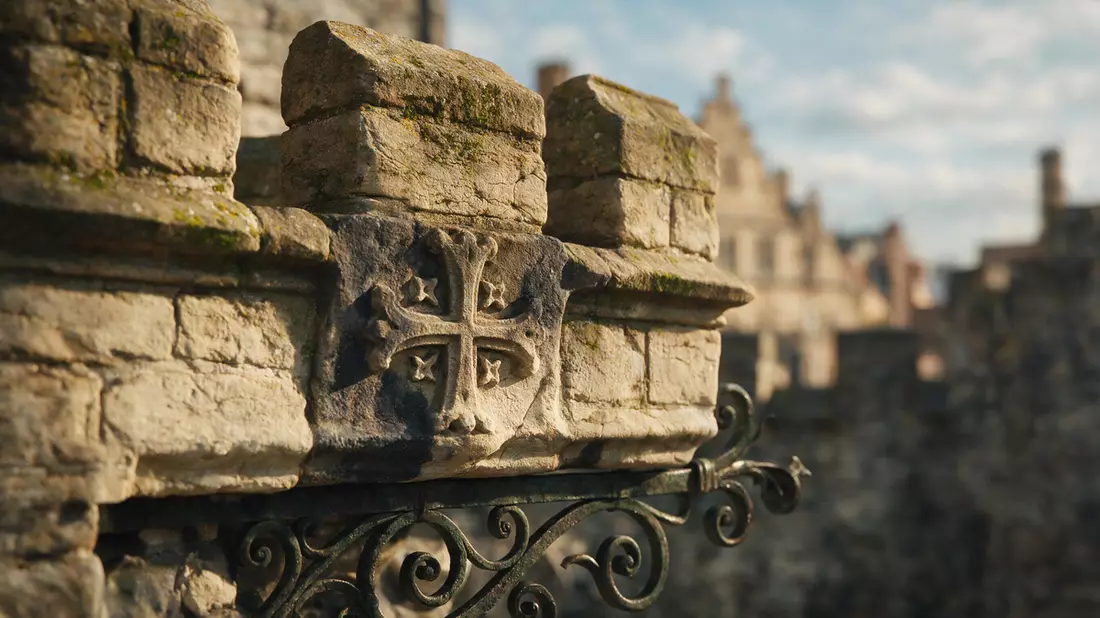
Gravensteen in Gent is a compact stone castle that rises above the city’s canals and narrow streets, its walls and towers forming a near-complete fortress in the middle of the urban fabric. Built as a residence and stronghold for the Counts of Flanders in the late twelfth century, it remains one of the most recognisable silhouettes in Belgium.
Stone walls, towers and a castle in the city
Gravensteen stands a short distance from the Leie river, hemmed in by streets and water, so the meeting of fortress and city is visible from almost every side. From the outside, visitors see thick grey stone walls punctuated by towers and battlements, arranged in an irregular polygon that encloses a central courtyard. A broad gatehouse fronts the main entrance, backed by a defensive wall that still reads clearly as a medieval fortification.
Inside the walls, the castle is organised around that courtyard, with ranges of stone buildings housing halls, staircases and smaller rooms on several levels. The main residential block rises taller than the surrounding structures, with narrow openings and a roofline that steps around chimneys and gables. Walkways run along parts of the wall, connecting towers and giving views into the courtyard on one side and across Gent’s roofs and church towers on the other.
From comital stronghold to city monument
The strong association between Gravensteen and the Counts of Flanders dates to the late 1100s, when a stone castle replaced earlier defences on this site. Its architecture reflects that era, with Romanesque arches, thick masonry and compact window openings that speak of defence as much as residence. Later centuries brought changes as the castle’s military role diminished and administrative and judicial functions grew within its walls.
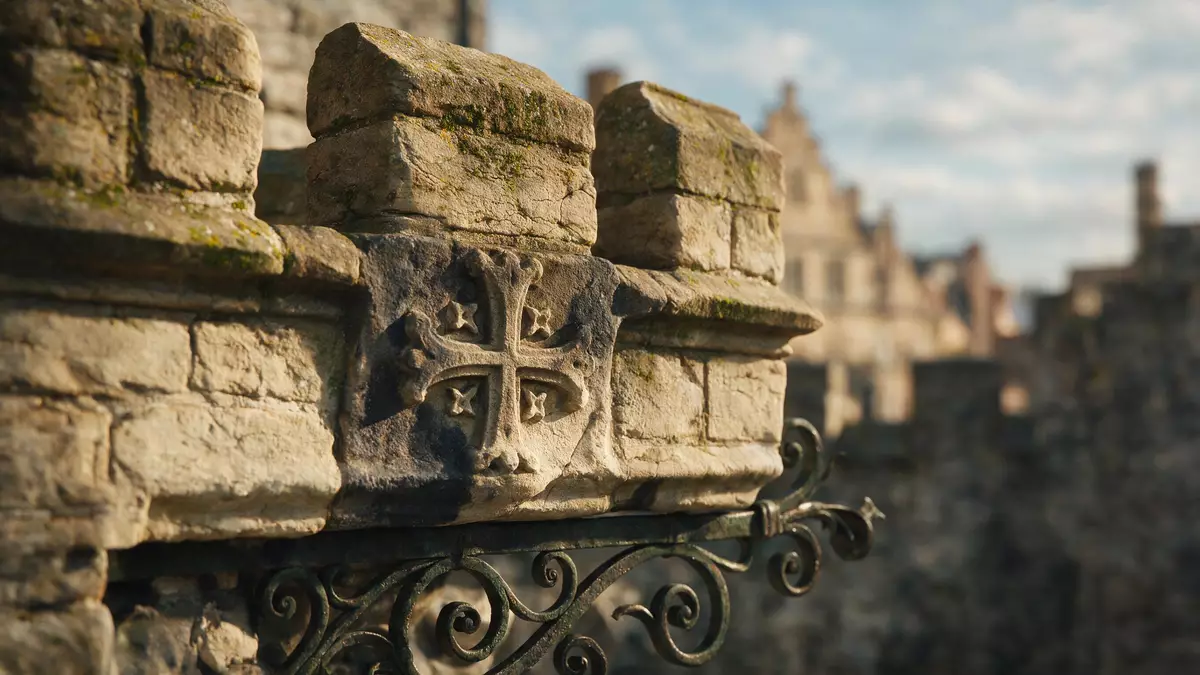
By the nineteenth century, attitudes to medieval architecture shifted and Gravensteen gained attention as a historic monument within Gent. Restoration campaigns in that period and in the early twentieth century reshaped parts of the castle, emphasising battlements, crenellations and stonework in a manner that readers of Gothic Revival buildings will recognise. The result is a structure where twelfth-century core masonry and later reconstruction sit side by side, easily compared in the texture and finish of the stone.
Walking the ramparts and reading the stone
A visit to Gravensteen is shaped by its verticality and by the simple fact that it is surrounded by a functioning city rather than open countryside. Visitors climb staircases within towers and walls to reach the wall-walks, where parapets frame views over the enclosed courtyard and outward across Gent’s historic centre. From these heights, the contrast between solid medieval stone and the tiled roofs and gabled facades around the castle becomes one of the defining impressions of the site.
Within the interior rooms, exhibitions often occupy former halls, chambers and service spaces, set against bare stone walls and timber roofs. Armour, weapons and objects linked to the castle’s judicial history help explain how Gravensteen functioned over centuries as more than just a residence. Even without entering every room, the sequence from gatehouse to courtyard, from courtyard to keep, and from keep to ramparts gives a clear sense of how a medieval urban castle operated day to day.
Visiting Gravensteen: what travellers from Western Europe should know
- Gravensteen stands in the historic centre of Gent in Belgium, and travellers reach it on foot from city tram stops or by road from Gent’s rail stations.
- Admission arrangements and opening hours are set by the site's operator and change with the season; the official website is the only binding source.
- Gent’s weather brings cool, damp winters and mild summers, so many visitors favour late spring or early autumn for clearer views from the ramparts.
- The castle involves climbing narrow stone staircases, crossing uneven floors and walking along elevated ramparts, so sturdy footwear and a reasonable level of mobility are important; restrictions may apply on site.
- Dutch is the main language in Gent, though English and French are widely understood in the centre, and card payments are common in Belgian cities.
- Entry requirements depend on your nationality. UK travellers should check the FCDO travel advice at gov.uk/foreign-travel-advice; Irish travellers the Department of Foreign Affairs at ireland.ie; EU and EEA citizens their own national foreign ministry.
Searching for Gravensteen on social platforms
These links open searches for Gravensteen on each platform.Frequently asked questions about Gravensteen
Where is Gravensteen located?
Gravensteen stands in the historic centre of Gent, in the Flemish region of Belgium, a short walk from the Leie river.
What can visitors expect inside Gravensteen?
Visitors find a stone courtyard, interior halls, towers and wall-walks, along with exhibitions that occupy former residential and administrative rooms.
What makes Gravensteen distinctive among castles?
Its position as a largely intact medieval stone fortress embedded within a living city, with ramparts overlooking Gent’s streets and canals, gives it a distinctive character.