
Great Barrier Reef: a living coral mosaic off Cairns
Published on 09/22/2026 at 00:25 | Editorial responsibility: Rafael Müller, Editor-in-Chief AD HOC NEWS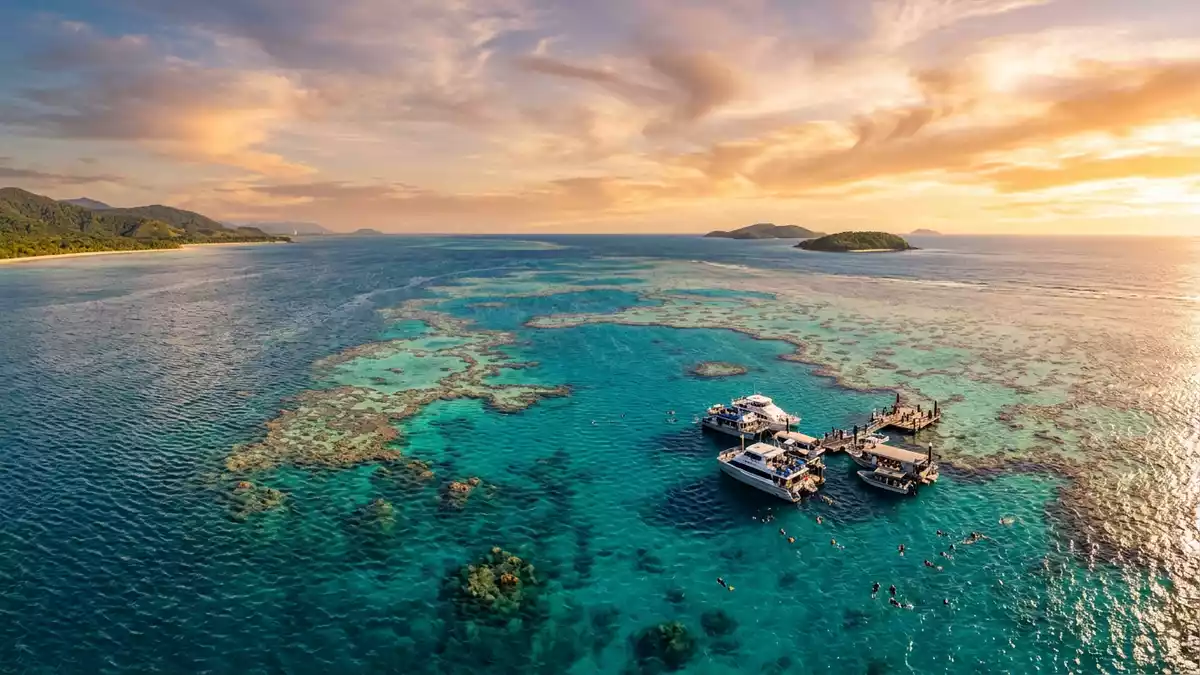
Great Barrier Reef stretches along the north?east coast of Australia as a continuous marine region of coral reefs, islands and shallow seas, with Cairns acting as one of its best?known gateways. It forms a coral system extending for more than 2,000 km (around 1,250 miles) off Queensland and has been recognised as a UNESCO World Heritage Site since 1981 for its outstanding natural value.
A reef that behaves like a region
Seen on a map, Great Barrier Reef occupies a band of sea that lies off the Queensland mainland, in the Coral Sea, rather than a single line of rock close to shore. The World Heritage Area stretches along the coast for about 2,300 km (1,430 miles), from near the tip of Cape York Peninsula in the north towards waters off Bundaberg and the Mary River catchment in the south, covering roughly 348,000 square kilometres (134,000 square miles) of marine landscape.World Heritage listing in 1981 places almost the entire ecosystem within a defined protected boundary.
The width of this reef province varies with the coastline, with coral formations and shallow platforms extending from the low?water mark along the mainland out to distances that can reach around 250 km (155 miles) offshore.Queensland’s World Heritage overview describes the World Heritage Area as a cross?shelf system encompassing coastal waters, mid?shelf reefs and outer barrier structures. For travellers basing themselves in Cairns, this means the accessible coral sites lie out to sea as part of a much larger marine corridor rather than sitting directly off an urban beach.
Coral architecture on a continental scale
Great Barrier Reef is made up of thousands of individual reefs and many islands, arranged as patches, ribbons and platforms across the continental shelf. Scientific descriptions give figures of around 2,900 separate reef structures and about 900 islands, making it the largest coral reef system yet documented on Earth.A widely used overview notes that the reef complex occupies an area comparable in size to a medium?sized country such as Japan or Italy.
Within this mosaic, different reef types form distinct environments. Inshore fringing reefs hug the mainland and offshore islands, patch reefs rise from shallower lagoons, and outer barrier reefs trace long lines near the edge of the continental shelf.A scientific overview of reef types emphasises that Great Barrier Reef functions as a system rather than a single continuous wall of coral. From a boat deck, that system becomes visible as scattered reef tops, sand cays and deeper channels organised along the shelf’s gentle slope.
Life within the Great Barrier Reef ecosystem
Biologists describe Great Barrier Reef as one of the most complex and biodiverse marine ecosystems studied so far. The UNESCO listing highlights around 400 types of coral, roughly 1,500 species of fish and thousands of mollusc species, alongside marine reptiles, seabirds and other groups, all using the reef structures, seagrass meadows and surrounding waters as habitat.Global heritage datasheets underline the importance of the reef as feeding and breeding ground for threatened species such as dugongs and large green turtles.
The ecological variety reflects both latitude and distance from shore. Northern sections lie closer to the equator and include warm?water reef tracts, while southern sections approach the Tropic of Capricorn and show different seasonal patterns. Moving away from the mainland, water clarity, salinity and exposure to ocean swell change, and reef communities adjust accordingly. These gradients, laid out across thousands of kilometres, are part of what led the Great Barrier Reef Marine Park Authority and the Australian government to seek World Heritage recognition in the early 1980s.
Visiting Great Barrier Reef: what travellers from Western Europe should know
- Great Barrier Reef lies off the coast of Queensland in north?east Australia, with Cairns serving as an established departure point for boat trips and diving excursions into the surrounding marine park.
- Excursions from Cairns typically involve travel by vessel to designated reef sites, pontoons or island landing points, where access may be via ladders, gangways, beaches or platforms rather than conventional harbour infrastructure.
- The reef environment is maritime throughout, so activity on site can involve movement on wet decks, boat steps and floating platforms, with transfers between vessels and small craft depending on the chosen itinerary.
- The official language is English and the currency is the Australian dollar.
- Entry requirements depend on your nationality; UK travellers can check the FCDO travel advice at gov.uk/foreign-travel-advice, Irish travellers the Department of Foreign Affairs at ireland.ie.
Searching for Great Barrier Reef on social platforms
These links open searches for Great Barrier Reef on each platform.Frequently asked questions about Great Barrier Reef
Where is Great Barrier Reef in relation to Cairns?
Great Barrier Reef lies offshore in the Coral Sea, with the segment accessed from Cairns forming part of the wider World Heritage Area along Queensland’s north?east coast.
What can visitors expect when joining a reef trip from Cairns?
Visitors usually travel by boat to selected coral sites, reef platforms or islands, spending time on marine structures, beaches or vessel decks rather than on mainland promenades.
What makes Great Barrier Reef distinctive among coral regions?
Its distinction lies in its documented length of more than 2,000 km, its vast area of coral structures and islands, and its recognised biodiversity, all protected within a single World Heritage marine region.


