
Great Zimbabwe and the architecture of a stone city
Published on 09/24/2026 at 12:58 | Editorial responsibility: Rafael Müller, Editor-in-Chief AD HOC NEWS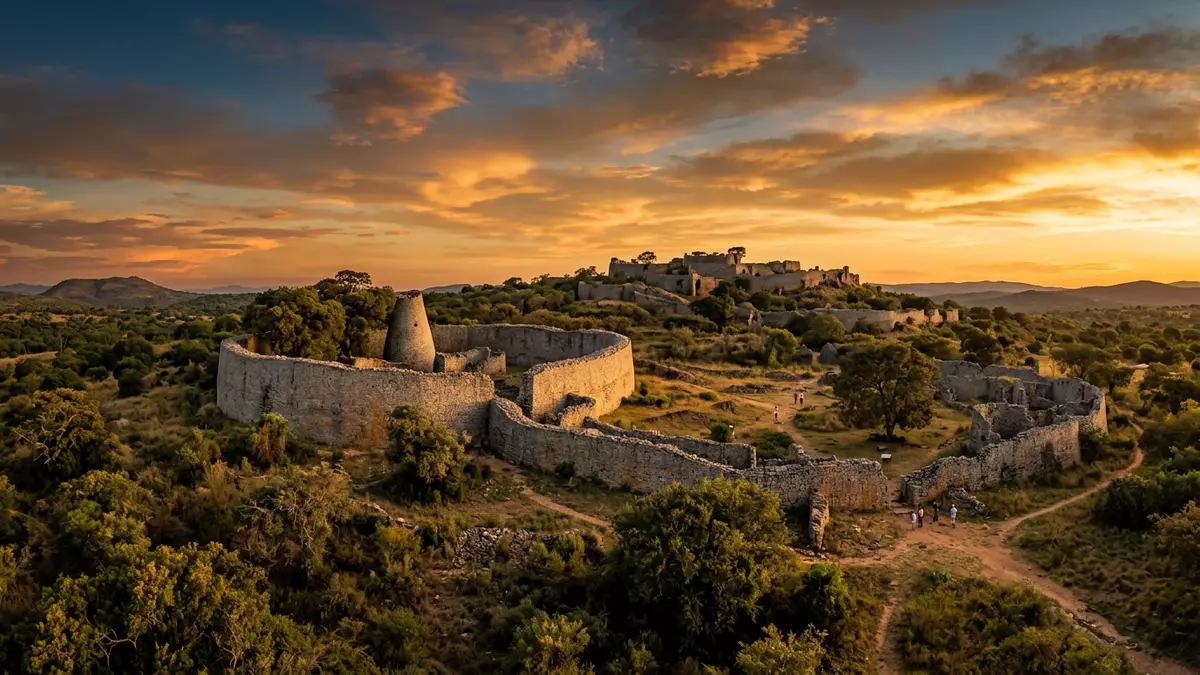
Great Zimbabwe is an archaeological city of granite walls near Masvingo in southeastern Zimbabwe. Its dry-stone enclosures spread across a landscape associated with the Shona kingdom, creating a visible meeting point between urban life, political power and carefully fitted stone.
Great Zimbabwe: walls built without mortar
The site developed between the eleventh and fifteenth centuries, with its principal building phase traditionally dated to approximately 1100–1450. Great Zimbabwe became the capital of the Kingdom of Zimbabwe, a Shona-speaking state whose influence extended across the interior of southern Africa.
Its walls use locally available granite blocks laid in courses without mortar. The stones form long curving boundaries, narrow passages, towers and enclosures. Their construction gives the ruins a distinctive architectural character: the masonry is monumental, yet each wall remains visibly assembled from individual pieces.
The name Zimbabwe is associated with stone houses or stone enclosures. At Great Zimbabwe, the term describes a settlement where stonework marked important spaces across a broad archaeological area. The ruins are not a single building, but a connected urban landscape of elevated, enclosed and residential zones.
The Hill Ruins, Great Enclosure and Valley Ruins
Great Zimbabwe is divided into three principal groups: the Hill Ruins, the Great Enclosure and the Valley Ruins. The Hill Ruins occupy a granite height and include the remains of the settlement’s elevated complex. Stone walls follow the rock and define terraces, passages and enclosed areas.
The Great Enclosure is the site’s most recognisable structure. A high curving wall surrounds an extensive interior, while a conical tower rises within the enclosure. The masonry contains decorated courses and shaped stone elements, showing how dry-stone building could create both broad boundaries and carefully finished details.
The Valley Ruins contain further enclosures and residential remains. Together with the Hill Ruins and Great Enclosure, they show a settlement organised through changing ground levels and distinct architectural spaces. The arrangement also demonstrates that Great Zimbabwe was an inhabited city rather than an isolated ceremonial monument.
Objects found at the site connect Great Zimbabwe with long-distance trade. Imported ceramics and other materials indicate links reaching towards the Indian Ocean world. Gold, ivory and agricultural production formed part of the wider economic setting associated with the kingdom, while stone architecture gave its central settlement a durable public form.
A Shona capital preserved as world heritage
Great Zimbabwe was associated with the political centre of a powerful medieval African kingdom. During the fourteenth century, the settlement reached its period of greatest influence. Its scale and material remains challenge older assumptions that monumental stone cities in southern Africa required outside builders.
The site entered the UNESCO World Heritage List in 1986 as Great Zimbabwe National Monument. The protected property covers almost 800 hectares and includes the Hill Ruins, Great Enclosure and Valley Ruins. Its cultural importance rests on the surviving architecture and on the history of the Shona communities who created and occupied the settlement.
Soapstone birds are among the best-known objects linked with Great Zimbabwe. These carved figures have become national symbols of Zimbabwe and connect the archaeological site with the visual language of the kingdom. The carvings and the walls belong to different forms of expression, but both remain tied to the political and cultural history of the settlement.
For travellers, the most immediate experience is architectural. Granite walls rise from the surrounding terrain, bend around enclosed spaces and frame views across the site. Great Zimbabwe’s identity comes from that combination of scale, material and layout: a city remembered through stone boundaries that remain legible across the landscape.
Visiting Great Zimbabwe: what travellers from Western Europe should know
- Great Zimbabwe lies in southeastern Zimbabwe, approximately 30 km from Masvingo. The site is reached by road from Masvingo, with the ruins spread across the surrounding archaeological property.
- The terrain includes granite slopes, uneven ground, stone passages and elevated areas. The Hill Ruins involve walking over rocky ground and along enclosed paths.
- The official language is English and the currency is the Zimbabwean dollar, alongside foreign currencies used in parts of the travel economy.
- Entry requirements depend on your nationality; UK travellers can check the FCDO travel advice at gov.uk/foreign-travel-advice, Irish travellers the Department of Foreign Affairs at ireland.ie.
Searching for Great Zimbabwe on social platforms
These links open searches for Great Zimbabwe on each platform.
Frequently asked questions about Great Zimbabwe
Where is Great Zimbabwe?
Great Zimbabwe is in southeastern Zimbabwe, near Masvingo. The ruins lie in a sparsely populated landscape associated with the Shona cultural region.
What can visitors expect at Great Zimbabwe?
Visitors encounter granite walls, elevated ruins, enclosed passages and open archaeological areas. The principal groups are the Hill Ruins, Great Enclosure and Valley Ruins.
What makes Great Zimbabwe distinctive?
Its architecture combines large dry-stone walls with a medieval Shona urban settlement. The site was built without mortar and became a UNESCO World Heritage Site in 1986.


