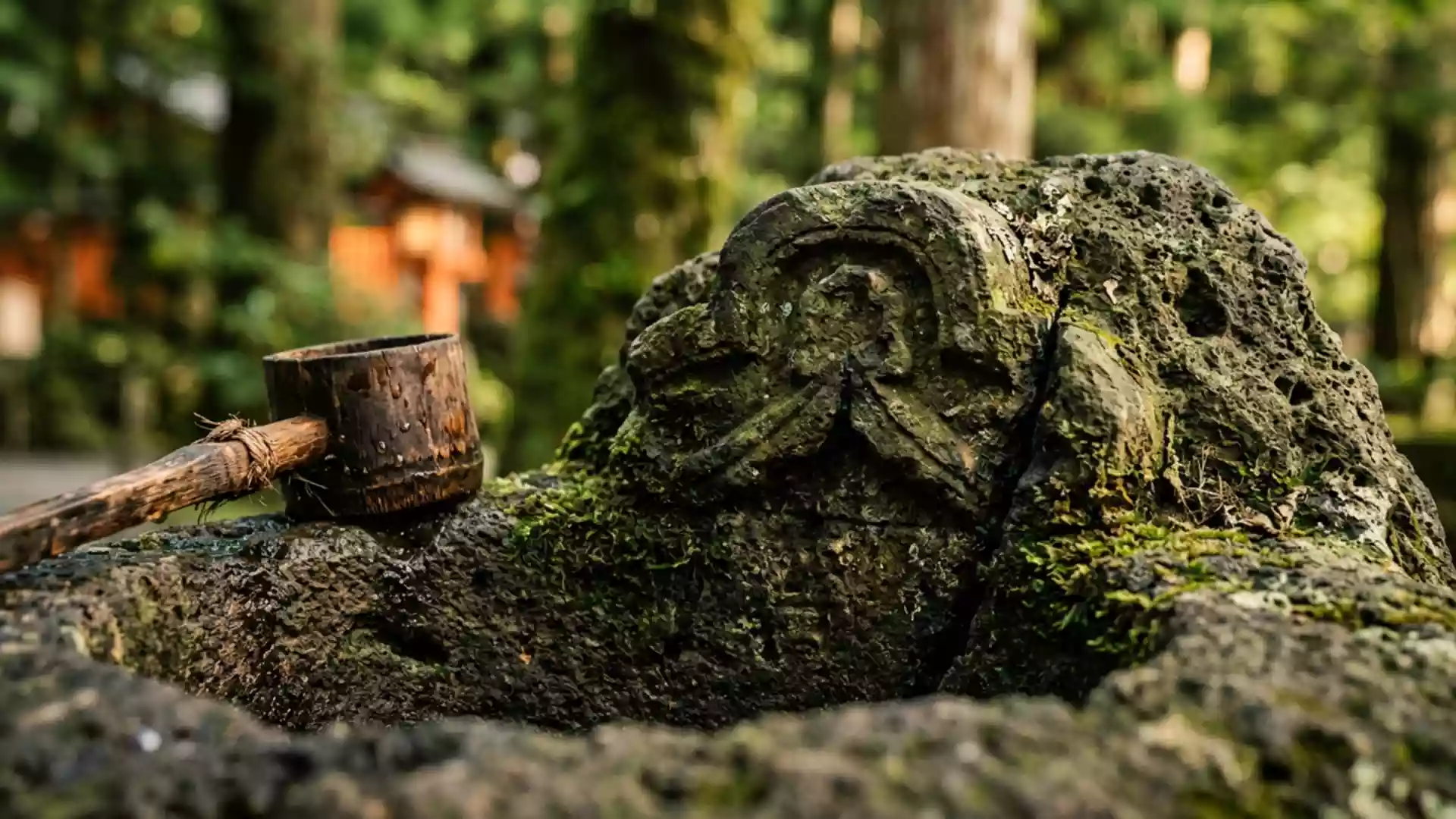
Hakone Jinja and its red gate on Lake Ashi
Published on 09/02/2026 at 13:15 | Editorial responsibility: Rafael Müller, Editor-in-Chief AD HOC NEWS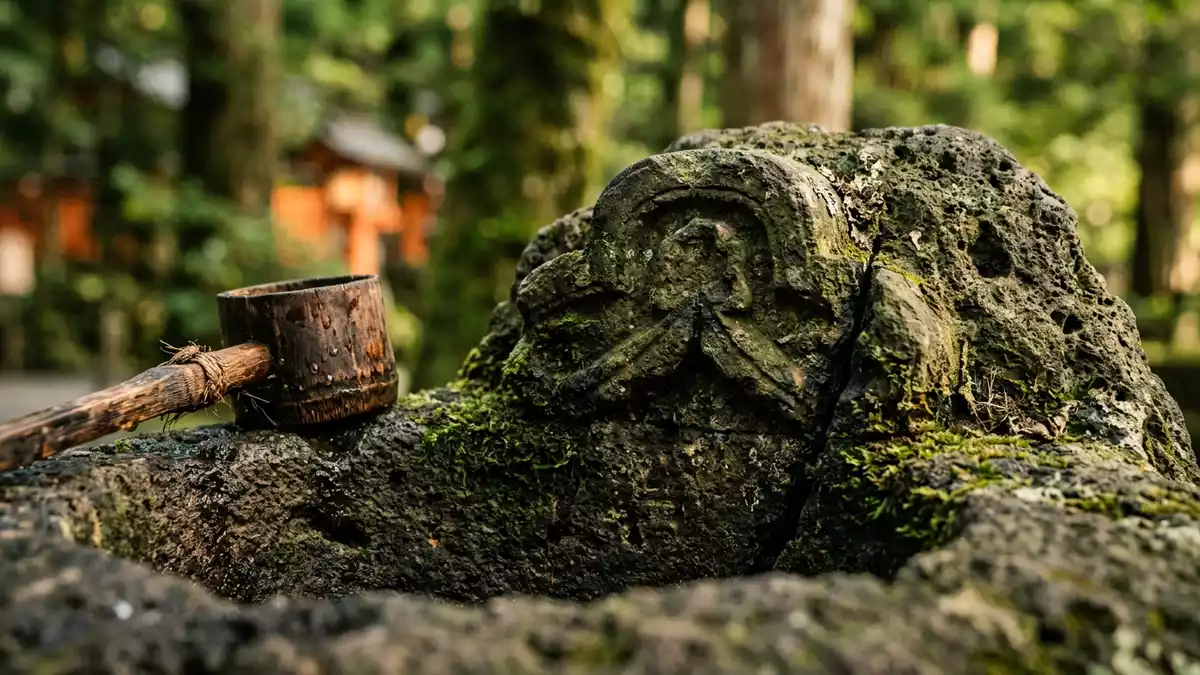
Hakone Jinja is a Shinto shrine on the shore of Lake Ashi in Hakone, south-west of Tokyo, framed by dense forest and a striking vermilion gate rising from the water. Founded in 757 during the Nara period and associated with figures such as the monk Mangan Shonin and the shogun Minamoto no Yoritomo, it weaves together mountain worship, lake mythology and one of Japan’s most recognisable shrine silhouettes.
A forest shrine on the shore of Lake Ashi
Hakone Jinja stands near the southern shore of Lake Ashi, in the volcanic landscape of the Hakone mountains in Kanagawa Prefecture. The complex lies within the wider Fuji-Hakone-Izu National Park, where wooded slopes meet the lake in a series of inlets and small bays.Fuji-Hakone-Izu National Park Visitors reach the shrine through paths shaded by tall cedar trees, with stone lanterns and smaller torii gates marking the route up from the lakeside.
The main buildings of Hakone Jinja stand on a terrace above the water, while one of its best-known features, the Heiwa no Torii or “Gate of Peace”, rises directly from Lake Ashi a short walk below. This bright red torii aligns with the lake so that, in clear weather, the view takes in water, forested hillside and the distant cone of Mount Fuji in a single frame.bright red Heiwa no Torii
From mountain summit to lakeside sanctuary
Hakone Jinja traces its foundation to 757, during the Nara period, when the ascetic monk Mangan Shonin is said to have established a shrine to the mountain deities of Hakone.founded in 757 Early worship focused on peaks such as Mount Komagatake and the surrounding volcanic range, linking the site to long-standing beliefs in sacred mountains and rugged high places.
The shrine’s history includes repeated reconstruction after fires and conflict, with its buildings rebuilt and relocated over the centuries between summit and lakeside. The present layout on the shore of Lake Ashi dates back to the seventeenth century, when the complex took on a form that has shaped Hakone Jinja’s appearance ever since.present layout on the shore In 1936 the main hall, or honden, was rebuilt again after a fire, giving the shrine its current central sanctuary in painted wood and traditional tiled roofing.main hall rebuilt in 1936
Dragons, shoguns and the Gate of Peace
Hakone Jinja is closely linked with the legend of a nine-headed dragon, Kuzuryu, once associated with the waters of Lake Ashi and the surrounding mountains. Within the shrine grounds stands an annex of Kuzuryu Shrine, dedicated to this dragon deity, which is revered as a protective presence connected to the lake.annex of Kuzuryu Shrine Dragon motifs appear in carvings and decorations around the precincts, tying the built structures back to the surrounding landscape and mythology.dragon motif around the shrine
During the Kamakura period, the military leader Minamoto no Yoritomo, born in 1147 and later the first shogun of the Kamakura shogunate, is recorded as seeking refuge and offering prayers at Hakone Jinja after an early defeat.Minamoto no Yoritomo Over generations the shrine became associated with samurai clans and travellers using the Hakone pass on the Tokaido route between Edo and Kyoto, giving it a reputation as a guardian of journeys through the mountains.shrine dates back to the year 757
Architecture, precincts and the Heiwa no Torii
The main approach to Hakone Jinja climbs a series of stone steps through forest, passing stone lanterns and subsidiary shrines before reaching the worship hall and inner sanctuary. The buildings follow traditional Shinto shrine composition, with a haiden or worship hall at the front and the honden, housing the enshrined deities, set behind on slightly higher ground.
Below the main complex, a path descends towards the lakeshore and the Heiwa no Torii, the large red torii gate that stands in the shallows of Lake Ashi. This gate, built in 1952 to mark the coming into force of the San Francisco Peace Treaty and events associated with the post-war settlement, carries a plaque bearing the word “Peace” in Japanese written by prime minister Shigeru Yoshida.torii built in 1952 The combination of the vermilion gate, the dark water of the lake and the wooded shore has made this viewpoint one of the defining images of Hakone Jinja.water-lapped red torii gate
Visiting Hakone Jinja: what travellers from Western Europe should know
- Hakone Jinja stands in the Motohakone area on the southern shore of Lake Ashi in Hakone, Kanagawa Prefecture. It is reached by local buses and boats serving the lakeside district.
- The shrine is set on a hillside above the lake, with approaches that include stone staircases and sloping paths through forest; visiting involves walking on uneven steps and paved surfaces.
- The wider Hakone area forms part of Fuji-Hakone-Izu National Park, where volcanic terrain, lake views and hot spring districts lie within short travel distances of one another.
- The official language is Japanese and the currency is the yen.
- Entry requirements depend on your nationality; UK travellers can check the FCDO travel advice at gov.uk/foreign-travel-advice, Irish travellers the Department of Foreign Affairs at ireland.ie.
Searching for Hakone Jinja on social platforms
These links open searches for Hakone Jinja on each platform.Frequently asked questions about Hakone Jinja
Where is Hakone Jinja located?
Hakone Jinja stands in the Motohakone district of Hakone, on the southern shore of Lake Ashi in Kanagawa Prefecture, within the Fuji-Hakone-Izu National Park.
What should visitors expect at Hakone Jinja?
Visitors encounter wooded shrine grounds with traditional Shinto buildings, stone steps, subsidiary shrines and the large red Heiwa no Torii gate standing in the shallows of Lake Ashi.
What makes Hakone Jinja distinctive among Japanese shrines?
Hakone Jinja combines an eighth-century foundation, connections with figures such as Minamoto no Yoritomo and Kuzuryu, the dragon deity, and the water-lapped Heiwa no Torii gate on Lake Ashi.