

Historic Centre of Morelia hosts Day of the Dead displays on 7 October
Published on 10/11/2026 at 00:09 | Editorial responsibility: Rafael Müller, Editor-in-Chief AD HOC NEWSKey points in brief
- The Historic Centre of Morelia hosts Day of the Dead decorations from 7 October to 3 November 2026.
- Morelia's Noche de Muertos programme runs from 23 October to 2 November 2026 with more than 30 activities.
- Five monumental catrinas are scheduled for the historic centre from 19 October 2026.
- Morelia's World Heritage site contains more than 200 historic buildings built mainly from regional pink stone.
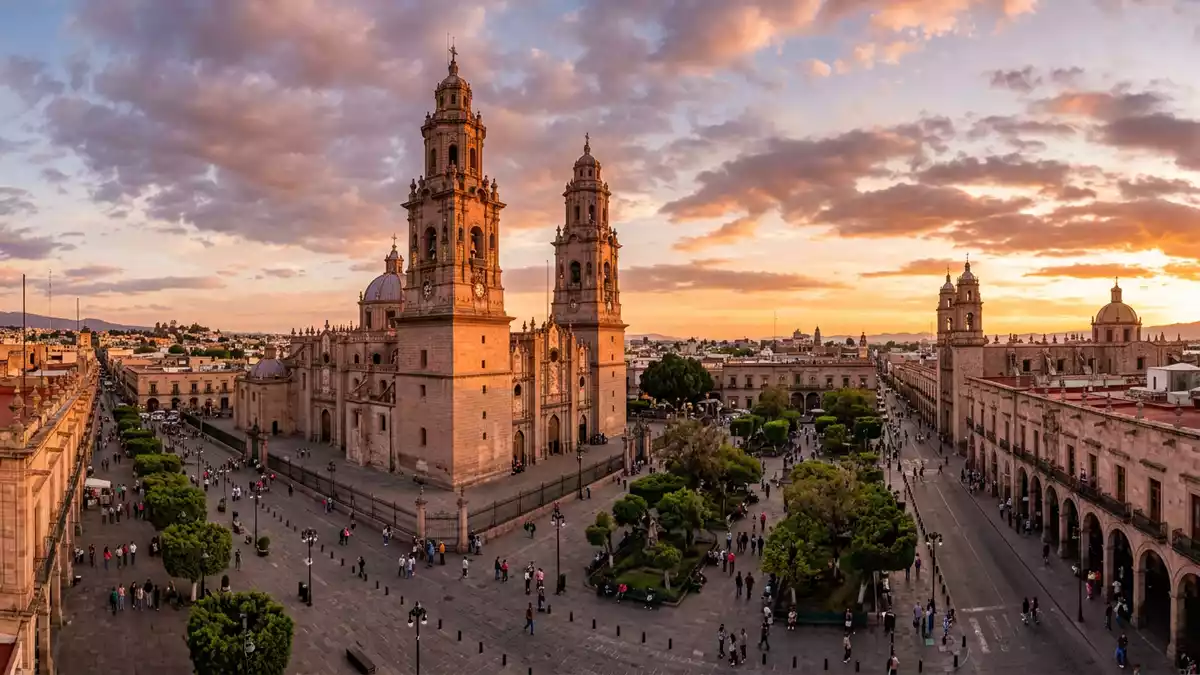
The Historic Centre of Morelia (Centro Histórico de Morelia) will host Day of the Dead displays from 7 October 2026, as Morelia prepares its Noche de Muertos programme in Mexico. More than 30 activities are scheduled from 23 October to 2 November 2026, while decorations will remain in place until 3 November.
Day of the Dead programme reaches Morelia's historic centre
The municipal programme links the main celebration with public spaces across the centre. More than 100 balconies will receive cempasúchil flowers and papel picado from 7 October to 3 November 2026, according to the published programme.
A cempasúchil display is scheduled for the Cerrada de San Agustín from 9 October. The programme also lists eight large skulls on the pedestrian El Nigromante street, five monumental catrinas on the Miguel Hidalgo walkway from 19 October, and an Arco de Ánimas in the Callejón del Romance from 20 October. Morelia's published programme also includes decorated temple doors and installations in public squares.
The wider Noche de Muertos season runs from 23 October to 2 November 2026. The programme includes a Purépecha procession on 28 October, a Zombie Walk on 31 October, and the Desfile de Catrinas y Catrines on 1 November. The same announcement places readings along the Calzada Fray Antonio de San Miguel and El Nigromante.
Pink-stone streets frame Morelia's Day of the Dead displays
The setting gives the programme a specific architectural context. UNESCO describes the site as a sixteenth-century city whose streets retain their original layout on the slopes of a central hill.
More than 200 historic buildings stand within this urban landscape, built in the region's characteristic pink stone. Their architecture combines medieval, Renaissance, Baroque and neoclassical elements, so the floral displays and catrinas will appear among arcades, churches, squares and historic facades. UNESCO's site description identifies the centre as an example of Spanish Renaissance planning combined with Mesoamerican experience.
The relationship between programme and place is especially clear in the named installations. The 100 decorated balconies, the Cerrada de San Agustín display and the catrinas on the Miguel Hidalgo walkway use the historic centre itself as the setting, rather than a single enclosed venue.
Morelia's public squares carry the seasonal programme
The programme extends beyond decoration. On 21 October, five figures from Guardianes del Mictlán are planned for Jardín Villalongín, while the Calzada Fray Antonio de San Miguel is scheduled to receive a floral arch and memorial altars from 28 October to 2 November.
On 1 November, the Desfile de Catrinas y Catrines is due to begin at Jardín Morelos before travelling along Avenida Francisco I. Madero towards the cathedral. These locations place the visitor programme within the original street and square network described by UNESCO.
Visiting Historic Centre of Morelia: what travellers from Western Europe should know
- The first decorations are scheduled for 7 October 2026, with balcony displays continuing until 3 November. The wider Noche de Muertos programme runs from 23 October to 2 November 2026.
- The announced access is to public streets, walkways, squares and gardens. The programme names the Cerrada de San Agustín, El Nigromante, the Miguel Hidalgo walkway, Jardín Villalongín and Jardín Morelos.
- The site is in Morelia, in central Mexico. UNESCO describes its streets as following the original layout across the slopes of a central hill.
- Visitors will encounter historic buildings made mainly from regional pink stone, with Baroque facades, arcades, churches, towers and cupolas.
- Spanish is the official language and the national currency is the Mexican peso.
- Entry requirements depend on your nationality; UK travellers can check the FCDO travel advice at gov.uk/foreign-travel-advice, Irish travellers the Department of Foreign Affairs at ireland.ie.
Searching for Historic Centre of Morelia on social platforms
These links open searches for Historic Centre of Morelia on each platform.
Frequently asked questions about Historic Centre of Morelia
When does Noche de Muertos take place at the Historic Centre of Morelia?
The main programme runs from 23 October to 2 November 2026. Decorations begin on 7 October and continue until 3 November 2026.
What is the Historic Centre of Morelia?
It is a sixteenth-century urban area in central Mexico with more than 200 historic buildings made mainly from regional pink stone. UNESCO recognises its original street layout and architectural heritage.
Where is the Historic Centre of Morelia and how do you get there?
It is in Morelia, the capital of Michoacán in central Mexico. The programme's named public locations include streets, walkways, gardens and squares in the historic centre.


