
Kinkaku-ji and the three architectural languages of Kyoto
Published on 09/24/2026 at 11:38 | Editorial responsibility: Rafael Müller, Editor-in-Chief AD HOC NEWS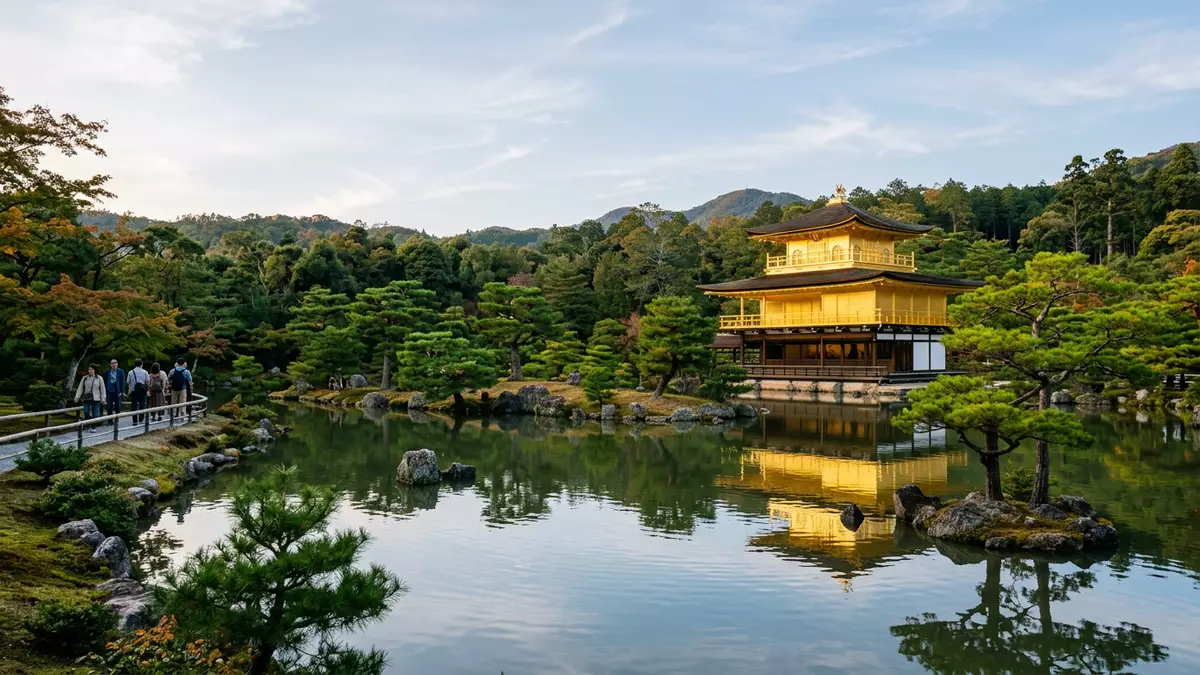
Kinkaku-ji, formally Rokuon-ji, is a Zen Buddhist temple in northern Kyoto whose central pavilion rises above a reflective pond. Its gilded upper storeys bring together three architectural languages, making one compact building a visible record of courtly, samurai and Zen traditions.
Kinkaku-ji above the pond
The pavilion is set within a garden of water, islands, rocks and trees. Its image changes across the pond as the gilded surfaces meet the dark roof, timber details and surrounding greenery.
The name Kinkaku-ji means Temple of the Golden Pavilion. The building is also called Kinkaku, while the temple complex is formally known as Rokuon-ji, or Deer Garden Temple.
From Ashikaga villa to Zen temple
The history of Kinkaku-ji begins in 1397, when Ashikaga Yoshimitsu acquired the grounds and established the Kitayama villa complex. Yoshimitsu was the third shogun of the Ashikaga shogunate, a military government that shaped Kyoto during the Muromachi period.
After Yoshimitsu’s death in 1408, the estate became a Rinzai Zen temple. The change of function connected the former shogunal residence with religious practice, while the surrounding buildings and garden retained the character of a carefully composed estate. The pavilion was destroyed by fire in 1950 and reconstructed in 1955. Its present form belongs to the post-war period, while its historical identity reaches back to the fourteenth century.
Three styles beneath a gilded roof
Each storey of Kinkaku-ji uses a different architectural vocabulary. The lowest level reflects shinden-zukuri, the residential style associated with Heian-period aristocratic buildings. It has natural timber and pale walls beneath the upper gilded levels.
The middle storey reflects buke-zukuri, the style associated with samurai residences. The top storey follows Chinese Zen architecture and is covered in gold leaf along with the storey below it. These distinct treatments are visible from the garden, where the pavilion presents courtly, warrior and Buddhist forms within one vertical composition. The three architectural styles are central to the building’s character.
Kinkaku-ji became part of the Historic Monuments of Ancient Kyoto, inscribed on the UNESCO World Heritage List in 1994. The designation includes the temple’s buildings, garden and historical setting. The 1994 World Heritage inscription places the site within Kyoto’s wider group of protected cultural monuments.
Visiting Kinkaku-ji: what travellers from Western Europe should know
- Kinkaku-ji is in Kinkakuji-cho, Kita-ku, in north-western Kyoto. City buses and local roads connect the district with central Kyoto.
- The approach passes through a temple garden and includes uneven paths, steps and changes in level. The pavilion itself is viewed from outside across the pond.
- The official language is Japanese and the currency is the Japanese yen.
- Entry requirements depend on your nationality; UK travellers can check the FCDO travel advice at gov.uk/foreign-travel-advice, Irish travellers the Department of Foreign Affairs at ireland.ie.
Searching for Kinkaku-ji on social platforms
These links open searches for Kinkaku-ji on each platform.
Frequently asked questions about Kinkaku-ji
Where is Kinkaku-ji?
Kinkaku-ji is in Kinkakuji-cho, Kita-ku, in north-western Kyoto, Japan. The temple stands within a landscaped complex centred on the Golden Pavilion and its pond.
What can visitors expect at Kinkaku-ji?
The main view is of the pavilion from the garden path across the pond. The grounds include water, rocks, islands, trees and additional temple structures.
What makes Kinkaku-ji distinctive?
Its gilded upper storeys sit above a lower level of natural timber, while each storey reflects a different architectural tradition. The building combines Heian court style, samurai residential style and Chinese Zen architecture.


