
Lineas de Nazca and the drawings across Peru’s desert
Published on 09/24/2026 at 10:41 | Editorial responsibility: Rafael Müller, Editor-in-Chief AD HOC NEWS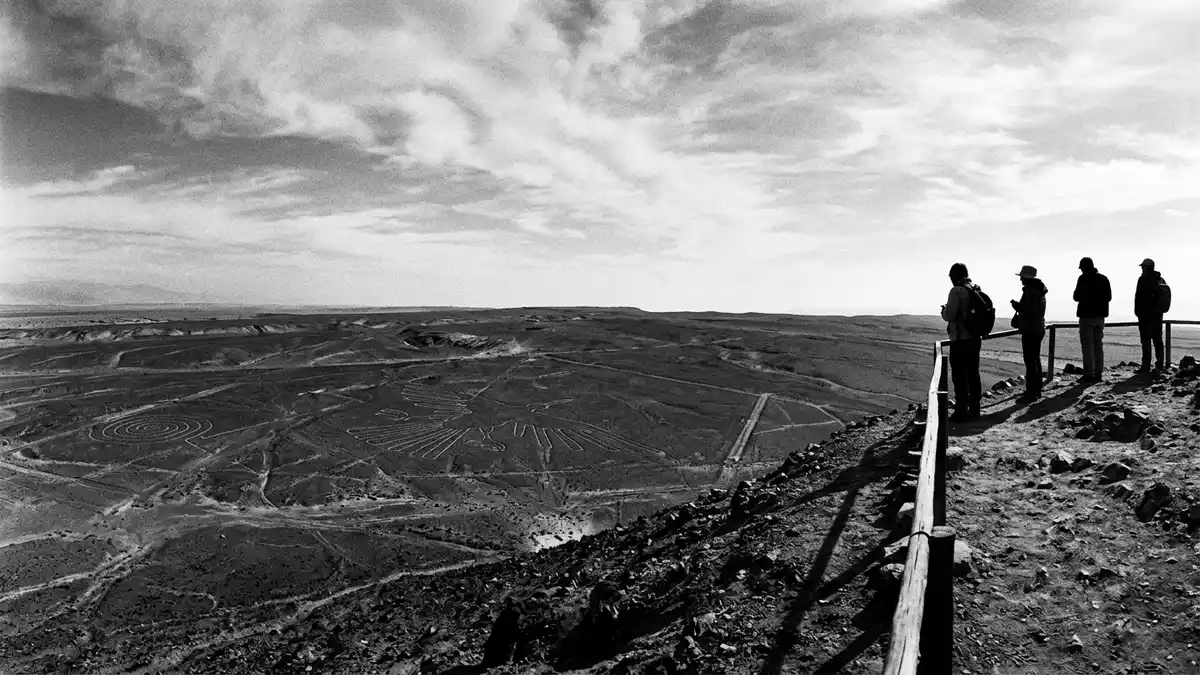
Lineas de Nazca are immense drawings traced across the arid coastal desert near Nazca in southern Peru. Seen from ground level, they appear as shallow lines and cleared surfaces; from above, animals, plants, humans and geometric forms emerge across the plateau.
The desert itself is part of the subject. Dark surface stones were moved aside to expose lighter soil, creating marks that extend across a broad archaeological landscape.
Lineas de Nazca: figures spread across the desert floor
The geoglyphs occupy the Pampas de Jumana and the basin of the Rio Grande de Nazca. The UNESCO-listed area covers about 75,358 hectares, linking the drawings with a wider landscape rather than a single viewpoint or isolated monument. UNESCO World Heritage listing records the site as Lines and Geoglyphs of Nasca and Palpa.
The designs belong to several visible groups. Long straight lines cross the plain, while geometric forms include trapezoids, triangles and spirals. Other marks form recognisable figures, including the hummingbird, monkey, spider, condor, pelican and plant motifs.
From Paracas traces to the Nazca culture
Most of the drawings are associated with the Nazca culture, which flourished between about 200 BC and AD 600. Some figures and techniques predate the Nazca period and connect the landscape with the earlier Paracas culture.
The lines were made across a long span of pre-Columbian history. A UNESCO document dates the ground markings broadly between 500 BC and AD 500, a range that reflects the layered development of the geoglyph tradition. the archaeological dating places them within the ancient cultures of Peru’s coastal plain.
Reading animals, lines and geometric forms
The largest designs can extend for hundreds of metres. Britannica records a monkey measuring about 110 metres, a hummingbird about 50 metres, a spider about 46 metres and a pelican about 285 metres. named figures and dimensions show how greatly the forms vary.
The relationship between the drawings and their ancient meanings remains unresolved. The visible evidence is more secure: lines, cleared expanses and figurative designs form a large symbolic landscape, with the desert surface acting as both ground and image.
Aircraft provide the broadest view of the figures, while ground-level viewpoints reveal the shallow construction of the lines. The difference between these perspectives is central to the place. From the plain, a design becomes a mark in the earth; from above, its proportions and outlines become legible.
Visiting Lineas de Nazca: what travellers from Western Europe should know
- Lineas de Nazca lie near Nazca in Peru’s Ica Region, on the Pampas de Jumana and the desert basin of the Rio Grande de Nazca.
- The landscape is arid desert terrain. Ground visits involve exposed earth, sparse vegetation and shallow lines spread across open archaeological ground.
- Flights from the Nazca area provide an aerial view of the large animal figures, geometric forms and straight lines.
- The official language is Spanish and the currency is the Peruvian sol.
- Entry requirements depend on your nationality; UK travellers can check the FCDO travel advice at gov.uk/foreign-travel-advice, Irish travellers the Department of Foreign Affairs at ireland.ie.
Searching for Lineas de Nazca on social platforms
These links open searches for Lineas de Nazca on each platform.
Frequently asked questions about Lineas de Nazca
Where are Lineas de Nazca?
They lie in southern Peru, near Nazca, across the Pampas de Jumana and the Rio Grande de Nazca basin.
What can visitors expect to see?
The site contains straight lines, geometric shapes and large figures of animals, plants and humans across arid desert ground.
What makes Lineas de Nazca distinctive?
The drawings combine vast scale with shallow ground markings. Their outlines become most legible from above, while the desert surface remains visible at ground level.


