Ludi Yan and its painted limestone chambers
Published on 09/02/2026 at 09:45 | Editorial responsibility: Rafael Müller, Editor-in-Chief AD HOC NEWS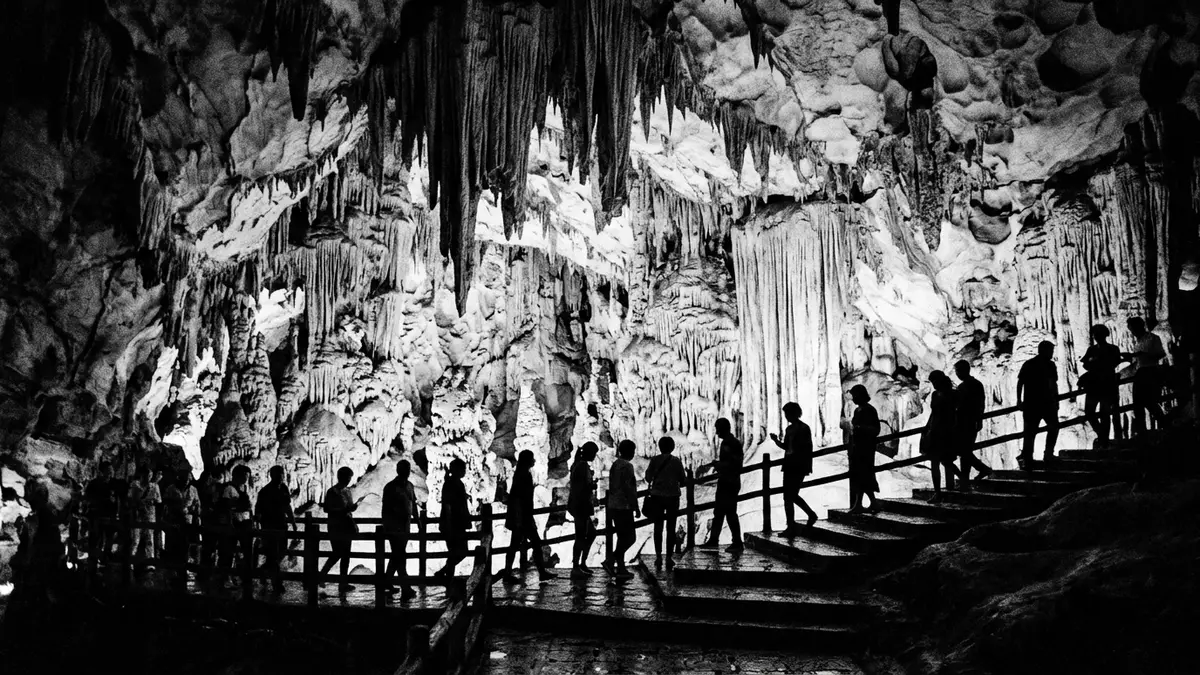
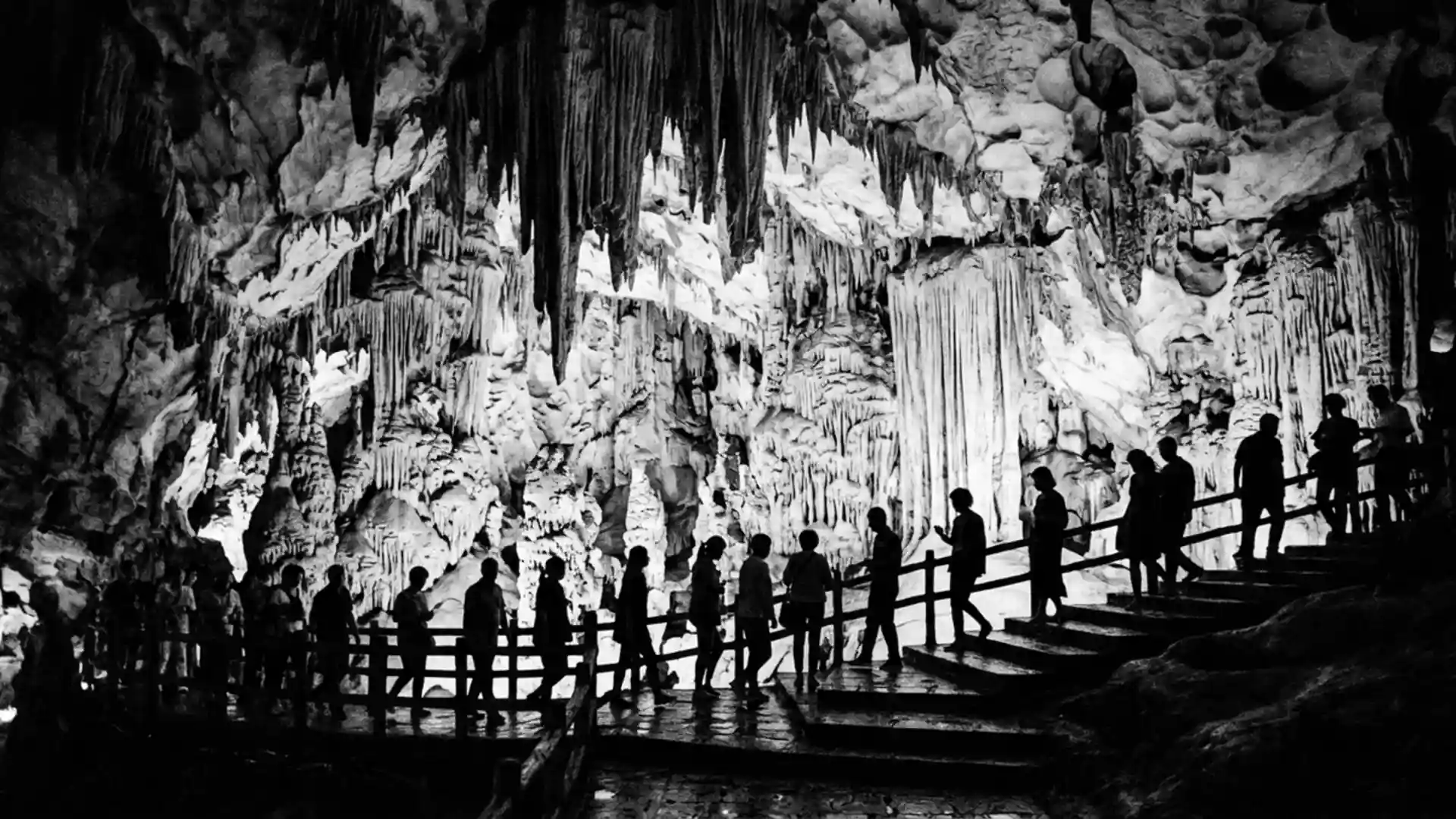
Ludi Yan in Guilin is a limestone cave whose chambers are marked by coloured lighting and pale rock surfaces. The Chinese name, Lúdí Yán, points to the reed-flute association that has long followed the site.
Illuminated chambers beneath Guangming Hill
The cave lies on the north-western side of Guilin, in Xiufeng District, beside Guangming Hill and near Ludi Road. It is reached as a cave site rather than as a built monument, and the visitor route runs through an underground series of chambers.
The walls and ceilings are formed from limestone and karst shapes, with mineral surfaces taking on different tones under the lighting. An article on Ludi Yan in painted limestone chambers describes the route as compact and sets the cave within Guilin’s wider limestone landscape.
A cave with a long cultural name
The name Ludi Yan is tied to reed flutes, which gives the site a cultural layer beyond the rock itself. The same link between name and place appears in English-language coverage of Reed Flute Cave Facts and in the cave’s standard English naming.
The cave is also known for its chamber sequence, which includes a clear contrast between open spaces and tighter passages. A separate guide places Ludi Yan on 1 Ludi Rd and links it with Guangming Hill in Guilin.
Limestone, light and underground space
Ludi Yan belongs to Guilin’s karst landscape, where limestone caves are a major natural feature of the region. The site’s underground rooms bring rock texture and artificial light into the same setting, and the cave is identified in several English-language sources as a Guilin landmark.
The Chinese name appears in full as ???, and the site is regularly presented as a cave rather than a museum or temple. That makes the place easy to read on arrival: the main experience is the rock, the chambers and the path between them.
Visiting Ludi Yan: what travellers from Western Europe should know
- The cave is on the north-western side of Guilin, in Xiufeng District, near Guangming Hill and Ludi Road.
- The visit takes place underground, with uneven cave surfaces, chamber changes and a defined path through limestone space.
- The site sits within Guilin’s karst terrain, so the landscape around it belongs to the same limestone world as the cave itself.
- The official language is Chinese and the currency is the Chinese yuan.
- Entry requirements depend on your nationality; UK travellers can check the FCDO travel advice at gov.uk/foreign-travel-advice, Irish travellers the Department of Foreign Affairs at ireland.ie.
Searching for Ludi Yan on social platforms
These links open searches for Ludi Yan on each platform.
Frequently asked questions about Ludi Yan
Where is Ludi Yan?
Ludi Yan is in Guilin, on the north-western side of the city in Xiufeng District. It lies near Guangming Hill and Ludi Road.
What does a visit involve?
The site is a cave route through limestone chambers. The setting is underground, with rock surfaces and coloured lighting shaping the experience.
What makes Ludi Yan distinctive?
The cave combines Guilin’s karst landscape with a name linked to reed flutes. Its underground chambers and lighting give the place a strong visual identity.