
Machu Picchu and the stone city above the Urubamba Valley
Published on 09/24/2026 at 07:24 | Editorial responsibility: Rafael Müller, Editor-in-Chief AD HOC NEWS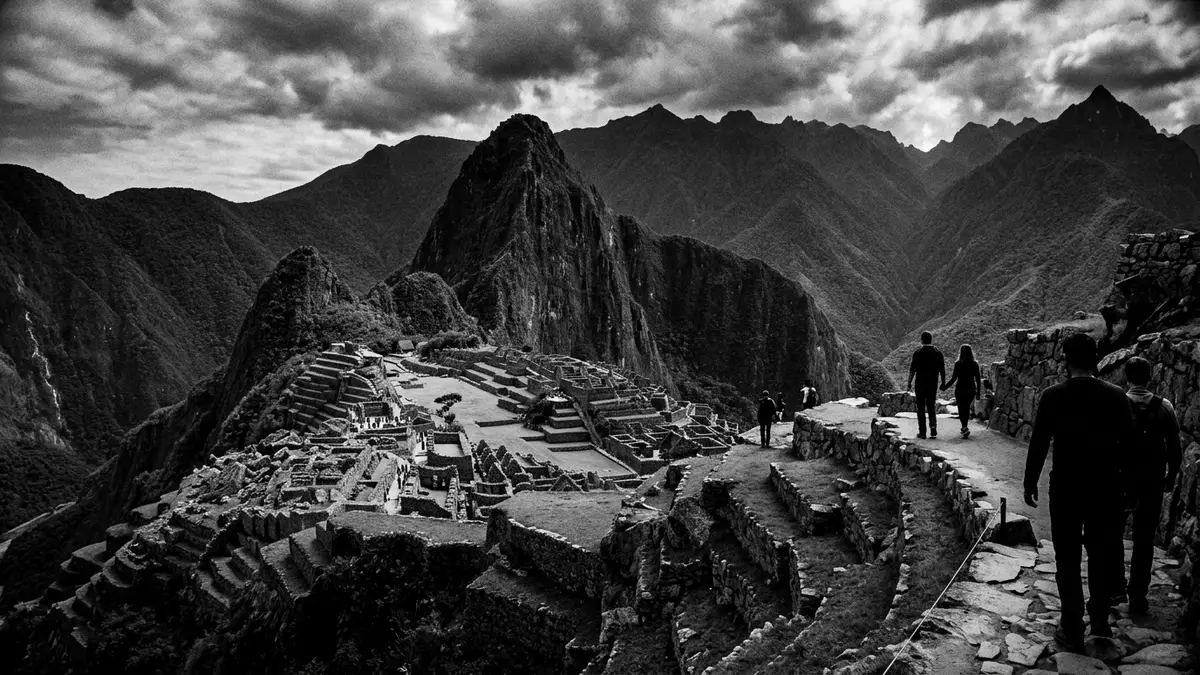
Machu Picchu is an Inca citadel in the eastern Andes of Peru, above the Urubamba Valley and the town of Aguas Calientes. Its terraces, plazas and buildings occupy a mountain saddle at about 2,430 m (7,972 ft), where finely fitted stonework meets steep green slopes.
Machu Picchu between mountain peaks and forest
The site lies in the Cordillera de Vilcabamba, north-west of Cusco, between the peaks named Machu Picchu and Huayna Picchu. The Urubamba River curves through the valley below, while tropical mountain forest surrounds the archaeological complex.
The wider Historic Sanctuary of Machu Picchu includes mountain slopes, summits and valleys around the citadel. Its protected area covers 32,592 hectares, combining archaeological remains with Andean and upper-Amazon landscapes. Historic Sanctuary of Machu Picchu carries both cultural and natural importance.
Inca terraces, plazas and fitted stone
Machu Picchu was built between the mid-fifteenth and sixteenth centuries, during the height of the Inca Empire. Its construction is associated with Pachacuti Inca Yupanqui, who ruled from about 1438 to 1471.
The settlement contains an agricultural sector and an urban sector. Agricultural terraces climb the slopes, while plazas, houses, temples and retaining walls occupy the central area. Dry-stone masonry forms much of the complex, with individual blocks fitted closely together without visible mortar. Pachacuti Inca Yupanqui belongs to the site’s established historical setting.
From Inca imperial centre to protected heritage site
The exact role of Machu Picchu has been described through its palaces, ceremonial buildings, residences and agricultural terraces. The surviving layout records an organised settlement rather than an isolated group of ruins.
Hiram Bingham brought the site to international attention in 1911. Peru designated Machu Picchu a National Historic Sanctuary in 1981, and UNESCO inscribed it as a World Heritage site in 1983. The designation includes the citadel and the surrounding mountain environment. Inca settlement in Peru identifies the complex within the Urubamba Valley.
Visiting Machu Picchu: what travellers from Western Europe should know
- Machu Picchu is reached from Aguas Calientes, the settlement below the sanctuary. Rail services connect Aguas Calientes with the Cusco region, and onward access climbs into the mountain landscape.
- The archaeological area contains terraces, uneven stone surfaces, stairways and steep slopes. The altitude is about 2,430 m (7,972 ft), and the surrounding terrain is mountainous.
- The site lies within a tropical mountain forest on the eastern slopes of the Andes. The Urubamba River and the peaks of Machu Picchu and Huayna Picchu form named geographical features around it.
- The official language is Spanish and the currency is the Peruvian sol.
- Entry requirements depend on your nationality; UK travellers can check the FCDO travel advice at gov.uk/foreign-travel-advice, Irish travellers the Department of Foreign Affairs at ireland.ie.
Searching for Machu Picchu on social platforms
These links open searches for Machu Picchu on each platform.
Frequently asked questions about Machu Picchu
Where is Machu Picchu?
Machu Picchu is in Peru’s eastern Andes, above the Urubamba Valley and Aguas Calientes. The citadel lies in the Cordillera de Vilcabamba at about 2,430 m (7,972 ft).
What can visitors see at Machu Picchu?
The archaeological area contains terraces, plazas, houses, temples, retaining walls and finely fitted dry-stone masonry. Mountain forest, steep slopes and the Urubamba Valley surround the settlement.
What makes Machu Picchu distinctive?
Its Inca architecture occupies a mountain saddle between named peaks, combining agricultural terraces with an urban settlement. The surrounding sanctuary also protects a broad Andean and upper-Amazon landscape.


