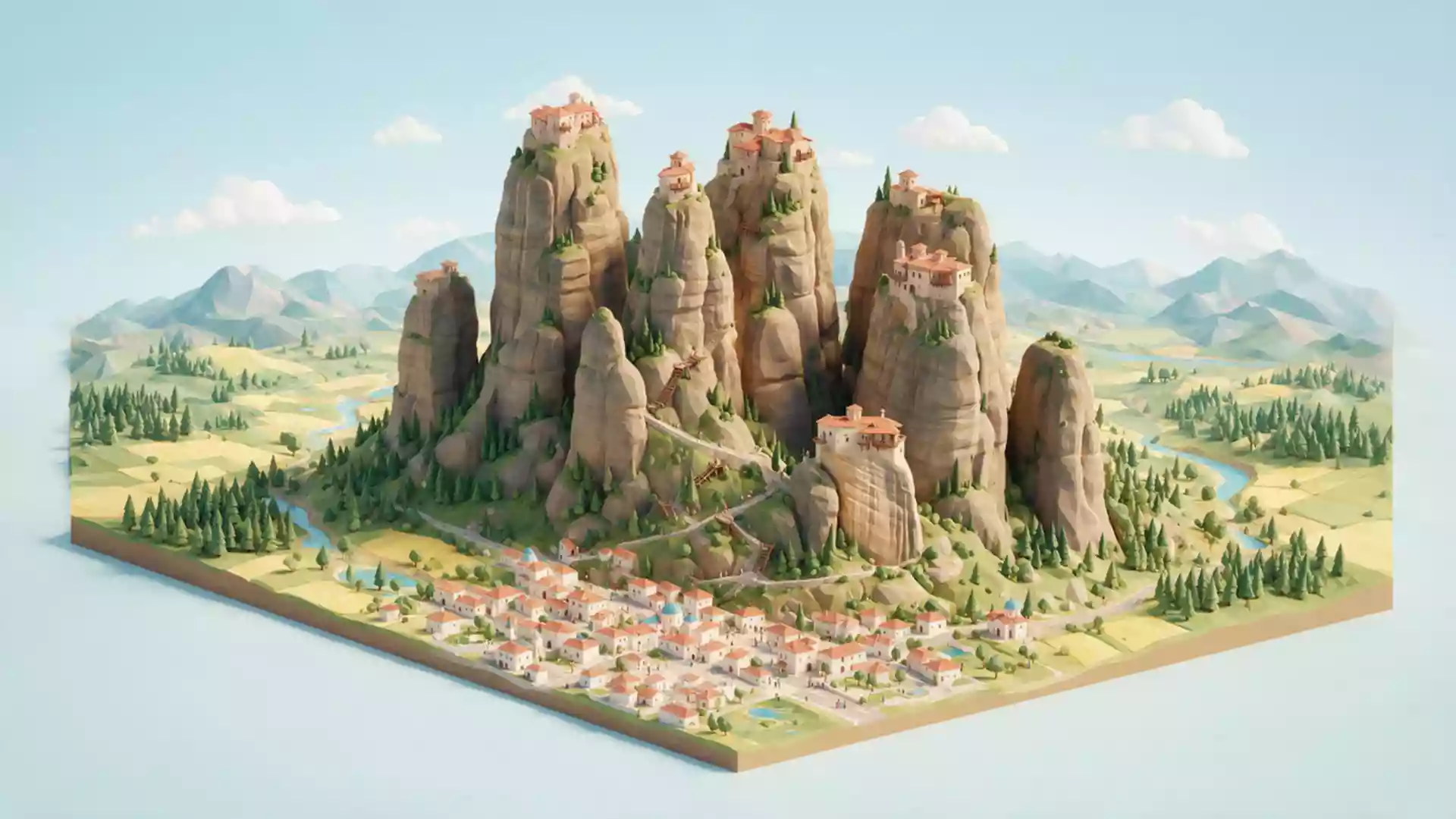
Meteora’s monasteries above the sandstone pillars of Kalambaka
Published on 09/15/2026 at 20:39 | Editorial responsibility: Rafael Müller, Editor-in-Chief AD HOC NEWS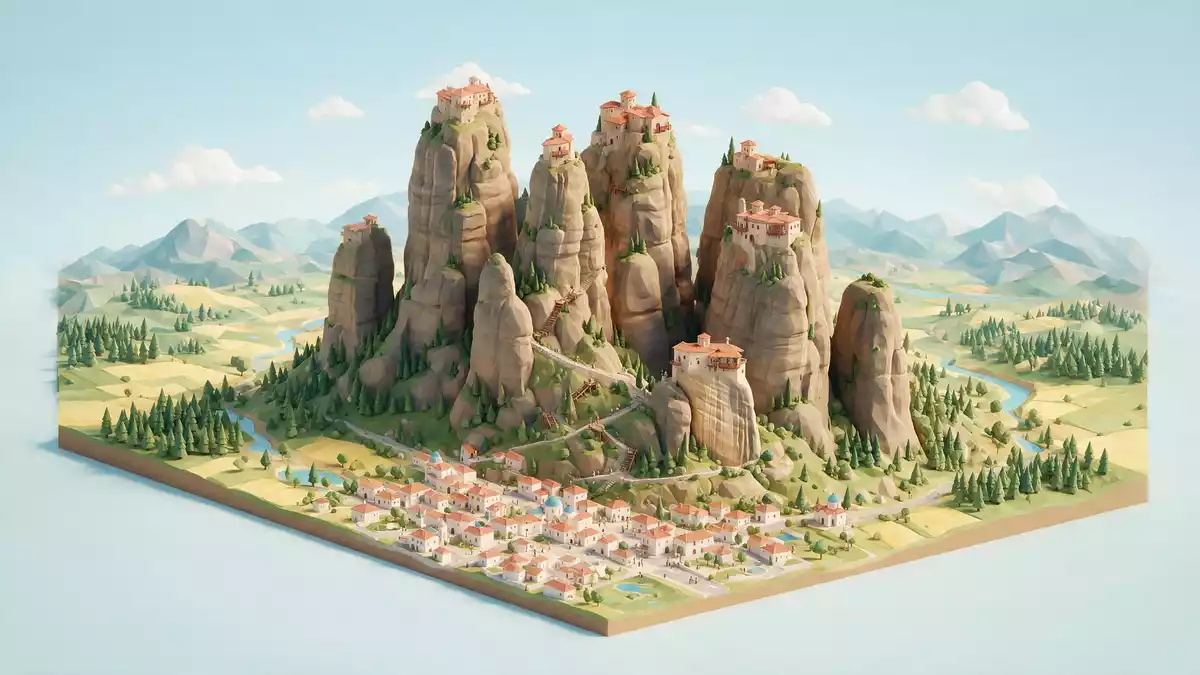
Meteora in central Greece is a sandstone landscape where Eastern Orthodox monasteries rise directly from towering rock pillars near Kalambaka, combining dramatic geology with centuries of monastic life in a single view of stone and faith.
Sandstone columns and a vertical sanctuary
Meteora forms a compact group of high sandstone pillars on the north-western edge of the Thessalian plain, close to the town of Kalambaka and the village of Kastraki, with the Pindus Mountains and the valley of the Pineios River framing the wider landscape.Sandstone pillars near Kalambaka These rock masses rise steeply from gentler ground, so the monasteries occupy summits that feel visually detached from the valley despite lying only a short distance from streets and houses below.Monasteries on high rock pillars
The sandstone itself reflects a long geological history, with the pillars shaped over millions of years into towers, buttresses and isolated stacks that now carry footpaths, stairways and small roads leading towards the monastic compounds.Steep rocky masses from a geological phenomenon From below, the impression is of masonry walls and tiled roofs perched directly on pale rock ledges, with chapels, courtyards and small gardens appearing as added layers of human order on top of eroded sandstone.
From hermit caves to a UNESCO World Heritage monastery complex
Hermit monks settled among the smaller peaks and caves of Meteora by the eleventh century, developing a scattered ascetic community that used the natural height and isolation of the rocks for seclusion.Monks settled here in the eleventh century In the fourteenth century Athanasios Koinovitis, a monk from Mount Athos, climbed a broad summit known in Greek as “platy lithos” and founded the Monastery of the Transfiguration, also called Great Meteoron, which became the leading community on the rocks.Athanasios Koinovitis and Great Metéoron
During the late medieval and post-Byzantine periods, more monasteries were founded on neighbouring summits, and fresco cycles from the sixteenth century inside their churches mark an important stage in post-Byzantine painting.Sixteenth-century frescoes at Meteora In 1988 Meteora was inscribed on the UNESCO World Heritage List for both cultural and natural values, recognising the combination of monastic architecture, painting and the sandstone towers that surround and support the religious settlements.UNESCO World Heritage inscription in 1988
Monastic architecture balanced on rock and sky
Each monastery stands as a compact ensemble of stone-built church, living quarters and service buildings, arranged around terraces and small courtyards that follow the contours of the summit rather than imposing a regular plan on it.Monasteries built on high rock pillars Walls are largely built of local stone with brick detailing, while roofs carry terracotta tiles, so the complexes echo the colours of the sandstone yet keep a distinct architectural presence.
Inside, the katholikon – the main church of each monastery – often preserves rich fresco programmes dating from the fifteenth and sixteenth centuries, with layered scenes covering vaults, walls and icon screens under subdued interior light.Post-Byzantine frescoes in Meteora churches Some monasteries incorporate refectories, chapels, libraries and small museum rooms into the ensemble, while external stairways, bridges and paths connect the buildings to rock ledges used for viewpoints and gardens.
Visiting Meteora: what travellers from Western Europe should know
- Meteora lies in Thessaly in mainland Greece, immediately north of Kalambaka and close to the village of Kastraki, and is reached by road connections from regional centres such as Trikala.
- The sandstone pillars rise steeply above the plain, and approaches to the monasteries involve uphill paths and stairways on uneven rock, so visitors encounter significant gradients and many steps on foot.
- Several viewpoints and roadside platforms offer wide views of the pillars and monasteries without entering monastic compounds, but reaching the summit complexes themselves involves following marked access routes on the rocks.
- The official language is Greek and the currency is the euro.
Searching for Meteora on social platforms
These links open searches for Meteora on each platform.
Frequently asked questions about Meteora
Where is Meteora and what kind of place is it?
Meteora is a group of sandstone pillars near Kalambaka in Thessaly in central Greece, carrying Eastern Orthodox monasteries on their summits.
What should visitors expect during a visit to Meteora?
Visitors encounter steep terrain with stairways and paths on rock, monastic complexes with churches and frescoes, and wide views over the pillars and the Thessalian plain.
What makes Meteora distinctive among monastic sites?
Meteora combines medieval and post-Byzantine monasteries, significant fresco painting and an eroded sandstone landscape, so monastic architecture and geology share the same vertical stage.