Metzada, a desert fortress above the Dead Sea
Published on 08/30/2026 at 14:36 | Editorial responsibility: Rafael Müller, Editor-in-Chief AD HOC NEWS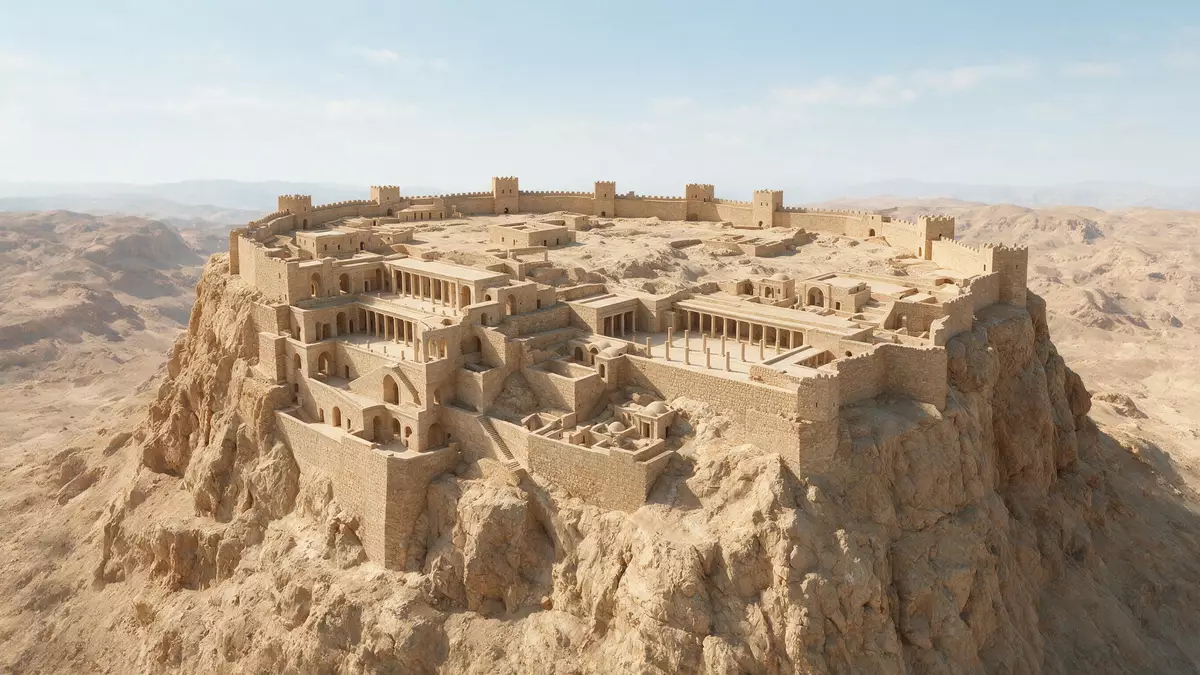
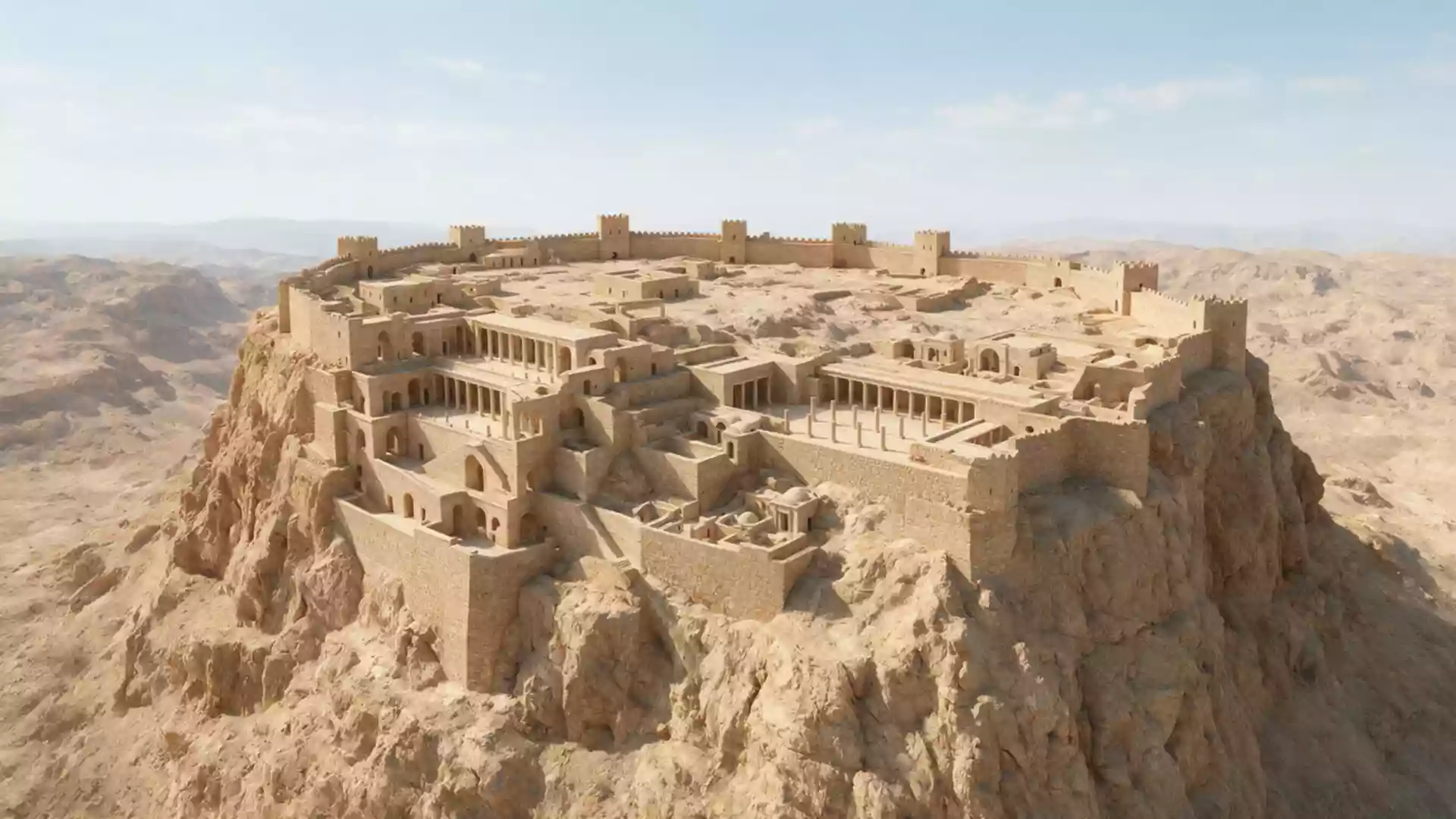
Metzada is an ancient fortress on a high desert plateau above the western shore of the Dead Sea in Israel, combining harsh Judaean Desert rock with carefully planned palace architecture and fortifications from the age of Herod the Great. Rising several hundred metres above the surrounding terrain, the flat-topped mountain forms a self-contained world of stone, ruins and far-reaching views over the Dead Sea basin and the mountains beyond.
A palace fortress in Herod’s Judean landscape
Metzada occupies the entire summit of an isolated mesa in the southern part of Israel, close to the south-western coastline of the Dead Sea and some distance south-east of Jerusalem. The mountain’s rhomboid plateau extends roughly 600 m by 300 m, giving the fortress a broad, level surface that once held royal palaces, military quarters and storage facilities.The rhomboid, flat plateau
The site is traditionally dated to the late first century BC, when Herod the Great, king of Judaea between 37 and 4 BC, developed Metzada as a palace complex and fortified refuge.Herod the Great built the palace complex He furnished the plateau with palaces, a casemate wall along the edge, barracks and large storerooms for provisions, creating a stronghold at the edge of the desert.Storehouses, cisterns and barracks
Roman-era engineering in the Judean Desert
Much of Metzada’s enduring fascination lies in its engineering: the builders turned a steep-sided desert mesa into a place where a large community could live securely for extended periods. A ring of fortification walls runs around the plateau, punctuated by gates and defensive structures, while a network of walkways connects the different quarters.
Herod’s architects cut enormous cisterns into the rock and fed them with channels that gathered floodwater from the surrounding desert, creating a water supply that sustained life high above the Dead Sea.Twelve enormous cisterns On the northern side of the plateau they built a series of terraced palace levels, with residential rooms, reception spaces and bathhouses arranged down the slope.Three terraced palaces on the northern face Roman bath technology appears in the remains of heated rooms and bathing facilities, linking this Judaean stronghold to wider patterns of early Roman imperial architecture.Classical Roman style palace complex
Metzada’s siege landscape and World Heritage status
Metzada is embedded in a wider archaeological landscape that records one of the defining episodes of the First Jewish–Roman War. In the first century CE, Jewish rebels seized the fortress and held it against Roman forces after the fall of Jerusalem in 70 CE.Last stand after the fall of Jerusalem The Roman army encircled the mountain with camps and a siege wall, and built a large ramp up the western slope, elements of which can still be traced in the desert around the plateau.Eight camps and an encircling siege wall
The combination of palace ruins on the summit and Roman siege works in the surrounding desert led to Metzada’s inscription as a UNESCO World Heritage Site in 2001, under cultural criteria recognising its architectural and historical significance.Masada National Park World Heritage inscription The site is seen as a symbol of the ancient Jewish kingdom of Israel and of the dramatic end of resistance during the first century CE, linking its rugged natural setting with deep layers of cultural memory.Symbol of the ancient kingdom of Israel
Visiting Metzada: what travellers from Western Europe should know
- Metzada stands on an isolated plateau on the western side of the Dead Sea in southern Israel, reached by road along the Dead Sea shoreline and by cable car or steep footpath from the base.
- The ascent from the visitor area to the summit involves a substantial height gain on desert terrain; routes on foot follow a long, stepped path with significant gradients.
- The surrounding Judaean Desert is arid and largely treeless, with exposed rock and minimal shade on the approaches and on the plateau itself.
- The official language is Hebrew and the currency is the Israeli shekel.
- Entry requirements depend on your nationality; UK travellers can check the FCDO travel advice at gov.uk/foreign-travel-advice, Irish travellers the Department of Foreign Affairs at ireland.ie.
Searching for Metzada on social platforms
These links open searches for Metzada on each platform.
Frequently asked questions about Metzada
Where is Metzada located?
Metzada is on an isolated desert plateau in southern Israel, overlooking the western shore of the Dead Sea and lying south-east of Jerusalem in the Judaean Desert.
What should visitors expect on a visit to Metzada?
Visitors encounter extensive ruins of Herodian palaces and fortifications, Roman-era siege remains in the surrounding desert and wide views over the Dead Sea landscape from the summit plateau.
What makes Metzada distinctive among desert fortresses?
Metzada combines an early Roman imperial palace complex by Herod the Great with a complete set of Roman siege works and a dramatic setting above the Dead Sea, recognised as a UNESCO World Heritage Site.