
Metzada: a palace fortress above the Dead Sea
Published on 09/24/2026 at 00:18 | Editorial responsibility: Rafael Müller, Editor-in-Chief AD HOC NEWS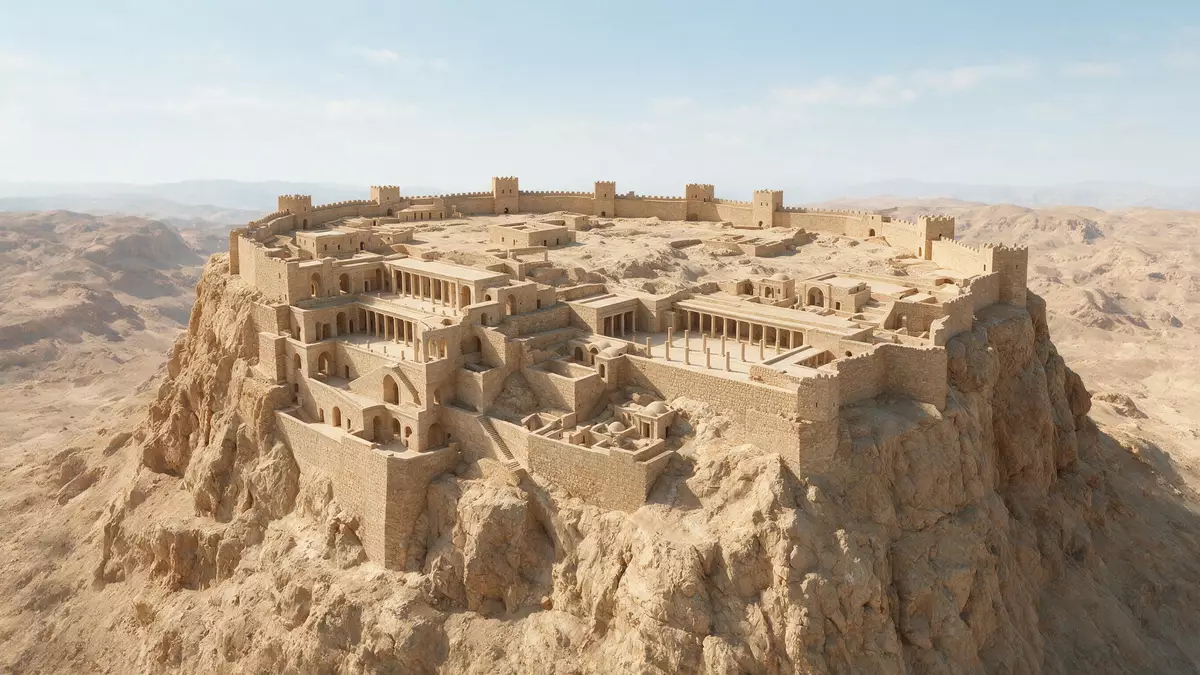
Metzada rises above the Dead Sea as a rocky plateau carrying a palace, fortress walls, cisterns and the remains of a Roman siege. Herod the Great built the complex in the classical style of the early Roman Empire during his reign from 37 to 4 BCE.
Metzada on a desert plateau above the Dead Sea
The site stands on the eastern edge of the Judaean Desert, between En Gedi and Sodom. Its plateau measures approximately 650 metres from end to end and 300 metres across at its broadest point. It rises about 450 metres above the Dead Sea.
The summit carries a mixture of royal, military and communal remains. A casemate wall follows the plateau edge, while the Northern Palace occupies the northern cliff. The Western Palace forms another substantial complex, with courtyards, reception rooms, storerooms and bathing areas. The desert landscape remains visible from the plateau in every direction.
Herod’s building programme included palaces, storage rooms, defensive walls and a water system. Channels carried rainwater towards rock-cut cisterns, creating a large reserve within an arid setting. The surviving masonry records the scale of the royal complex without requiring an imagined reconstruction of its appearance.
Herod’s palaces, mosaics and water cisterns
The Northern Palace descends across three terraces on the mountain’s northern face. Its upper level contained private rooms and an observation area, while the lower terraces included halls associated with receptions. Foundations of columns, plastered walls and fragments of painted decoration remain among the ruins.
The palace complex also contains a Roman-style bathhouse. Its rooms include a dressing area, a tepid room, a cold room and a hot room with a raised floor. Mosaics and frescoes survive in several parts of the site, including geometric designs and patterns resembling marble.
Large storerooms stand near the northern complex. Herod’s builders also cut cisterns into the rock and linked them with channels. The system includes twelve cisterns on the slopes, while the plateau contains further water installations. These features belong to the practical infrastructure of a palace fortress and remain among Metzada’s clearest archaeological details.
The Western Palace covers about 3,700 square metres. Its rooms surround courtyards and include residential spaces, reception areas, guard rooms and baths. A synagogue, ritual baths and modest dwellings record the community that occupied the fortress during the Great Revolt against Rome.
The Roman siege still visible below Metzada
Metzada became the last rebel stronghold in Judaea during the Jewish Revolt against Roman rule. After the destruction of Jerusalem in 70 CE, rebels remained on the mountain. In 73 or 74 CE, Flavius Silva led the Roman Tenth Legion Fretensis against the fortress.
The Roman army built camps, a circumvallation wall and an assault ramp around the mountain. The earth-and-stone ramp climbs the western slope towards a breach in the perimeter wall. The camps and siege lines remain visible on the desert floor, forming a broad archaeological landscape beneath the summit.
The UNESCO World Heritage listing recognises both Herod’s palace complex and the surviving Roman siegeworks. Metzada entered the World Heritage List in 2001.
The siege is recorded mainly through the writings of Josephus Flavius and through archaeological remains. The Roman ramp, camps, wall and breaching point give the story a physical setting. They also show how the fortress formed part of a much larger military operation across the desert.
After the Roman period, a Byzantine monastery occupied part of the summit. Its church remains among the later structures on the plateau, with a preserved apse and mosaic decoration. The remains therefore cover several historical phases, from Herodian architecture to the revolt, Roman occupation and Byzantine monastic life.
Visiting Metzada: what travellers from Western Europe should know
- Metzada lies beside the Dead Sea in southern Israel, between En Gedi and Sodom. Road 90 provides access from the eastern side, while the western approach runs through Arad.
- The summit can be reached by cable car or on foot. The eastern ascent follows the Snake Path, while the western route follows the Roman siege ramp.
- The plateau contains exposed rock, cliff edges, historic walls and uneven archaeological ground. The Snake Path and siege-ramp routes involve sustained climbing.
- The main remains include the Northern Palace, Western Palace, synagogue, Byzantine church, cisterns and Roman siegeworks.
- The official language is Hebrew and the currency is the Israeli new shekel.
- Entry requirements depend on your nationality; UK travellers can check the FCDO travel advice at gov.uk/foreign-travel-advice, Irish travellers the Department of Foreign Affairs at ireland.ie.
Searching for Metzada on social platforms
These links open searches for Metzada on each platform.
Frequently asked questions about Metzada
Where is Metzada?
Metzada is in southern Israel, on a plateau above the Dead Sea at the eastern edge of the Judaean Desert. It lies between En Gedi and Sodom.
What can visitors see there?
The archaeological remains include Herod’s palaces, Roman-style baths, mosaics, a synagogue, a Byzantine church, water cisterns and the Roman siege ramp.
What makes Metzada distinctive?
The palace fortress combines Herodian architecture on the summit with Roman camps, fortifications and an assault ramp preserved across the surrounding desert.


